Key Points of High-Yield Artificial Cultivation Techniques for Houttuynia cordata and a Detailed Explanation of Its Effects and Functions
Houttuynia cordata, also known as dog-heart grass and zhe'ergen gou dian'er, is pungent, slightly cold, and slightly bitter. It is harvested in summer when the stems and leaves are luxuriant and there are many flower spikes, then foreign matter is removed and it is sun-dried. So what are the high-yield cultivation techniques for Houttuynia cordata? What are its effects and functions?
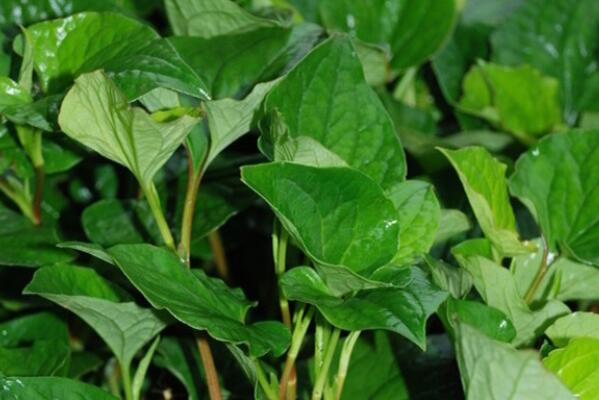
What are the high-yield artificial cultivation techniques for Houttuynia cordata?
I. Plant characteristics and biological properties
The Houttuynia cordata plant is 15-30 cm tall, and its underground stem grows creeping and is white. The upper part of the stem is upright, the base is prostrate, purplish red, and hairless. The leaves are alternate, heart-shaped, 3-8 cm long and 4-6 cm wide, with an acute tip and entire margins; when old, the upper surface is slightly purplish and the lower surface is purplish red, and both surfaces are hairless except for the veins; the petiole is 1-3 cm long and often has sparse hairs; the stipules are membranous, lanceolate, and connate with the petiole at the base to form a sheath. The spike inflorescence is borne at the upper end of the stem and opposite the leaves, 1-3 cm long, with 4 white petal-like involucral bracts at the base, 1-2 cm long; the flowers are small and dense, bisexual, without a perianth, and the bracts are linear; there are 3 stamens with slender filaments; the pistil is composed of 3 carpels connate below, the ovary is superior, and the styles are separate. The capsule is urn-shaped and dehisces at the top. The seeds are ovate and striped. The flowering period is April to July, and the fruiting period is June to September.
Houttuynia cordata originally grew in low-lying wet depressions, beside ditches, and on field ridges. It has relatively high water requirements and needs a sufficient water supply throughout the entire growth period to keep the soil moist; it grows better in warm, shady, and humid environments and is afraid of frost. The underground stem is relatively cold-tolerant and can overwinter below -15°C, begins to sprout at 12°C, and the optimum growth temperature is 16-25°C; it has no strict requirements for soil and light, and soil rich in organic matter is best.
II. Site selection, land preparation, and basal fertilizer application
(1) Plot selection. To obtain a relatively high rhizome yield, the plot selected for planting should be flat, with sufficient water sources, convenient irrigation and drainage, a deep plow layer, suitable soil structure, good physical and chemical properties, and moderate fertility sandy loam.
(2) Fine land preparation. After selecting the plot, thoroughly remove weeds and the stalks of the previous crop, and deep-plow and sun the soil. Before planting, deep-plow and rake level, apply sufficient basal fertilizer, and make the plot loose, fertile, and level.
(3) Apply sufficient basal fertilizer. Before planting, apply 1000-1500 kg of decomposed farmyard manure and 150-200 kg of plant ash per mu, then plow once to a depth of 25-30 cm so that the fertilizer is fully mixed with the soil.
(4) Open beds for planting. After the soil and fertilizer are fully mixed, open beds with a bed width of 2-2.5 m, a ditch width of 30-35 cm, and a depth of 25-30 cm.
III. Propagation methods
Houttuynia cordata generally uses asexual propagation, including rhizome propagation and cutting propagation, but rhizome propagation gives better results, saves time and labor, and yields relatively high output.
Rhizome propagation. Planting can be done in all four seasons, but planting in winter, spring, and early summer can be harvested in the same crop. The best time for planting is generally around the Beginning of Spring. Before the plant sprouts new shoots, dig out the rhizomes, cut them into small sections 8-10 cm long with more than 2-3 axillary buds, and retain the fibrous roots. Open shallow furrows 5-8 cm deep at a row spacing of 20-25 cm, place the cut rhizomes in the furrows at a plant spacing of 8-10 cm, and cover with 6-10 cm of soil. If the soil is moist, no watering is needed; when the soil is dry, irrigate appropriately to keep the soil moist. After 15-20 days, seedlings can be seen emerging.
IV. Field management
(1) Intertillage and weeding. After Houttuynia cordata is planted, weeds must be removed frequently. Before the rows close, soil can be hilled up and weeds removed; after the rows close, weeds should be pulled by hand, and fertilizer and water management should be done in combination with intertillage and weeding.
(2) Water and fertilizer management. Keep the soil moist throughout the entire growth period. In the early stage, growth is slow. From seedling survival until the rows close, apply 8-10 kg of urea per mu as a seedling fertilizer. During the vigorous growth period of stems and leaves, the fertilizer requirement is relatively large, so apply 10-15 kg of compound fertilizer per mu. Afterward, switch to foliar topdressing with a 0.4% potassium dihydrogen phosphate solution, sprayed once every 7 days for a total of 4-5 times. When the plant height is above 10 cm, hill up soil in time. During the entire growth period, do not irrigate with polluted dirty water, and do not apply garbage, undecomposed human (livestock) manure and urine, or nitrate nitrogen (ammonium nitrate), etc. Do not apply any fertilizer within 30-35 days before harvest.
(3) Remove flower buds. When the aboveground part grows excessively, harvest young stems and leaves in time; when flowering and budding occur, remove the flower buds in time to avoid flowering consuming a large amount of nutrients and inhibiting the growth of underground stems.
(4) Pest and disease control: Houttuynia cordata rarely suffers from pests and diseases, and generally does not require chemical control. If root rot occasionally occurs, a 1000-fold solution of 70% thiophanate-methyl can be used for drenching.
V. Timely harvest
For harvesting young stems and leaves for food, they can be harvested from April to October and can be harvested multiple times. For products using underground stems, after entering October they can be harvested successively according to market demand. After harvesting, wash clean and tie into bundles for market. During storage and transportation, water appropriately to keep fresh. During storage and transportation, the product must be kept clean and hygienic. The interval from harvest to sale should not be too long, otherwise the rhizomes are prone to turning yellow, affecting the selling price.
Appendix: Effects and functions
Houttuynia cordata is pungent in taste and cold in nature. It can clear heat and detoxify, relieve pain, reduce swelling, and treat sores, promote urination and remove dampness, and strengthen the stomach and promote digestion. It is used to treat lung abscess, sores and swellings with toxic heat, hemorrhoids with bloody stool, and accumulated heat in the spleen and stomach caused by excess heat, heat toxin, damp pathogens, and fulminant heat.
Medicinal value of Houttuynia cordata
1. Antibacterial
Modern research shows that its distinctive odor mainly comes from an active component in the volatile oil of Houttuynia cordata——houttuynin (decanoyl acetaldehyde). Houttuynin is the main antibacterial component of Houttuynia cordata and has a clear inhibitory effect on Neisseria catarrhalis, Haemophilus influenzae, pneumococcus, Staphylococcus aureus, and others.
2. Diuretic
Houttuynia cordata also contains active components such as quercitrin and has antiviral and diuretic effects.
3. Anti-inflammatory
Clinical practice has proved that Houttuynia cordata has relatively good therapeutic effects on upper respiratory tract infection, bronchitis, pneumonia, chronic tracheitis, chronic cervicitis, and pertussis, and also has a certain therapeutic effect on acute conjunctivitis and urinary tract infection.
4. Enhance immunity
Houttuynia cordata can also enhance the body's immune function and increase the phagocytic capacity of white blood cells, and has effects such as analgesia, relieving cough, stopping bleeding, promoting tissue regeneration, dilating capillaries, and increasing blood flow.
Nutritional value of Houttuynia cordata
Houttuynia cordata mainly contains volatile oil, houttuynin (decanoyl acetaldehyde), and many other components. It has inhibitory and antibacterial effects on various pathogenic bacilli, cocci, influenza viruses, Leptospira, and others, and can improve the human body's immune regulatory function.