Eggplant Planting and Harvest Time and the Medication Methods for Flowering, Fruit Setting and Pest Infestation
Eggplant, a name used in traditional Chinese medicine. It is the fruit of the plant eggplant (Solanum melongena) in the nightshade family, genus Solanum. It is found throughout the country. It has the effects of clearing heat, invigorating blood circulation and reducing swelling. It is often used for bloody stool due to intestinal wind, heat-toxin sores and abscesses, and skin ulcers. When is eggplant generally planted and harvested? What medication should be used for flowering, fruit setting and pest infestation?
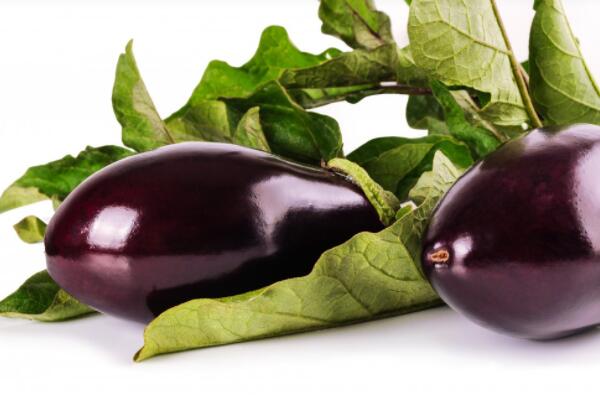
When is eggplant generally planted and harvested?
Planting:
The sowing period of eggplant is determined by the planting period and the seedling age of the nursery seedlings. The suitable sowing period is calculated backwards from the artificially determined planting period minus the seedling age of the seedlings. It should be determined according to specific conditions such as the production plan, local climatic conditions, seedbed equipment, seedling-raising techniques and variety characteristics. For example: for open-field eggplant cultivation in early spring, in Northeast China, planting takes place after May 10, requiring a seedling age of 80-90 days, so the seedling-raising time should be in mid-February. Seedling-raising techniques and facility conditions should also be taken into account. For example, only when large seedlings are raised in plastic nutrient pots or nutrient soil blocks can the sowing period be advanced. Otherwise, a smaller nutrient area will cause the seedlings to grow leggy or suffer excessive root damage during transplanting and slow recovery, affecting early yield. When electric heating hotbeds are used for seedling raising, the seedlings grow quickly, and when the seedlings are uniform in size, the seedling age required is shorter than that for ordinary hotbed seedling raising. Therefore, the sowing period can be appropriately delayed. In short, the determination of the sowing period must be comprehensively considered to ensure timely planting.
Harvest:
1. The harvest season for eggplant is in summer, from June to July, but now with greenhouses, eggplant can be eaten all year round.
2. Eggplant is not tolerant of waterlogging. After eggplant is planted in summer, it soon enters the high-temperature rainy season. Sandy loam soil with higher terrain should be chosen for cultivation. The planting period for eggplant is generally from early June to early July after the wheat harvest.
3. In order to bring it to market earlier and improve economic benefits, harvesting must be done at the right time and early, and the fruit should not be left to become overripe before harvesting, so as to avoid reducing the eating quality of the fruit and affecting the fruit setting and growth of later fruits as well as the growth of the plant. The suitable harvest time for eggplant is before the "eggplant eye" closes, that is, where the calyx connects to the fruit, when the white part of the skin is very small, indicating that the fruit is growing slowly and has entered the seed development stage. Harvesting at this time is appropriate; too early affects yield, and too late affects quality. In early spring cultivation for early maturity, the harvest of the first eggplant and the second eggplant can be a little earlier than this period. The harvest time is best in the morning or evening. At noon, sunlight is strong, the eggplant skin color is dark, the temperature is high, and it easily wilts and does not keep well, so it is not suitable for harvesting.
What medication should be used for eggplant flowering, fruit setting and pest infestation?
Flowering: For flower spotting of greenhouse eggplant, the commonly used flower-spotting agents include 4-CPA, zuoguoling, 2,4-D, etc. The flower spotting time should be when the eggplant flower is about to open from the bud stage to just opening; the effect of treating flowers that have not fully grown and flowers that have fully opened is not ideal. A color should be added to the flower-spotting agent as a marker, and an appropriate amount of procymidone should be added to prevent gray mold. Flower spotting should be done before 10 a.m. and after 2 p.m.
Fruit setting: Potassium fertilizer can be applied; potassium fertilizer makes the fruit, roots and stems expand and become thick and strong, colors the fruit skin, and makes fruit setting easy.
Pest infestation: 1. Tobacco cutworm (black-headed worm) ① remove eggs and larval clusters; ② you can choose 4.5% arruibao emulsifiable concentrate 1500 times solution; 2.5% mengweiling 1500-2000 times solution; 1.8% abamectin 1500 times solution.
2. For thrips, you can choose 5% jiyadi 800-1200 times solution; 25% imidacloprid 3000 times solution + haoniandong 600 times solution; 40% qixingbao 800 times solution; 70% aimeile 6000-10000 times solution, used in rotation for spray control.
3. For red spider mite, you can choose 20% dicofol 800-1000 times solution; 2.5% tianwangxing 1500-2000 times solution; 35% qingman 3000-5000 times solution for spray control.
4. For broad mite, you can choose 73% propargite 2000-3000 times solution; 20% manke 1000-1500 times solution; 40% manaomei 1500-3000 times solution; 34% jinpian sumaNcuo 1500-3000 times solution for spray control.
In addition, the control of the four common major diseases:
1. Young leaf yellowing disease
Eggplant young leaves appear yellow-white, with green remaining at the leaf tips, and rust-colored streaks appear on the middle and lower leaves. Excessive fertilizer, high humidity, acidic soil, or excess manganese nutrition inhibiting iron absorption can easily lead to yellowing of new leaves. Spray ferrous sulfate 500 times solution on the leaf surface; apply magnesium hydroxide and lime to the field to adjust soil pH; supplement potassium to balance nutrition and satisfy or promote iron supply.
2. Flower bud non-opening disease
Eggplant ovary does not expand, and the flower buds remain tight and do not open, affecting pollination and fertilization and resulting in stiff fruit. In cold seasons, when the field lacks water, the air is humid, and the soil pH is above 7.5, the availability of boron in the soil decreases; excessive lime calcium in the field induces boron deficiency in the plants, both of which can cause flower buds not to open for a long time. Spray borax 700 times solution or amino acid polypeptide pollination agent on the leaf surface.
3. Fruit stiffening and cracking disease
Eggplant fruit becomes stiff and does not expand, the spongy tissue is dense, the skin color is lusterless, and there are pale stripes; after watering it becomes cracked fruit, does not grow large, and has poor quality. After the eggplant skin becomes suberized, watering on a sunny day will cause fruit cracking. During periods of low temperature and weak light and high temperature and strong light, the fruit is in the expansion stage, and the absorption of nitrogen, potassium and boron increases, while the demand for phosphorus is relatively small. If the phosphorus input is too large, it affects the absorption of potassium and boron, making the fruit have many seeds and little flesh and become stiff. Phosphate fertilizer is mainly applied under the seedling roots at planting; later, apply 2-3 kg of pure phosphorus per mu each time, and during the fruiting period mainly apply potassium fertilizer.
4. Leaf drop and fruit drop disease
During low-temperature periods, the lower leaves turn yellow and fall off, and during high-humidity periods, young fruits soften and fall off on their own. When the temperature is too low, and nitrogen and phosphorus fertilizers are applied excessively, making the soil concentration high, the plants will age due to long-term nutritional imbalance, which is the aftereffect of reduced gibberellin synthesis in plants caused by zinc deficiency. The connection between the petiole and the stem and between the fruit stalk and the fruit forms an abscission layer and falls off due to lack of auxin. For aged seedlings, spray zinc sulfate 700 times solution on the leaf surface, or apply 1 kg of zinc sulfate per mu, or spray nutrients containing more zinc such as lvlang on the leaf surface to prevent drop and promote growth.