Is the world's smallest bamboo, Pleioblastus fortunei, a tree? Value and cultivation
Pleioblastus fortunei is one of the smallest bamboos in the world. Pleioblastus fortunei has little value for timber and shoots, but it has high ornamental value and forage value. So, is the world's smallest bamboo, Pleioblastus fortunei, a tree? What are its main values? How is it cultivated?
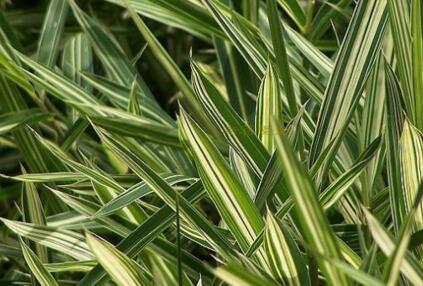
I. Is the world's smallest bamboo, Pleioblastus fortunei, a tree?
Bamboo is a perennial evergreen monocotyledonous plant of the grass family Poaceae, subfamily Bambusoideae (some taxonomists also classify bamboo plants as a separate family, Bambusaceae). There are tree, shrub, and vine forms, as well as a very few with small culms and soft texture that appear herbaceous. The cultivated bamboo species with economic value are all tree-like. The growth and development of bamboo differ from ordinary trees and shrubs: their culms have a short lifespan, their flowering cycle is long, and species dispersal and reproductive renewal are mainly achieved through vegetative division.
II. What are its main values?
1. Ornamental value
Pleioblastus fortunei is low-growing with elegant leaves, and is often planted in gardens for viewing; it is suitable as ground cover, a hedge, or paired with ornamental rocks; it is also a good material for mixed planting in pots or bonsai. It is dignified and elegant, and is also a rare and precious variety among ornamental bamboos.
2. Forage value
Pleioblastus fortunei has good climatic adaptability in the Xu-Huai region of Jiangsu, and has the advantages of high yield and good quality. It can be promoted and used on a large scale in this region as green fodder maize, serving as an excellent succulent green feed for raising cattle, sheep, pigs, rabbits, fish, and so on.
The leaf moisture content of Pleioblastus fortunei is 57.71%, crude protein is 13.14%, crude fat is 6.24%, crude fiber is 39.02%, crude ash is 14.42%, and available sugar is 5.29%; the leaves of Pleioblastus fortunei contain 18 protein amino acids and 1 non-protein amino acid, C-aminobutyric acid, among which all 8 essential amino acids for animals can be detected, and their content is relatively rich. From the perspective of nutritional composition, the best mowing time for Pleioblastus fortunei is from August to October.
III. How is it cultivated?
The cultivation technique for Pleioblastus fortunei mainly uses the method of dividing mother plants. In February to March, transplant whole clumps of mother plants together with their underground rhizomes and soil. The mother plants have shallow roots, and sometimes it is difficult to keep the soil intact, so they should be dug and planted immediately. Transplanting during the growing season must be done with soil, otherwise survival is difficult. After planting, water thoroughly and move to a shaded, humid place for care for a period of time.
Pleioblastus fortunei is best grown in fertile garden soil or leaf mold with a small amount of sand as the substrate. It is usually planted in rectangular or oval shallow pots. The drainage hole at the bottom should be covered with a layer of window screen, with a layer of coarse sand on top as a drainage layer. When planting, deliberately set the plants at well-spaced intervals, and according to the rise and fall of the soil surface in the pot, create a miniature of a natural landscape.
[Care points]
Because Pleioblastus fortunei is small in size and its root system is shallowly distributed, daily care requires careful management and meticulous handling.
From June to September, avoid direct sunlight, and give it about 3 hours of light each day or place it in bright, indirect light. Otherwise, strong light will cause the surface soil to dry out too quickly, and the temperature will be too high, leading to scorched leaves and, in severe cases, even death. However, long-term shading is also unfavorable for its growth and development.
Do not water too much; keep it often moist but not too wet. Around the time of shoot emergence in April to May, water should be more plentiful, and cake fertilizer water should be applied 1-2 times to promote robust development of new plants; fertilization is not suitable during the hot summer climate, and after the autumn cools, apply fertilizer 2 more times. After winter begins, when the temperature drops to 3-5°C, the whole pot should be moved indoors, and it can overwinter safely as long as the room temperature is not lower than minus 3°C. At this stage, appropriate light is needed, which is more conducive to its safe overwintering.
After 3 years of pot cultivation, overly dense old culms should be cut away to facilitate renewal.
[Pest and disease control]
Pleioblastus fortunei has very few pests and diseases, and its management is simple and extensive.