Is Hornwort Harmful, and How to Fix and Plant It in an Aquarium, and When to Plant
Hornwort, also known as fine grass, fish grass, soft grass and pinewort, is a perennial herbaceous submerged aquatic plant that was once commonly seen in ponds, ditches and other places. Its flowering period is from June to July, and its fruiting period is from August to October. So is hornwort a harmful plant? How do you fix it in an aquarium? When do you plant it? How do you plant it? According to data from the Ceratophyllaceae, hornwort contains plastocyanin and ferredoxin, the former being a copper-containing protein and the latter an iron-containing protein. Its nature and flavor are sweet, bland and cool. It has relatively high medicinal value. The whole plant is used as medicine; it can be collected in all four seasons, dried in the sun, and used to cool the blood and stop bleeding and to clear heat and promote diuresis. It mainly treats blood-heat vomiting of blood, coughing of blood, and painful strangury with heat. Hornwort can also be used as feed for pigs, fish and poultry; and for landscaping artificial aquarium tanks.
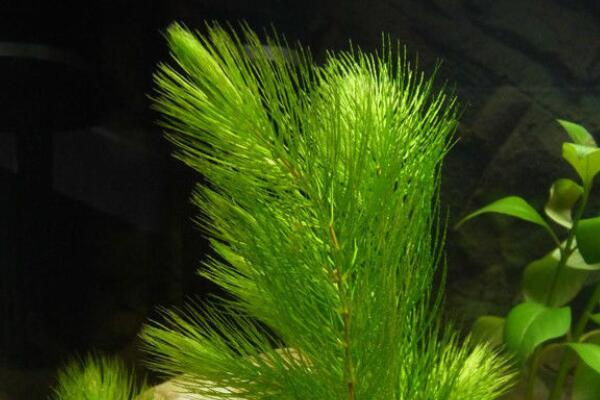
How do you fix hornwort in an aquarium?
1. Aquarium landscaping developed on the basis of tropical fish keeping and aquatic plant cultivation.
2. In the early days of keeping tropical fish, people only kept some ornamental fish in aquariums. As ornamental requirements increased, some aquatic plants were placed in aquariums as decoration. With the increasing maturity of lighting equipment and thermostatic equipment, aquatic plants moved from a supporting role to a leading role, and the cultivation of aquatic plants developed as a specialized technique.
3. The increase in aquatic plant varieties also laid the foundation for arranging aquatic plants in aquariums. Through carefully designed layouts of aquatic plants of different varieties, different colors and different shapes, plus stones and driftwood and so on, people create a natural world of their own.
When do you plant hornwort? How do you plant it?
1. Nursery site selection
Although hornwort can grow on land lacking nutrients, the yield will not be very high. The quality of the soil directly determines how much hornwort is produced. If the soil is very good and the growing environment is very good, then management by workers will be much simpler, and the yield will increase accordingly. Hornwort is not strict about soil, and sandy soil, yellow soil, clay and soil with a lot of sand are all fine. Hornwort is resistant to cold and drought and is not afraid of water. The land chosen for planting is limited to flat terrain, and the land must drain smoothly. In summer, rainfall gradually increases, and accumulated water must be able to drain away immediately; otherwise, large-scale seedling death may occur. The key point of the terrain is that it is conducive to draining accumulated water; the soil only needs to be about right, and there must be sufficient sunlight.
2. Land preparation
Plowing: Hornwort is very sensitive to nutrients. Only with sufficient soil nutrients can it grow glossy green and vigorous, with strong plants. But the soil in some fields is on terrain with only about average nutrients, so if you want high yields of hornwort, you need to apply sufficient farmyard manure before planting. Spread 5,000-7,000 kg of cow dung and pig manure per mu. After applying the fertilizer, plow deeply once and rake level once, so that the soil and fertilizer are fully and evenly mixed together, with no large clods of soil, making planting easier and increasing seedling emergence.
Making beds: To facilitate necessary maintenance measures for hornwort throughout the entire growing period, such as irrigation, weeding and fertilizer application, Changjing Landscape suggests making the land into beds of a fixed standard width of 1.6 m and a length of 12-22 m, depending on the actual plot.
3. Sowing
Hornwort seeds are average in size and have relatively good ability to push through the soil. Before planting, some pre-germination treatment can be done appropriately. Some of the procedures are, frankly speaking, very simple: soak them in warm water for 1 day, then take them out and dry them, and they are ready for planting. The planting depth should be moderate or shallow, and the soil covering depth should be no more than 5 cm. Basically, row sowing is mostly used. Choose a breezy environment, mix the hornwort seeds into moist sand, and evenly scatter them on the soil. After planting, you can cover the soil by raking by hand or by machine. After covering the soil, irrigate once, and seedling emergence can generally be increased in about 5-9 days.
4. Seedling-stage management
There is relatively little to do in the seedling-stage management of hornwort. It has few pests and diseases and grows well. At most, the work is only irrigation, weeding and preventing pests and diseases. During the peak growth period of hornwort, large amounts of water and fertilizer are needed. During this period, 40 kg of compound fertilizer can be applied per mu. During the peak growth period of hornwort, sufficient water is also needed. At this time, the number and timing of waterings should be decided according to rainfall conditions.
In addition, under normal circumstances, from planting hornwort to the first harvest is generally 50 days. During harvesting, note that you need to lift the stick and shake it, turn it in the water 4-5 turns, then hold the stick horizontally and lift it upward with both hands. The second harvest should be 30 days later, and the third harvest only needs an interval of a few days.