Price per jin of Vietnam's national flower lotus seeds, planting and blooming time, and pot cultivation methods
Lotus, also known as lianhua, water hibiscus, lotus root flower, fuqu, water ganoderma, water bloom, zezhi, and Chinese lotus, has many varieties and is divided into two major categories, ornamental and edible, and is widely cultivated. So how much does a jin of lotus seeds cost? When to plant and when does it bloom? How to plant it? How to care for it in pots? According to Mr. Wu from the Jiujiang Seed Company, the price of lotus seeds is about 20 to 30 yuan per jin, but prices vary greatly depending on seed quality, variety, place of origin, and market. The sowing rate per mu is 5 to 7 jin.
When are lotus planted and when do they bloom?
Planting:
For outdoor planting, the best sowing season is after the Spring Equinox. Depending on the weather conditions in different provinces, the timing varies. It is best to sow when the temperature is around 15 degrees. When temperature, moisture, and other conditions are suitable, the seeds normally sprout in one week.
Blooming:
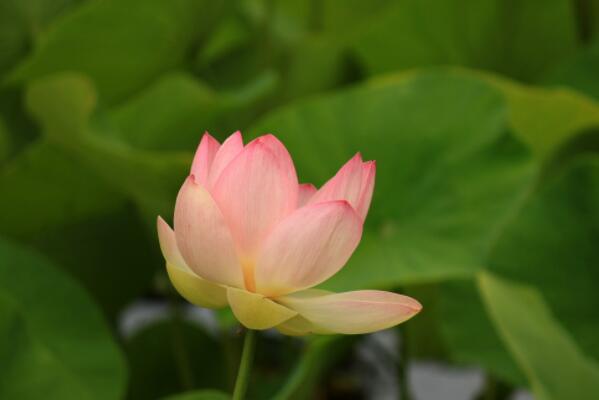
1. The lotus flowering period is generally from June to September, opening in the morning and closing in the evening each day. Lotus flowers are borne singly at the top of the pedicel, with numerous petals embedded in the cavities of the receptacle, in colors such as red, pink, white, and purple, or with variegated patterns and edging. The nut is oval, and the seed is ovate. The fruit ripening period is from September to October.
2. The lotus flowering process is divided into 3 stages: beginning bloom, full bloom, and final bloom; during the flowering period, it is strongly affected by temperature. Due to different regions and temperature differences, low-latitude and low-altitude areas bloom earlier than or longer than high-latitude and high-altitude areas.
3. The best time to view lotus is from 6 a.m. to 8 a.m., when lotus are at their most vigorous. Generally, to ensure reproduction and successful pollination, lotus flowers open for two days. On the first day, the flower opens in the morning, and near noon the petals all close up and it becomes a bud again. On the second morning, the previously closed flower center continues to open, and near noon the petals of these flowers fall off, while the pollinated seedpod remains on the stem and continues to mature slowly.
How are lotus seeds planted?
Selection of nursery site
Lotus is widely distributed across the world and throughout China in areas from 100 to 3100 meters above sea level, including in deep mountain pools and swamps in the Qinling Mountains and Shennongjia. In some remote areas of China, there are even primitive and ancient wild lotus (lianhua), but most are currently cultivated artificially. Lotus likes calm, slow-flowing waters, swamps, ponds, and other places with water. What water depth is suitable for planting lotus depends on the variety; some varieties are deep-water types and some are shallow-water types, but overall none exceed 1.8 meters in depth, and most can only grow in water depths within 1.2 meters. Lotus does not have great requirements for water quality and also has the function of improving water quality.
Land preparation
1. Deep plowing: Lotus is generally not sown directly into water, but is planted on the bank after seedling raising, or planted into the lotus pond during the dry season. There is also direct planting on the bank, but the sprouting rate is relatively low. The best method is artificial seedling raising followed by planting.
2. Making beds: No beds are made.
Sowing
Lotus seeds have hard shells, and the natural sprouting rate is low, so they need to be cracked open manually or promoted to split naturally. Manual shell cracking is time-consuming and laborious, but the effect is the best. The method is to crack the shell open with scissors or a hammer. The second method is soaking in water: put the seeds in water and soak for 1 day, then take them out and dry them in the sun for one day, then put them back in water to soak at night, and take them out again during the day to dry in the sun. After 5 consecutive days, place them in a ventilated and cool place and sprinkle water every morning and evening to keep them moist. After keeping this up for 5 days, most seeds will crack, and the embryos will begin to develop; at this point, plant them in paddy fields.
Seedling stage management
Management of lotus seedlings is simple. Regularly put cow dung, pig manure, and the like into the water to keep the water in a fertile state, but be careful to use an appropriate amount and do not be greedy for too much. Fish, shrimp, and other aquatic products can also be raised in the water, but sufficient feed must be provided, otherwise fish, shrimp, and the like will gnaw on lotus stems, leaves, roots, and tubers.
How to care for potted lotus?
1. Pot-grown lotus is usually propagated by dividing and planting rhizomes. Around Qingming, select strong underground stems newly grown from the previous year for planting. Generally, a 3-node rhizome section is taken as one planting rhizome, and the terminal bud, middle bud, and tail bud must be kept intact. The planting container is usually a lotus jar with a mouth diameter of 35-50 cm and a depth of 65-80 cm. Use fertile pond silt as the soil. If it is dry before use, first crush it, remove stones and impurities, knead it into a paste, and put it into the bottom of the jar to a thickness of 25 cm.
2. At the same time, add base fertilizer (such as bean cake, bone meal, chicken feathers, chicken and duck manure, and chopped tender green grass, etc.), then cover it with a thin layer of soil. Then plant the planting rhizome in the pot near the edge, with the head low and the tail high, and the buds between each node should all face upward. Generally, plant one rhizome per pot. If the pot or planting rhizome is small, two rhizomes of the same variety and similar size can be planted. Do not mix different varieties, because different growth vigor will cause the ornamental effect to fail. Cover the rhizome head with soil about 6 cm thick, and cover the tail with soil only enough to leave it slightly exposed. This is what is commonly said. Because the rhizome head, by its growth habit, first extends straight upward for several centimeters before beginning to extend horizontally in the shallow layer of the pot soil.
3. After planting the rhizome, place it in a sunny place such as a balcony and let it be exposed to strong sun. Temporarily shelter it during heavy rain, or cover it with plastic film. When the soil dries and cracks, add clear water, with the water depth allowed to exceed the soil surface by about 5 cm, so that the jar mud dries and forms blocks and can stabilize the planting rhizome. After a second exposure to the sun, when the water has been absorbed until the mud is soft but not sticky, water can be added formally, keeping the water depth at 6 cm. After mid-May, when small leaves appear above the water surface, apply topdressing once (dead fish, rotten shrimp, etc. can be placed under the mud on both sides of the rhizome nodes), and add water to a depth of 10-15 cm. After the standing leaves emerge, apply topdressing another 1-2 times to promote leaf growth and flower bud growth. As the temperature rises, when two or three standing leaves have grown, the floating leaves usually have already tightly covered the pot surface. At this time, press the old and residual floating leaves into the mud to keep the pot surface properly ventilated and exposed to light.
4. If the leaf color is pale and thin, apply 0.1% urea and 0.05% monopotassium phosphate to the water as topdressing, or about 10 cake fertilizer blocks the size of a fingertip, inserted separately into the pot mud. If the leaves are thick and slightly blue-glowing on the surface, it indicates that the fertilizer is moderate. If the leaves are uneven and bumpy, it indicates that the fertilizer amount is too large. After entering August, topdressing can be stopped.
5. Pot-grown lotus can also be propagated by sowing. Lotus seeds mature from July to August and can be sown immediately after harvest, but usually they are sown in April of the following year when the climate turns warm. The lotus shell is hard. Before sowing, grind and break the slightly porous end of the thick end of the lotus seed, but do not damage the lotus kernel. Then soak it in 25-30°C water, with a water depth of about 8 cm. Change the water once a day, and it will germinate in 7-10 days. After two or three leaves have spread out, it can be planted in a pot.