Cauliflower Planting and Harvest Time, Growth Cycle, Differences from Broccoli, and Storage
Cauliflower, also known as flowering cabbage, cauliflower head, or broccoli flower, cabbage flower, foreign cauliflower, and ball cabbage, is a very popular vegetable. So when is cauliflower planted and harvested? How long is its growth cycle? What is the difference from broccoli? What are the storage and freshness-preservation methods? According to grower Wu Xiangsheng, extra-early-maturing varieties have a growing period of 30-40 days; early-maturing varieties generally 50-60 days; mid-maturing varieties 70-90 days; and late-maturing varieties require more than 90 days.
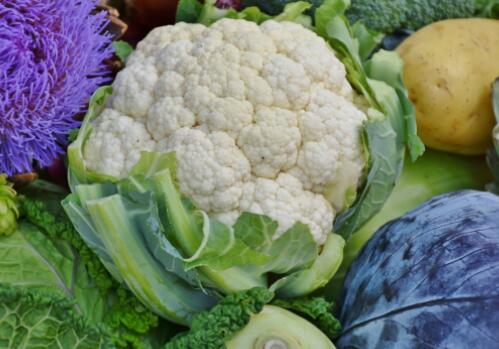
When is cauliflower planted and harvested?
Planting:
The normal season for sowing cauliflower is to begin sowing in autumn, grow through winter, and normally come to market and reach the table after Spring Festival. It begins to flower in spring, and the seeds mature in April or May. For summer-autumn seedling raising: raise seedlings during the high-temperature season within August-October. At this time the temperature is generally above 25°C, sometimes with high temperatures of 30-35°C, and there are also heavy rain and hail hazards, so shade nets are used for open-field seedling raising. The seedling age is generally 35-40 days. Sowing or direct hole planting can be used. The average seedling stage is about 30 days, and from transplanting to harvest is 80-90 days. It has somewhat stronger winter habit; when the seedling stem is 10mm thick it can be affected by low temperature and complete the vernalization process.
Harvest:
The climate differences between northern and southern China are huge, and the varieties planted in different places also differ noticeably. Cauliflower variety types are divided by maturity into extra-early-maturing, early-maturing, mid-maturing, and late-maturing varieties, and they are generally all harvested in autumn and winter.
What is the difference between cauliflower and broccoli?
Broccoli and cauliflower are not the same vegetable. In fact, broccoli and cauliflower both belong to the cruciferous cabbage family, but one is white and one is green; they are a pair of “sister flowers” in the cabbage family. So cauliflower is not broccoli; there are still subtle differences between the two.
1. Cauliflower, also known as flowering cabbage or cauliflower head, is a cruciferous vegetable and a variety of cabbage. The head of cauliflower is a white inflorescence, similar to broccoli. Cauliflower originated along the Mediterranean coast, and its product organ is a curd formed by the aggregation of pure white, shortened, plump and tender flower buds, flower branches, and flower stalks. It is a vegetable with low crude fiber content, fresh and tender quality, rich nutrition, and delicious flavor that people enjoy eating.
2. Broccoli's morphological characteristics and growth habits are basically similar to ordinary cauliflower. It belongs to Brassica oleracea of the genus Brassica in the cruciferous family, and is a 1-2 year herbaceous plant. The plant is tall; depending on the variety, after about 20 leaves grow, the flower stem emerges, with flower buds clustered at the top. They are tightly clustered into a curd shape, hemispherical in form, and the flower buds are blue-green, hence the common name green cauliflower. Broccoli's leaves are blue-green and alternate, gradually turning dark blue-green, with a thickened waxy layer and narrow, long petioles. Its leaf shapes include broad-leaf and long-leaf types. The rootstock is thick with a thin epidermis, the central pith cavity has high water content and is fresh and tender, and the root system is well developed.
Appendix: Cauliflower storage and freshness-preservation methods
Different cauliflower varieties have different storage tolerance. Only by choosing storage-tolerant varieties can storage and freshness preservation be achieved and considerable economic benefits obtained. At present, storage-tolerant varieties are mainly mid- and late-maturing varieties, while early-maturing varieties are not suitable for storage. The sowing period should be arranged according to the length of the variety's growth period and the local suitable storage period. Generally, sowing and transplanting should be appropriately later than for fresh-eating cauliflower, so that the harvest period falls before the ground freezes. Harvesting too early means high temperatures and difficult storage; harvesting too late easily leads to freezing damage and low yield. In cultivation management, do not irrigate heavily; the furrow irrigation method should be used. Reduce watering or stop watering 7-10 days before harvest. During the mid and late stages of curd growth, cover the curd with outer leaves to protect it from sun exposure and freezing damage. On the basis of applying an appropriate amount of nitrogen fertilizer, increase the application of phosphorus and potassium fertilizers.
1. The curd standard suitable for cauliflower storage is: a medium curd with a diameter of about 15 cm and a weight of 0.5-0.8 kg. The curd is dense, pure white, free of pests, free of viruses, free of damage, and free of pollution.
2. At harvest, if about 2 months of short-term storage is intended, 4-6 small leaves can be left to protect the curd, which also helps preserve vitamin C. If the storage period exceeds 2 months, curds without leaves should be stored, because in the later storage period the leaves easily rot, giving the curd a moldy smell, affecting the curd's flavor and thus causing it to lose edible value. At harvest, damage to the curd should be avoided, because damaged curds turn yellow and dark during storage, develop brown spots, and rot.
3. The temperature suitable for cauliflower storage is 0-1°C. If the temperature is too high, especially above 10°C, it easily causes the curd to discolor, bolt, lose water and shrink, and rot, losing storage value; below 0°C, freezing damage easily occurs, the curd becomes locally transparent, and after warming up brown spots appear, affecting the curd's flavor and storage. The relative humidity suitable for cauliflower storage is 90%-95%. If the humidity is too low, the curd easily dehydrates, shrinks, and becomes limp, and the flower branches become loose, losing commercial value and edible value.