Small Tree Hazelnut Seedling Prices, Flowering and Fruiting Times, and Planting Methods
The hazelnut tree, also known as the hazelnut, is one of the world's four major dried nuts (walnut, almond, hazelnut, cashew). It is a shrub or small tree of the genus Corylus in the birch family. So how much does a hazelnut seedling cost approximately? When does it bloom? How many years until it bears fruit after planting? How do you plant it? According to information from a Jiangsu nursery base, hazelnut seedlings cost 5-8 yuan, with prices varying by height.
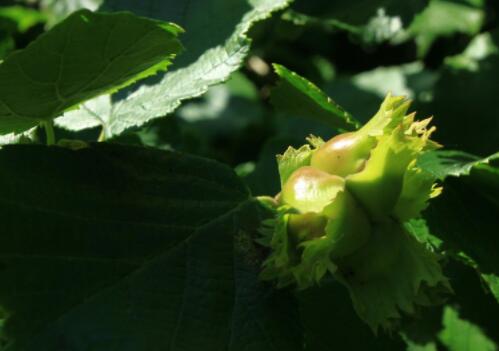
When does the hazelnut tree bloom?
The hazelnut tree generally blooms and bears fruit on one- to two-year-old shoots sprouting from the base; older branches generally do not bloom. The flower color is medicine red.
How many years until the hazelnut tree bears fruit after planting?
The hazelnut tree generally bears fruit in 3—5 years. It grows in thickets on shady mountain slopes at an altitude of 200-1000 m, has strong cold resistance, and prefers a humid climate. The hazelnut tree is distributed in China (Heilongjiang, Jilin, Liaoning, Hebei, Shanxi, Shaanxi, etc., and cultivated in Jiangsu), Italy, Spain, the United States, Korea, Japan, eastern Siberia and the Far East of Russia, and eastern Mongolia.
How do you plant a hazelnut tree?
1. Establishing a hazelnut orchard
The hazelnut's flowers are monoecious with unisexual flowers, that is, unisexual flowers, blooming before the leaves. The male flowers are catkins, borne in the leaf axils of the middle and upper parts of new shoots; the female flowers are capitula, borne on the middle and upper parts of one-year-old branches or at the top of short branch clusters, and are pollinated by wind. Therefore, when establishing a hazelnut orchard, varieties with the same or similar flowering periods should be arranged as pollinizer trees; generally, 3 varieties per orchard is suitable, at a ratio of 5-6:1.
2. Temperature
Different types of hazel have different temperature requirements. The European hazel prefers a warm and humid climate. It is suitable for areas with an average temperature of 13-15°C, an absolute minimum of -10°C, and an extreme high temperature of 38°C. The Pingou hybrid is more cold-resistant than the European hazel and is suitable for cultivation in areas with an average annual temperature of 7.5-13°C and a minimum temperature that can reach -30°C.
3. Light
The hazelnut is a light-loving plant and generally requires annual sunshine hours of more than 2100 hours; otherwise, flower bud formation is low and yield is low.
4. Soil
The hazelnut tree prefers to grow in fertile, well-aerated sandy loam soil, and the Pingou hybrid in particular has high soil requirements. Dry sandy soil, heavy clay soil, swamps, saline land, and low-lying land are all unsuitable for establishing a hazelnut orchard. The Pingou hybrid requires a soil pH of 6.5-7.5, while the European hazel requires 5.5-7.
5. Propagation
Hazelnut branches root easily, and adventitious buds easily sprout root suckers. Therefore, layering or grafting is usually used to propagate and cultivate seedlings. For layering in early spring, use vigorous one-year-old sprouting shoots; for layering in June, use current-year young shoots as material. For grafting propagation, Ping hazel seedlings are mostly used as rootstock.
6. Measures to increase yield
Hazelnuts are prone to flower and fruit drop, and the rates of empty nuts and shriveled kernels are relatively high. The main measures to prevent this:
① When propagating and growing seedlings, select superior mother trees.
② When establishing the orchard, arrange pollinizer trees properly and supplement with artificial pollination.
③ Strengthen management to ensure adequate nutrition.