Is the Parlor Palm Poisonous? Blooming Period, Symbolism, and Care Tips to Encourage Flowering
The Parlor Palm, also known as the Belmore Sentry Palm, Dwarf Palm, Dwarf Coconut, Parlor Palm, and Miniature Palm, is an evergreen small shrub native to Mexico and Guatemala. Because its appearance closely resembles a coconut tree, it is called the Parlor Palm, and many people like to place it indoors to enhance the decorative effect. So, is the Parlor Palm poisonous? Does it bloom? When does it bloom? What does it symbolize? How should you care for it so that it blooms?
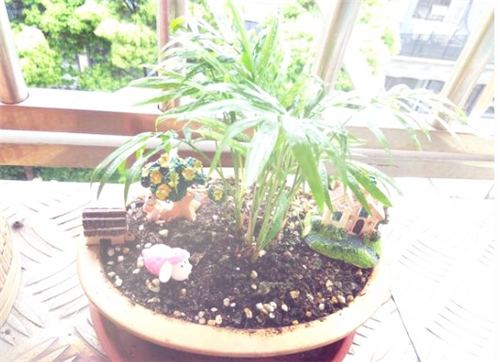
Is it poisonous?
The Parlor Palm itself is cultivated as an indoor plant, so it is absolutely safe and non-toxic. It is not poisonous itself and does not produce toxic substances, so everyone can rest assured and plant it indoors.
Blooming time:
The Parlor Palm generally blooms from February to March, but it is relatively difficult for the Parlor Palm to bloom, and whether it blooms or not is affected by climate and environment. Under ordinary potted conditions, it basically will not bloom, but with careful care and sufficient nutrients, allowing the Parlor Palm to accumulate a certain amount of nutrition, it will grow flower buds and bloom, though the blooming process is very slow.
Symbolism of blooming:
The Parlor Palm symbolizes vitality and eternal happiness. Its blooming is very rarely seen, and ordinary cultivation environments cannot meet the requirements for blooming, so when the Parlor Palm blooms, it represents prosperity and honor, the arrival of a benefactor, and foretells that good things are about to happen.
Cultivation tips:
1. Potting soil: For potted Parlor Palms, a substrate made from leaf mold and peat soil plus 1/4 river sand and a small amount of base fertilizer can generally be used. It is best to plant it in loam soil that drains well and is loose and fertile.
2. Watering: The principle for watering is to keep it moist rather than dry, and the potting soil should simply remain moist at all times. When the air is dry in summer and autumn, spray water on the plant frequently to increase the ambient air humidity, which is beneficial to its growth and can also keep the leaves dark green and glossy. In winter, appropriately reduce the amount of watering to help it overwinter.
3. Fertilizing: The Parlor Palm does not have high fertilizer requirements. Generally, apply liquid fertilizer 1 to 2 times per month during the growing season, and apply a little fertilizer or no fertilizer in late autumn and winter. Repot once every 2 to 3 years in spring.
4. Temperature: The suitable growth temperature is 15 to 30°C, of which May to September is 19 to 30°C, and October to April of the following year is 13 to 16°C. In summer, it can tolerate high temperatures of 35°C. When the temperature exceeds 35°C, appropriate shading or measures such as spraying water and ventilation should be taken. In winter, the ambient temperature should be maintained at no lower than 5°C; otherwise, when the temperature is below 5°C for a long time, it is prone to freezing and leaf drop.
5. Location: The Parlor Palm is very tolerant of light, but the best location is in half shade with 50 to 60% sunlight.
6. Diseases: Under high temperature and high humidity, the Parlor Palm is prone to brown spot disease. If brown spot disease is found, promptly use 800 to 1000 times diluted Topsin or Baijunlingqing for control. When the air is dry and ventilation is poor, it is also prone to scale insects. If scale insects are found, they can be removed manually, and 800 to 1000 times diluted omethoate can also be sprayed for control.