How much is a jin of Phalaenopsis seeds? Detailed guide to planting methods and flowering time
Phalaenopsis, also known as moth orchid and Taiwan butterfly orchid, is one of the most common flowers in the Orchidaceae family and the city flower of Taitung City. Because its flowers resemble butterflies, it is deeply loved by flower enthusiasts. So how much is a jin of Phalaenopsis seeds? How do you plant them? When do they bloom?
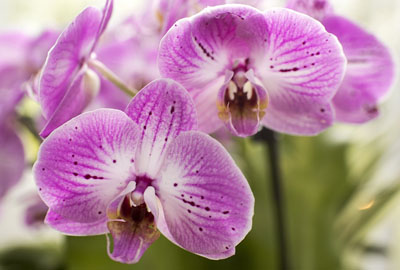
Seed price:
The price of Phalaenopsis seeds is about 90-120 yuan per jin, but prices vary greatly depending on seed quality, variety, market, and other factors.
Sowing techniques:
1. Natural sowing method: The natural sowing method is to sow the seeds released from already split seed pods into the pot of the parent plant. It is simple and easy, requires no complicated sterile procedures or operating tools, and is suitable for ordinary home Phalaenopsis growers, but the chance of success is very small.
2. Sterile sowing method
① Seed pod treatment: After washing the unopened mature fruit of Phalaenopsis, place it in 75-90% ethanol or chloroform for 2-3 seconds, then soak it in a 5-10% bleaching powder solution or 3% hydrogen peroxide for 5-20 minutes, and take out the seeds.
② Seed treatment: Soak the Phalaenopsis seeds in the same disinfectant solution for 5-20 minutes, then remove the solution by filtration, and use a fine needle to evenly spread the seeds on the surface of the prepared culture medium in a bottle.
③ Post-sowing management: The culture conditions are a light intensity of 2000-3000 lux, 10-18 hours per day, and a temperature maintained at 20-26°C. After 9-10 months, when the seedlings grow 2-3 leaves, they can be taken out of the bottle and planted in pots.
Flowering time:
The flowering period of Phalaenopsis is generally around the Spring Festival, roughly in February to March, and the ornamental period can last as long as 2 to 3 months. It blooms once or twice a year.
Additional potting techniques:
1. Temperature: Phalaenopsis likes a high-temperature and high-humidity environment. Attention should be paid to increasing the temperature in autumn and winter, at the turn of winter and spring, and when winter temperatures are low. When summer temperatures are relatively high, cooling and ventilation are needed. If the temperature is higher than 32°C, it will enter a semi-dormant state, so continuous high temperatures should be avoided. The full flowering period is around the Spring Festival. Proper cooling can extend the ornamental time. During flowering, the nighttime temperature is best controlled between 13-16°C, but must not be lower than 13°C.
2. Humidity: The suitable air humidity for Phalaenopsis growth is 60-80%. During the period of vigorous new root elongation, water more; during the dormant period after flowering, water less. In spring and autumn, water once around 5 p.m. every day. In summer, when the plant grows vigorously, water once each at 9 a.m. and 5 p.m. every day. In winter, with weak light and low temperatures, watering once every other week is enough, and it should preferably be done before 10 a.m. If a cold wave arrives, do not water; keep it dry, and resume watering after the cold wave passes.
3. Light: Although Phalaenopsis is relatively shade-loving, the plant still needs to receive some light, especially before and after the flowering period. Proper light can promote flowering and make the flowers more colorful and long-lasting. Generally, it should be placed in a spot indoors with scattered light, and not exposed to direct sunlight.
4. Ventilation: The normal growth of Phalaenopsis requires circulating fresh air, so home-grown Phalaenopsis must have good ventilation, especially during the high-humidity period in summer. Good ventilation must be used to prevent heat stress, and it can also avoid infection by pests and diseases.
5. Fertilization: Phalaenopsis should be fertilized all year round. Unless low temperatures persist for a long time, fertilization should not be stopped. Winter is the flower bud differentiation period for Phalaenopsis, and stopping fertilization can easily lead to no flowers or few flowers. Spring and summer are the growth periods, and a dilute liquid fertilizer can be applied once every 7-10 days. Organic fertilizer is preferable, and a special nutrient solution for Phalaenopsis can also be used, but do not apply it when there are flower buds, otherwise the buds are likely to drop early. Fertilize after watering in the afternoon. After several fertilizations, rinse the pot and plant with a large amount of water to prevent residual inorganic salts from harming the roots.
6. Diseases: Phalaenopsis is prone to soft rot and gray leaf spot. Soft rot is extremely contagious. Once found, immediately isolate the diseased plant. The diseased plant can be controlled with mancozeb or Shengshengling, usually sterilizing once every 15 days. The common cultivation media for Phalaenopsis are mainly sphagnum moss and moss, so the potting material should not be soil, but should use sphagnum moss, pumice, tree fern crumbs, charcoal fragments, etc.