Differences Between Perennial Basil and Schizonepeta, Their Benefits, and Container Planting and Fertilizing Methods
Basil is an aromatic plant used both as medicine and food, with a flavor resembling fennel. It is also known as nine-layer pagoda, jinbuhuan, St. Joseph's wort, sweet basil, and lanxiang, and it prefers a warm, humid climate. So what are the differences between basil and schizonepeta? What are their benefits and effects? How do you grow them in containers? How do you fertilize them? According to Lamiaceae records, basil has the functions of dispersing wind and moving qi, resolving dampness and promoting digestion, invigorating blood, and detoxifying. It is used to treat conditions such as externally contracted headache, food stagnation and qi blockage, stomach duct pain, diarrhea, irregular menstruation, traumatic injury, snake and insect bites, damp skin sores, and itching urticaria.
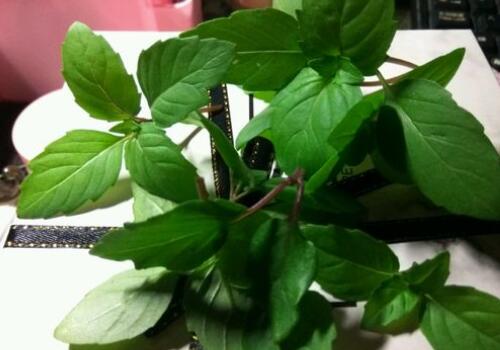
What are the differences between basil and schizonepeta?
1. Compared with each other, schizonepeta leaves are relatively small and narrow, while basil leaves are relatively broad and large. Schizonepeta leaves are relatively smooth, without obvious wrinkles, and are fairly flat, which also makes them appear more upright. By contrast, basil leaves have more obvious wrinkles and a very strong bumpy texture.
2. The schizonepeta plant has a very strong smell that is quite pungent, whereas basil's smell is relatively milder and not as pungent as schizonepeta's. Therefore, we can also distinguish basil from schizonepeta by smelling the two.
3. The petioles of mature basil are darker in color, tending toward purple, and basil petioles are very smooth, without fuzz. Schizonepeta petioles, like its leaves, are tender green, but schizonepeta petioles are covered with fine, soft fuzz. In addition, schizonepeta petioles also have some small white prickles. From this point, we can distinguish basil from schizonepeta very well.
4. The flowers of both basil and schizonepeta are relatively small, but basil flowers are purple and have a somewhat stronger scent, which attracts some small insects. Schizonepeta flowers, however, are white. The flower color alone can distinguish basil from schizonepeta.
How do you grow basil in containers?
1. Choose the variety you want to grow.
2. Sow indoors. Sow indoors 4-6 weeks before the last frost. Basil likes warmth and sun, so sowing indoors is safer and can prevent basil from being damaged by frost.
3. Prepare the sowing container and soil. Fill a square pot or individual containers with equal parts vermiculite, perlite, and peat moss. Press the soil lightly to remove air. Moisten the soil with water to prepare a suitable environment for seed germination.
4. Sow the seeds. Bury one to two seeds in each container, then gently cover with a layer of soil. Wrap the pot with plastic film to keep the soil moist. Place the pot under a sunny window, uncover the film twice a day, and sprinkle water into the soil to keep it moist.
5. Remove the plastic film after the seeds germinate. When you see the first tendril-like green seedlings emerging from the soil, it is time to remove the film. Water the young sprouts twice a day, and never let the soil dry out completely. When the plants grow to a few centimeters tall and the leaves gradually mature, you can move the basil into a larger container.
6. After basil grows 1-2 mature leaves, you can move the basil into the garden or a regular flowerpot. Basil is not frost-tolerant, so do not move it outdoors too early. It is best to move basil to a place with ample light and plant it in well-drained soil.
7. Keep the soil moist, but do not let it become soggy. Basil grows well only in well-drained soil and cannot stay soaked in water all the time. For mature basil, water once every morning to give the basil enough time to absorb and evaporate water and prevent the soil from drying out at night.
8. Pinch off the flower buds. When basil blooms, pinch off the flowers and the two leaves below them. Flowering causes hormonal changes in basil, reduces its aroma, and causes basil to produce fewer leaves. This flowering and seed-setting phenomenon mostly occurs under especially ample sunlight. If you do not pinch off the flower buds, you will find that basil leaves become increasingly slender and no longer as rich in aroma as before.
9. Watch out for pests and mold. Basil easily attracts Japanese beetles. The best way to deal with the pests is to pick out and remove the beetles by hand. If your basil tends to be attacked by mold, that proves it may not be getting enough sunlight or is growing too densely. Dig out the small basil plants to give the large basil enough space to grow.
How do you fertilize basil?
When basil is planted out, the field soil should be kept moist. During growth, carry out intertilling and weeding in a timely manner, and apply 15 kg of urea per 667 sq m as topdressing. When the plants are budding, remove the buds in a timely manner to reduce nutrient consumption. In the middle and late stages of harvesting, pinch the growing tips in a timely manner to promote more side branches. Root-zone topdressing can also be combined with pinching, using a 0.2% potassium dihydrogen phosphate or 0.2% urea solution, sprayed evenly on the leaf surfaces in the early morning or evening. At the same time, if conditions permit, irrigate once every 15 days to ensure full growth.