Olive Tree: Market Price, Maturity and Harvest Time, and Suitable Growing Regions
Olive, also known as huanglian, qingguo, shanlan, bailan, honglan, qingzi, jianguo, and zhongguo, is a common tree plant in southern China. It is widely cultivated because its fruit, pit, and tree all have high economic value, and among these, olive oil has the highest value. So how much is the market price of olives per jin? When do they mature and go on the market? Which regions are suitable for growing them? How are they grown?
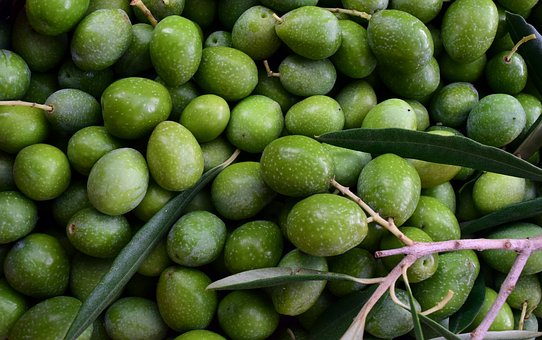
Market price:
In fact, the selling price of olive fruit on the national market varies to some degree. Some sell for about 3.5 yuan per jin, some can reach several tens of yuan, and higher prices can even reach over a hundred yuan. At present, a relatively reasonable wholesale price for olive fruit is about 4800 yuan per ton. If you need olive fruit in large quantities, buying wholesale may be a good way to save money.
Maturity and harvest time:
Olives need to be cultivated for 7 years before they bear fruit, and the maturity period is generally around October each year. New olive trees begin fruiting very little, producing only a few kg per tree, and only after 25 years does production increase significantly, with some trees reaching more than 500 kg. Each time an olive tree bears fruit, the following year generally sees a reduction in yield, with a rest period of one to two years. Therefore, olive production has on-years and off-years.
Suitable planting regions:
Olive is native to southern China. In China, it is cultivated in Fujian, Taiwan, China, Guangdong, Guangxi, Yunnan, and other areas. It is distributed from northern to central Vietnam, and is cultivated in Japan (Nagasaki, Okinawa) and the Malay Peninsula. In China, it is most widely distributed in Fujian Province, with some distribution also in parts of Sichuan, Zhejiang, and Taiwan, China. Countries that cultivate olives besides China include Vietnam, Laos, Cambodia, Thailand, Myanmar, India, and Malaysia.
Cultivation techniques:
1. Site selection: Olive is characterized by a preference for warmth and strong drought resistance. Areas with an average annual temperature of 18-20°C and annual rainfall of 1200-1600 mm are all suitable for olive growth. The best orchard sites are those with deep, loose soil and soil rich in organic matter or sandy loam. The orientation should not have strong western sun exposure, cold air, or enclosed mountain hollows prone to frost. Based on the actual conditions of the site, choose hillside or terraced land with convenient transportation, abundant and pollution-free water sources, and relatively flat terrain for planting.
2. Planting method: Choose a season with ample rain for olive planting. When taking seedlings, minimize root damage and promptly remove 2/3 to 3/4 of the leaves. For bare-root young saplings, if conditions permit, seal and wrap the trunk with degradable film to reduce water evaporation. The planting hole should be dug deep, and when planting, it should also be planted deep or earthed up high. After confirming survival, appropriately open up part of the mounded soil. In orchards with abundant water sources, add water into the hole and mix it into mud, or better, put in rice paddy mud, place the roots in the mud for planting, and then cover with soil. Do not apply inorganic fertilizer or incompletely decomposed organic fertilizer at planting time, to prevent root damage that affects survival.
3. Care measures: Insert bamboo poles to prevent livestock damage and take shading measures. The tree disk can be covered with plastic film or straw and other measures to maintain humidity so the trees can successfully get through summer.
4. Shaping and pruning: Olive trees have strong growth vigor and are prone to excessive vegetative growth, which affects reproductive growth. Generally, measures are taken to weaken apical dominance, mainly using light pruning and thinning pruning or appropriate heading back, to encourage branches at all levels to form an even and compact canopy. Olive flowering and fruiting have the characteristic of outer-edge dominance, and the fruiting branches each year mostly develop from the previous year's summer and autumn shoots. When pruning after harvest, pay attention to cultivating summer and autumn shoots on the outer part of the canopy, so as to promote fruiting branches that sprout from after the Beginning of Spring to before the Awakening of Insects, which have the best fruit-setting rate. In production, flower-promoting measures such as water control, root cutting, girdling, and chemical regulation are also combined. Girdling treatment should be carried out cautiously and is not recommended.
5. Fertilizer and water management: In cultivation, the timing and amount of fertilization are determined according to tree age, tree vigor, fruit load, and soil fertility. Generally, pre-flowering fertilizer is applied in March, using medium-release fertilizer combined with farmyard manure. Fruit-swelling fertilizer is applied in August to September, with topdressing quick-release fertilizer and plant growth regulators. After harvest, farmyard organic fertilizer and major elements such as N, P, K, and Ga should be heavily applied as supplements, and efforts should be made to turn the soil, apply deeply, and cover. During rainy days or dry sunny days, timely drainage and irrigation should be carried out to ensure normal tree growth. In particular, during each shoot-flushing period and fruit expansion period, an appropriate water supply must be ensured.
6. Harvesting and preservation: Harvest at the proper time according to use and market demand. Olive fruit contains relatively more tannins and shrivels easily from water loss after harvest, so harvest according to sales, processing volume, or orders. At the same time, take care to protect the terminal buds of fruiting branches so they can sprout the next year's fruiting branches, and strive to harvest lightly, load lightly, and transport without damaging the fruit. Maintaining appropriate and stable temperature and humidity is a key part of olive preservation. Then process according to different procedures based on use, in order to obtain the best economic benefits.
7. Pest and disease control: Compared with other fruit trees such as citrus and jujube, olives have relatively lighter diseases. The main ones include anthracnose, gummosis, and tree gall disease. The main pests include star-room psyllids, small yellow leaf-roller moths, black spiny whiteflies, scale insects, and longhorn beetles. A "prevention first, integrated control" approach should be adopted. [For diseases, at new shoot leaf expansion or the early stage of disease onset, spray with 70% thiophanate-methyl 1500x solution or 50% carbendazim 800x solution for control. For pests, spray with 90% trichlorfon 1000x solution + 10% imidacloprid 2000x solution + 40% chlorpyrifos 1500x solution, or 5% fipronil 1500x solution + 5% thiamethoxam 12500x solution for control. For longhorn beetles, combine manual capture and killing, and insert cotton dipped in the pesticide solution into the insect tunnels to fumigate and kill them.