How Many Times Does Jasmine Bloom in a Year, Plus Flowering Season, Price and Planting Methods Explained
Jasmine, also known as Xianghun, Molihua, Meili, Meili, Mali, Meili, Meili, Muli, is a common flowering plant of the genus Jasminum in our country. It is deeply loved by flower enthusiasts for its strong fragrance and attractive flowers. So how many times does jasmine bloom in a year? When does it bloom? How much does a pot cost on the market? How do you grow it?
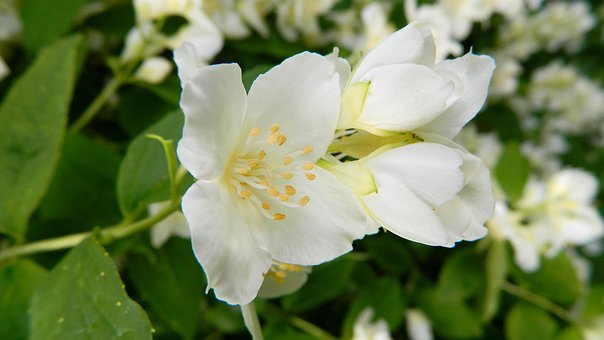
How many times does it bloom in a year?
It can bloom three times a year. Jasmine loves fertilizer very much. As long as it is cared for properly, a potted jasmine can bloom three times a year. The first bloom is in June; the second in August; the third in September. If there is insufficient fertilizer and nutrients, it will stop blooming after flowering once.
Flowering time:
Jasmine loves fertilizer very much. As long as it is cared for properly, a potted jasmine can bloom three times a year. If there is insufficient fertilizer and nutrients, it will stop blooming after flowering once. With proper management, it can bloom continuously from the end of May to the beginning of November. The key is pruning, sunlight, and the control of fertilizer and water.
Jasmine begins to bloom one after another from early summer. With proper management, it can produce three peak flowering periods. In early June, jasmine gradually produces early flowers; from late June to early July is the first peak flowering period; in early August, the second flowering period forms; from early September to early October, the third flowering period forms.
Market price:
The market price of jasmine varies by region, size and variety. Generally, an ordinary single-petaled jasmine costs about 5-10 yuan per pot, and a double-petaled jasmine costs about 10-20 yuan per pot. It is worth noting that most jasmine varieties are afraid of cold and drought, and are not tolerant of frost, waterlogging or alkaline soil. When the winter temperature is below 3°C, the branches and leaves are prone to frost damage, and if it lasts for a long time, the plant will die.
Planting techniques:
1. Potting soil
Potted jasmine requires soil rich in organic matter with good air permeability and aeration. Fertile, slightly acidic sandy soil can be used.
2. Fertilizing
Jasmine loves fertilizer, so the potting soil should maintain sufficient fertility. The high-temperature period in summer is the peak growing season for jasmine. At this time, more fertilizer should be applied, with fertilization needed twice a month. If jasmine branches and buds grow luxuriantly in summer but do not bloom, it is because too much fertilizer has been applied, causing excessive vegetative growth. In this case, water and fertilizer should be controlled so that it buds in time, and at the same time, the jasmine should be moved to a sunny, well-ventilated place for cultivation.
3. Watering
Jasmine is not drought-tolerant, so it needs to be watered more often. However, during the high-temperature period in summer, water must never be allowed to accumulate in the pot, otherwise it will cause root rot. During the rainy season, the flowerpot should be tipped in time to prevent water accumulation; in the hot summer, water once each morning and evening every day. If the leaves are found to be curling, water should be sprayed on the leaves in time to promote growth and development.
4. Environment
Jasmine likes hot, humid, ventilated and airy environments and needs sufficient light. It is afraid of cold. In the south, potted jasmine can be cultivated outdoors through the winter, while in the north, warmth protection is needed in autumn and winter, and it should be moved indoors to a south-facing position. With strong light, the branches and stems are robust, the leaves are dark green, and there are many fragrant flowers; with insufficient sunlight, the nodes are sparse, the flowers are few, and they are not fragrant.