What month do Physalis (Solanaceae) ripen? A detailed guide to prices, planting times and methods
Physalis, also known as Yangguniang, Mao Suanjiao or Jin Guniang, is a common plant of the Solanaceae family in Southwest, Northeast and North China and along the middle and lower reaches of the Yangtze River. It is well loved for its rich vitamin content and its many amino acids and trace elements. So in which season does this Solanaceae fruit ripen? How much does it cost per jin on the market? When is the best time to plant it? And how do you grow it?
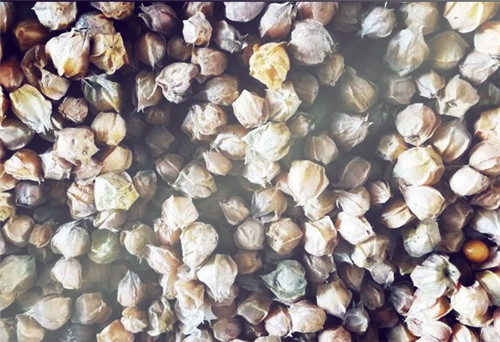
In which season does it fruit?
The fruiting season of Physalis is September. It grows by roadsides, in open ground, along streams and on hillsides. It is distributed in Jiangxi, Anhui, Jiangsu, Zhejiang, Fujian, Guangdong, Guangxi and other places. The appearance of the Physalis fruit is somewhat like a lantern; beneath the thin outer husk, once you peel it open, you can see the flesh inside, which is yellow. It is a fruit with a very pleasant taste.
Market price:
The price is relatively high among fruits, ranging from around ten-plus yuan to several tens of yuan. In some places it sells for 30 yuan/jin, and in some places it is even more expensive than imported fruit. For the exact price you would have to ask locally.
Planting time:
1. Early spring forced cultivation: raise seedlings in January to February in a solar greenhouse or a windbreak sun-facing seedbed, then transplant to open ground after the late frost in mid-April. Harvest begins from late May to June.
2. Spring open-field cultivation: raise seedlings in March to April. In March, seedlings must be raised in large, medium or small plastic tunnels; in April they can be raised in open ground. Transplant in May, and harvest begins from late June to July.
3. Autumn open-field cultivation: raise seedlings from late June to July. Transplant to open ground in early August, and harvest begins from late September to October. In recent years, because the economic returns of Physalis are not very high, growers rarely use protective facilities for cultivation.
Growing techniques:
1. Seedling raising: the best season is spring, and the seedling-raising time is January to February. You can build a low seedbed in a sheltered spot; before building the bed, you can cover the soil with plastic or glass to raise the temperature. Before sowing, soak the purchased seeds in warm water, which is better for germination; soak for about 10 minutes. When sowing, first apply fertilizer to the seedbed and shallow-till it, then water; after the water has seeped in, you can sow. After broadcasting the seed, cover with soil about 0.5 cm thick, and seedlings will emerge in about 10 days. After emergence, thin and fill in the seedlings; overly dense and weak seedlings should be pulled out, keeping a row spacing of about 10 cm. Fertilize once at the seedling separation stage, and water about once every 7 days.
2. Transplanting. Apply decomposed organic fertilizer at a rate of ~ kg per hectare to the transplanting site, deep-plow, rake level and make flat beds. Transplanting should be done after the late frost. The suitable transplanting time is when the seedlings have 6 to 7 leaves and the first flower has just opened. When transplanting, lift the seedlings carefully to damage the roots as little as possible, which helps them recover. The transplanting density is about plants per hectare, with a plant-to-row spacing of 25 to 28 cm × 65 to 70 cm.
3. Fertilizing: after transplanting, you can begin fertilizing, and you can choose mixed manure or urea. The first fertilizing after transplanting should be at the fruiting stage, which can promote fruit development; the second fertilizing can be at the harvest stage, using a small amount of compound fertilizer.
4. Watering: when transplanting, water thoroughly, and afterwards water each time you cultivate. You can also decide the number of waterings according to climate changes, keeping the soil loose during the growing period of Physalis, which can effectively raise soil temperature and moisture. During this period, weeds around the seedlings should be removed promptly to prevent nutrients from being absorbed.
5. Cultivating and weeding. In the early stage after transplanting, cultivate once after each watering to loosen the soil, raise the ground temperature and promote root development. At the first flowering and first fruiting stage, combine topdressing with cultivating and earthing up, so that the planting rows become ridges, preventing the plants from lodging and helping with irrigation and drainage. Weed promptly in the middle and late stages of growth.
6. Plant adjustment: plant adjustment for Physalis is mostly done after the first fruiting; the parts with many branches can be pruned. At the mature stage there are many branches and the plant tends to trail on the ground, so it should be trellised, and bamboo poles can be used for support. After the first fruiting and picking, to ensure quality the following year, branches should be removed promptly. Before sprouting, pinch out the growing tip of the seedling, which will stop growth but helps concentrate nutrient uptake and ensures a stable, high yield.
How do you eat it?
Physalis jam
Ingredients: 1000 g Physalis, 150 g white sugar, an appropriate amount of lemon juice.
Method:
1. Peel and wash the Physalis. Set aside 1/5 of them and prick them with several toothpicks so that the finished jam will contain a few fruit pieces, and pricking also makes the Physalis release moisture more easily.
2. Put the remaining 4/5 of the Physalis into a blender and blend into Physalis pulp.
3. Put the whole Physalis pieces, the Physalis pulp and the white sugar into a small saucepan; you can use any cookware other than an iron pot.
4. Squeeze in the lemon juice, bring to a boil over medium heat, then simmer over low heat for 30 to 40 minutes.
Colorful stir-fried diced meat
Ingredients: 50 g each of Physalis, water chestnut, carrot, cucumber and fried peanut kernels, 100 g pork tenderloin, appropriate amount of seasonings.
Method:
1. Cut the Physalis in half, and dice the water chestnut, carrot, cucumber and pork tenderloin.
2. First blanch the Physalis, water chestnut, carrot and cucumber dice in boiling water until cooked.
3. Pass the diced meat through hot oil, then pour into a strainer to drain the oil.
4. Heat the wok over high heat, add all the ingredients and stir-fry quickly; when nearly cooked, thicken with a thin starch slurry and drizzle it on.