Is Monstera toxic? Natural air purifier, indoor hydroponics and care when leaves do not split
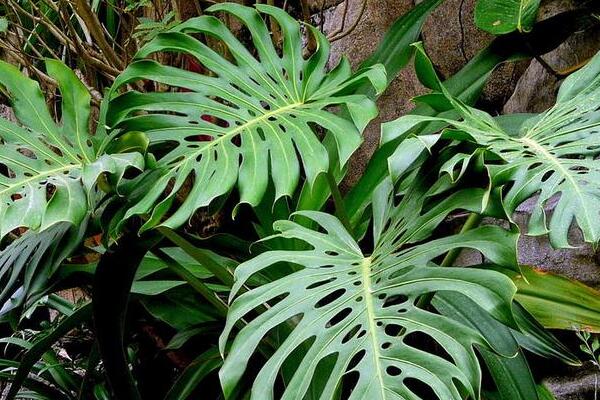
Monstera, also known as ceriman, Mexican breadfruit and Swiss cheese plant, is a common evergreen shrub of the genus Monstera in the Araceae family. Because it absorbs harmful gases such as formaldehyde and benzene, it is called a “natural air purifier. Many people now like to grow it indoors, so is Monstera toxic? Can it be grown in water? How do you care for it? What should you do if the leaves do not split?
Is it toxic?
Monstera is toxic, and this is certain. The toxic part of Monstera is mainly its sap, which is irritating and corrosive. If it comes into direct contact with the skin, it causes stinging and burns, and if accidentally eaten, it burns the throat.
Can it be kept indoors?
Monstera can be grown indoors and is a good indoor foliage plant.
First, although Monstera is toxic, its toxicity is relatively mild and not fatal. Second, Monstera mainly causes poisoning through skin contact and ingestion. It does not release harmful gases, so as long as its sap does not come into contact with the skin and it is not eaten directly, it is not very harmful.
Growing Monstera at home not only provides indoor foliage but can also remove certain harmful substances from the air. Monstera can remove many harmful gases from the air, so it can be grown indoors with confidence. When growing it, it is best to place it in a relatively spacious indoor area, such as the living room or study, and it can also be placed in a relatively spacious bedroom.
Can it be grown in water?
Monstera can not only be grown in soil but also propagated hydroponically, and as long as the care method is appropriate, it will grow well in a water environment. In addition to its roots being able to absorb oxygen in the water, its stems and leaves are also covered with aerial roots, so it can also absorb oxygen from the air.
Hydroponic method:
1. Selection of material. For hydroponic Monstera, choose a small soil-grown plant, because small Monstera plants are relatively easy to keep alive when grown in water.
2. Taking the material. Take the Monstera out of the soil and wash the roots clean, trying not to damage the roots.
3. Soaking solution. Soak the roots of Monstera in a very dilute potassium permanganate solution for about 10 minutes.
4. Apply light fertilizer frequently. Monstera is a foliage plant that is relatively tolerant of fertilizer. To promote many new leaves and keep the leaf color emerald green with a natural luster, apply fertilizer once every half month during the growing season. When fertilizing, be careful not to let the fertilizer solution stain the leaf surface.
5. Change the water and clean the container regularly. Change the water once a week to reduce bacteria in the water competing with the roots for dissolved oxygen, and increase the dissolved oxygen in the water as much as possible.
The principle of leaf splitting:
For young Monstera plants, the base rhizome is relatively thin and small, so its growth power is also relatively weak. In the early stage of the young plant, its leaves are entire and unsplit. As it continues to grow, both the number and size of the plant's leaves increase continuously. When light, temperature, water and fertilizer conditions are relatively suitable, the split, perforated state gradually forms.
Under normal circumstances, after Monstera has grown for six months to one year, obvious holes will appear in its leaves. Moreover, apart from young Monstera trees, even on perennial old Monstera trees, leaves newly sprouted from the heart after pruning will also show obvious holes.
Reasons for leaves not splitting and solutions:
1. Light and temperature management
Long-term insufficient or excessive light can cause poor growth in Monstera and inhibit its normal leaf-splitting process, especially in the hotter midsummer season. At this time, avoid direct sunlight on Monstera and place it in a cool, ventilated environment for care and management. When the light becomes relatively soft and the temperature is suitable, let it receive appropriate light again.
2. Scientific watering
During the vigorous growth period, Monstera's demand for water increases. In addition to keeping the potting soil slightly moist through measures such as spraying water, you should also frequently spray water on the leaves and the ground to raise the humidity of the surrounding environment and lower the temperature. This not only benefits the plant's growth but also makes Monstera's leaves more vivid and bright.
3. Appropriate additional fertilizing
Summer and autumn are the peak growing seasons for Monstera. According to its growth state, we can apply fertilizer once every 1-2 weeks, and it is recommended to use mainly nitrogen fertilizer. When fertilizing, combine it with watering: dig open the potting soil at the edge of the flowerpot, bury the fertilizer in, and then cover it with soil. Shading can greatly shorten the time it takes to become lush and full of leaves.
4. Repotting and division
If Monstera originally had split leaves, but the recently newly grown leaves suddenly do not split, this reminds you that it is time to repot and divide the Monstera.