Is it feasible to grow Chinese lantern (Physalis) perennial herb in rural areas, and what are its value and planting time?
Chinese lantern, also known as Physalis alkekengi, ghost lantern, and bitter lantern, is a perennial herb common in most parts of our country, and is widely cultivated because of its high medicinal value. So is it feasible to grow Chinese lantern in rural areas? What values does it have? When is the best time to plant? When to harvest?
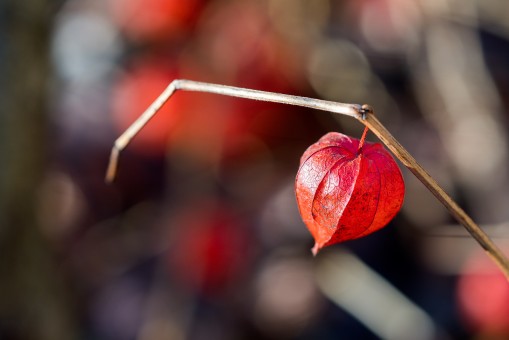
As a wild plant with extremely strong vitality, Chinese lantern can grow very luxuriantly even without care, so artificial cultivation is naturally feasible. Moreover, it is quite easy to manage. When grown in rural areas (or in the wild), it is divided into north and south. The Yellow River is roughly the dividing line; north of the Yellow River there is a large yellow-fruited Chinese lantern, while south of it most are a small yellow Chinese lantern. The large fruit is more suitable for the fruit type, and can be eaten, used medicinally, brewed into wine, or made into preserved fruit, canned goods, or sauce, etc. Although the small fruit can also be eaten and brewed into wine, it is mostly used medicinally.
The specific planting techniques are as follows:
Raising seedlings and propagation, mainly by seed propagation.
For purchased or self-collected seeds, choose seed soaking. First soak in warm water at about 50 degrees for 10 minutes while stirring constantly, then soak in 30-degree water for 24 hours. Remove and drain, mix evenly with clean water and fine sand, wrap in cloth, turn over every day, place in a sunny spot with shade above, and sprouts will appear in 3 to 5 days. Then they can be broadcast sown on a prepared seedbed, or sown in holes on prepared ridge plots. 2 to 4 seeds per hole.
Fertilization
For the seedbed and planting site, 3000 jin of barnyard manure can be applied per mu as base fertilizer, which should be applied first when leveling and harrowing. When the seedlings reach 7 cm tall, a light and thin human manure and urine water, or a small amount of chemical fertilizer, can be applied as topdressing. When the seedlings are about 20 cm tall, they can be transplanted or thinned.
Field planting
Generally, reasonable close planting should be used. The northern large yellow variety can retain about 3500 plants, and the southern small yellow variety can retain about 5000 plants.
Pests and diseases
The main disease is powdery mildew. In the early stage of discovery, 70% thiophanate-methyl wettable powder at 1000 times dilution can be sprayed. For a single plant (or when only a small amount occurs), simply spray and then pull out the remaining plants and burn them.
The main pests are underground pests, white grubs, and cutworms. Use 5% phoxim emulsifiable concentrate at 1000 times dilution to spray the roots or drench the roots.
The value of Chinese lantern:
The whole plant has the effect of clearing heat and detoxifying. The Chinese lantern fruit has the effects of clearing heat and detoxifying, benefiting the throat, resolving phlegm, and promoting urination, and is used for sore throat and hoarseness, phlegm-heat cough, and difficult urination.
Planting time and harvest time:
Planting can be divided into three types: spring seedling cultivation and planting, spring planting, and autumn planting.
The entire growth period takes about 120 days, somewhat shorter than early rice in the south. For spring seedling cultivation and planting, seedlings should be raised in a greenhouse in January to February, and after raising seedlings, transplant them to open-field cultivation in late March when the open-field temperature is suitable.
Spring planting: in late March, raise seedlings and plant in the open field.
Autumn planting: seedlings can be raised in June, planted in the open field in July, and harvested in September to October when the temperature drops.