How much does a silver willow (Salix argyracea) sapling cost per plant? Growing regions and methods
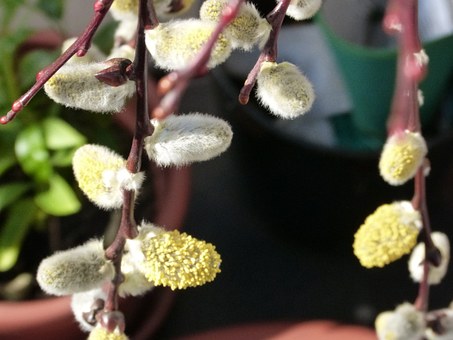
Silver willow, also known as silver willow or pussy willow, is a bud-ornamental plant with relatively high ornamental value. Because of its attractive appearance and the fact that it can be dyed in various colors, it is much favored by flower enthusiasts. It is currently sold on the market in China, and the price is not expensive. So how much does a silver willow sapling cost per plant? Which regions are suitable for growing it? How do you grow it?
Sapling price:
Generally 18-45 yuan per plant, but for the specific price you need to inquire locally.
Suitable growing regions:
Silver willow is native to northern China, and is also distributed in **(the northern slope of the Tianshan Mountains from east to west and the southern slope to the Kashgar Akto mountainous area), Russia and other places. It has currently been introduced and cultivated in Shanghai for 50-60 years.
Planting time:
Silver willow is generally propagated by cuttings. Branches can be cut and inserted as cuttings in early spring, or softwood cuttings can be used during the plum rain season; they root and survive very easily. Use garden soil as the cutting medium and keep it moist. Management: after rooting, the cuttings can be planted out. In daily management, pay attention to fertilizing and watering, and apply topdressing 3—4 times during the growing period; after the beginning of autumn, apply phosphorus and potassium fertilizer once to promote plump flower buds; fertilizer should also be applied after cutting flower branches, and irrigation should be timely in summer.
How to grow it?
1. Raising seedlings
Silver willow is mostly propagated by cuttings, generally by cutting propagation in spring, but we choose to take cuttings in late autumn. In this way, we can first select superior cuttings, and second, after the cuttings adapt through one winter, they can root and grow in a sunny cold frame in early spring, and can be transplanted by the end of April, with a well-developed root system and a high survival rate. The specific method is: in mid-to-late November, select healthy branches with plump leaf buds and a diameter of more than 0.5 cm, cut them into 10 to 15 cm lengths, keep 4 to 5 leaf buds on each section, put them in a basin, and soak them in clean water for later use. For the seedbed, choose loose, fertile garden soil and carefully prepare the bed. The bed width is about 1 m, and the length is not limited. Before cutting, water thoroughly in the seedbed with a watering can. The cutting depth is 2/5 to 1/2 of the cutting branch, and the plant and row spacing is about 5 cm. After inserting, spray enough water, cover with plastic film, and seal all around tightly. Remove the film the following spring, clear weeds, and water.
2. Transplanting
Harden the seedlings in mid-April, and transplant by the end of April. The transplanting field should be heavily applied with base fertilizer. Per mu, use 2500 kg of decomposed organic fertilizer and 50 kg of compound fertilizer, plow them into the soil, then prepare the land and make beds. The bed width is 1.5 m, and the planting spacing is 50×50 cm. Open the side ditches well and water thoroughly after planting to settle the seedlings.
3. Management
To encourage longer branch tips, in May and June, in addition to providing sufficient water, also weed and loosen the soil in time, and apply topdressing once a week, mainly nitrogen fertilizer, avoiding concentrated fertilizer. July and August are the main period of flower bud differentiation. To enable flower buds to form at each node along the branch tips, the supply of fertilizer and water is key. During this period, heavy water and heavy fertilizer should be used, and foliar fertilization can also be carried out. September is the flower bud swelling period, and fertilization should be stopped and water supply appropriately reduced. During this period, the nutrients needed for flower bud swelling can be supplied by internal transfer from the branch tips.
4. Harvesting branches
Around New Year's Day, branch tips can be cut successively and supplied to the market after the buds are exposed, until just before the Spring Festival. After harvesting the branches, they can be graded and sorted. Generally speaking, flower branches reaching more than 1 m in length are first-grade products for export. To make the colors richer, ordinary water-soluble dyes can be used to dye the inflorescences bright red, golden yellow, or emerald green, etc., to enhance the ornamental effect and increase the domestic sale price.
5. Other management
1. When the seedlings reach 60 cm in height, promptly pinch the tips to set the head, and cultivate branching, clustered-type branches to increase the harvest rate.
2. Silver willow generally does not suffer from diseases, but it is susceptible to red spider mite damage, which often occurs in summer during high-temperature and dry seasons. It can be controlled by spraying with 40% dimethoate 3000 times dilution, or with 40% dicofol 2000 times dilution.
3. After cutting off the old stumps and weak residual branches at the end of February, base fertilizer can be applied between the rows. The following year, use the same method for fertilizer and water management. Under normal circumstances, good-quality commercial branches can be produced for two to three years. After that, new seedlings should be raised again for production.