Is Luoyang flower, Dianthus, the same as carnation? Toxicity and indoor cultivation and blooming period
Dianthus, also known as Luoyang flower, Shizhu flower, and so on, is a traditional famous flower in our country. Because of its diverse flower colors and its ability to absorb harmful gases such as chlorine and sulfur dioxide, many people like to grow it indoors. So, is Dianthus the same as carnation? Is it toxic? How do you grow it indoors? When does it bloom?
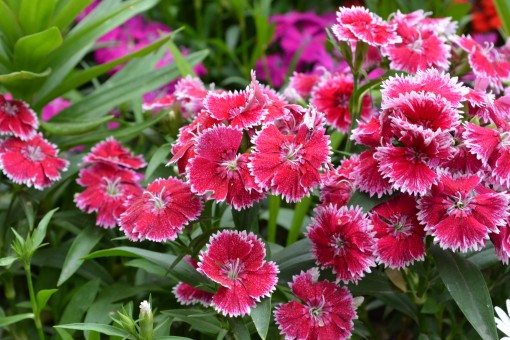
Is it carnation?
No. Dianthus is not only the name of a flower, but also the name of a family. Carnation belongs to the Dianthus family. Of course, carnation is also called fragrant Dianthus, but it is not Dianthus. Traditional Dianthus is a kind of Chinese herbal medicine, and its medicinal name is Qumai. It is basically single-petaled. Of course, the flower shape is still very beautiful.
Is it toxic?
It is not toxic, and it can even detoxify. Dianthus is cold-resistant and drought-tolerant, but not tolerant of severe heat. In summer it often grows poorly or withers, so shade and cooling should be provided during cultivation. It likes full sunlight, dry conditions, and a ventilated, cool, and humid climate. It requires fertile, loose, well-drained loam or sandy loam containing lime. It dislikes waterlogging and likes fertilizer.
Can it be grown indoors?
Yes. Although Dianthus is a small plant with small and beautiful flowers, it has unexpected functions in the home.
1. It can absorb sulfur dioxide. There is a gardening saying: “Dianthus has an iron belly and can clean up toxic gases.” Dianthus has the ability to absorb sulfur dioxide and chlorides. Wherever there are similar gases, Dianthus can be planted. Moreover, through the stomata on its leaves and roots, it can absorb substances harmful to the human body and convert these harmful substances into oxygen, sugar, and various amino acids.
2. It can kill bacteria. Dianthus has a faint fragrance. It can produce volatile oils, which have a significant bactericidal effect. In particular, its fragrance has a clear inhibitory effect on the growth and reproduction of Mycobacterium tuberculosis, pneumococcus, and Staphylococcus. In addition, fragrant Dianthus, that is, carnation, also has the special effects of being romantic and aphrodisiac, relieving tension, calming anger, and balancing hormones.
3. It can create a positive psychological effect in people. Dianthus has many colors. They are colorful yet not flashy, carrying a plain and pure feeling and reflecting the owner's taste in flowers. It can also increase the humidity of the air in a room, thereby reducing the chance of family members catching colds. When work pressure increases, it can relax people's mood, have a positive psychological effect, and also make people feel comfortable.
Specific cultivation techniques:
1. Planting
Dianthus is generally planted at the end of August. Prepare the potting soil and apply enough base fertilizer. Use 5~6 seeds per pot (to avoid failure to sprout). After sowing, when 1~2 leaves have grown, thin the seedlings. When 3~4 leaves have grown, they can be transplanted. When transplanting, leave about 5 between each plant, with 3 plants per pot, and water after planting.
2. Light and temperature requirements
The most suitable temperature for Dianthus growth is 15~20°C. In summer, when the temperature is higher, pay attention to providing appropriate shade and cooling. In winter, it should be placed in a greenhouse and the temperature should be kept above 12°C.
During the growing period, ensure sufficient sunlight and place the flowerpot outdoors in a sunny place. In summer, mainly use scattered light and avoid direct sun exposure. When the temperature is higher, provide appropriate shade and cooling.
3. Water and fertilizer requirements
Watering should follow the principle of not watering until dry. For Dianthus sown in autumn, when watering in November to December, pay attention to preventing freezing. For indoor care, the water temperature should be close to room temperature. Watering should preferably be done at noon when the temperature is higher, and there should be no standing water on the leaves at night. In the second year in spring, water to promote green-up, with the same requirements as in winter. During the entire growing period, apply topdressing 2~3 times, using decomposed cake fertilizer or organic fertilizer.
4. Pruning
If you want Dianthus to bloom more, prune it promptly. When the plant grows taller, pinch the tips to promote branching, and promptly remove leaf buds to reduce nutrient loss. After pruning, Dianthus will bloom again.
Blooming time:
Dianthus is also called Chinese Dianthus, Luoyang Dianthus, Shiju, Xiuzhu, and fragrant Dianthus. It is a perennial herbaceous plant of the Dianthus family and Dianthus genus, and one of China's traditional famous flowers. It can bloom from spring to autumn, and potted plants in a greenhouse can bloom in all four seasons. The blooming period of Dianthus is April to October, concentrated in April to May. Therefore, Dianthus blooms in late spring and early summer and can continue blooming until autumn.