What is the market price per jin of Solanaceae tomato (xi hong shi) and what varieties and planting times are used in soilless cultivation?
Tomato, also known as xihongshi or yangshizi, is a common fruit in China, deeply loved by people because it is rich in vitamins, carotene, and various trace elements. So how much is the market price of tomato (xihongshi) per jin? What varieties are good for soilless cultivation? When to plant? How to plant?
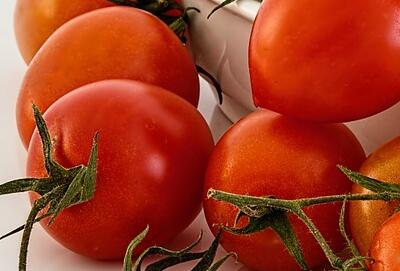
Latest market price:
Variety selection
Organic ecological substrate cultivation has no strict requirements for tomato variety selection. Varieties with high yield, disease resistance, and good quality should be selected according to the consumption habits of local residents. At present, large-fruited varieties such as Maofen 802, Zhongza No. 9, Jiafen 15, and Zhongshu No. 4 are mostly used in production.
Cultivation time:
Tomatoes grown in organic ecological substrate can be cultivated in solar greenhouses and plastic tunnels, and can be cultivated in early spring, late autumn, and winter. For the early spring crop, sow in late January and transplant in late March; for the autumn delayed crop, sow and raise seedlings in late July and transplant in early September; for the winter-spring crop, sow and raise seedlings in late November and transplant in late December.
Cultivation techniques:
1. Construction of cultivation beds and filling of substrate
After land preparation, dig cultivation troughs in a north-south direction, with an inner diameter width of 0.48 m and a depth of 0.15 m. Lay a layer of plastic film at the bottom of the trough to isolate it from the soil. Fill the trough with 2-3 cubic meters of substrate, with a substrate ratio of peat : cinder = 4:6. Before filling the trough, each cubic meter of substrate needs to be mixed with an additional 5 kg of solid organic fertilizer and 1.5 kg of ternary compound fertilizer.
2. Drip irrigation system
Use natural-pressure drip irrigation from a water storage tank, with an independent water storage tank built for a single greenhouse, 4 m long, 1.5 m wide, and 2 m high, and the bottom of the tank should be 0.5 m above ground level. To prevent shading and occupying too much planting area, the water tank should be built along the gable wall of the greenhouse or plastic tunnel. The main pipeline in the greenhouse and the drip irrigation tapes in the cultivation troughs can both use plastic pipes, and two drip lines should be laid in the trough, with a layer of narrow plastic film 0.1 mm thick covering the drip line tape to prevent drip irrigation water from spraying outward and evaporating.
3. Seedling raising and transplanting
Use artificial soilless plug tray seedling raising. The seedling substrate is mixed with peat and vermiculite at a volume ratio of 2:1, then 10 kg of dried chicken manure is added per 1 cubic meter of mixed substrate and mixed evenly. Water the substrate thoroughly, and after the water seeps down, sow, 1 seed per cell, direct sowing of dry seeds, and after sowing cover with 0.5 cm of seedling substrate. Before emergence, keep the temperature at 25-30°C; after emergence, keep the temperature at 20-25°C during the day and 10-15°C at night. The seedling tray should be kept moist. When 3-4 true leaves have grown, the seedlings can be removed from the tray for transplanting, about 30 days. Before transplanting, turn and level the cultivation substrate, and water once so that the substrate fully absorbs water. After the water seeps down, dig holes in 2 rows per trough for transplanting, so that the substrate is slightly higher than the seedling block, with a plant spacing of 30 cm, planting 3000 plants per mu, and water lightly after planting.
4. Field management after transplanting
① Temperature. During the tomato growth period, keep the indoor temperature at 21-24°C during the day, and start ventilation when it exceeds 27°C; at night, 16-18°C. A relatively high temperature can be maintained for 5 hours after sunset, and a relatively low temperature can be maintained in the latter half of the night.
② Fertilizer and water management. After transplanting, water generally once every 5 days to keep the rhizosphere substrate moist. After fruit set, water frequently, generally once a day on sunny days, for 30 minutes. Water less or not at all on cloudy days. According to the number of fruit trusses retained and the cultivation density of tomatoes, generally 4-6 topdressings are needed for retaining 3-5 trusses of fruit. Topdressing is mostly applied during the fruit enlargement period, once every 10-15 days. Each topdressing per cubic meter of substrate is 1.5 kg of disinfected chicken manure plus 0.5 kg of compound fertilizer (containing 14% nitrogen, 10% phosphorus, 14% potassium, 4% calcium, 9% magnesium, 6% sulfur, 2% iron, and trace elements such as manganese, copper, molybdenum, and boron). The fertilizer should be evenly scattered 5 cm away from the roots and can seep into the substrate with water.
③ Plant adjustment. After tomatoes flower and bear fruit, use the plastic string hanging method to support the plants. Single-stem pruning is used to reduce pests and diseases and increase yield. Generally, keep 3-4 fruits per truss. Promptly remove old leaves, diseased leaves, and leaves below mature fruit, and take them outside for disposal. Generally, for the autumn delayed crop, retain 6-7 trusses of fruit before pinching the tip; for the early spring or winter-spring crop, retain 8-10 trusses of fruit before pinching the tip.
④ Pollination. Pollution-free tomato production generally does not use hormone treatment. Instead, artificial vibration pollination or insect-assisted pollination is used. Artificial vibration pollination is carried out every day from 10-11 a.m. after flowering. Insect-assisted pollination mostly uses bee pollination.
⑤ Fruit bagging. After fruit set, tomatoes are bagged after flower and fruit thinning determines the fruits to be retained. The bag is 220 mm long, 160 mm wide, 0.08 mm thick, and made of colorless transparent polyethylene film. Put the film bag over the fruit, then tie the opening of the film bag at the fruit stalk with string, but not too tightly, to prevent affecting the lateral growth of the fruit stalk, while maintaining certain ventilation. The fruit can be marketed together with the bag. Fruit bagging can prevent pesticides from being directly sprayed onto the fruit and absorbed by the fruit skin and then marketed before the safe interval has passed.
5. Pest and disease control
Based mainly on agricultural control and biological control, with chemical control as a supplement. When chemical control is used, choose pesticides with low toxicity and low residues, and pay attention to the safe use interval to ensure that the product is not contaminated by pesticides.
6. Harvest
After the fruit enters the mature green stage, it is appropriate to harvest when the top begins to turn orange-yellow.