When to plant and when to harvest Canna edulis? Planting benefits and cultivation methods
Canna edulis, also known as ginger taro, banana taro, banana lotus, banana sprout, banana shoot, and fragrant pearl, is a common Chinese medicinal herb in most parts of China. Because of its wide range of uses, combining ornamental, edible, medicinal, fodder and brewing purposes in one, it is widely cultivated. So when is Canna edulis planted? When is it harvested? What are the planting benefits? How is it planted?
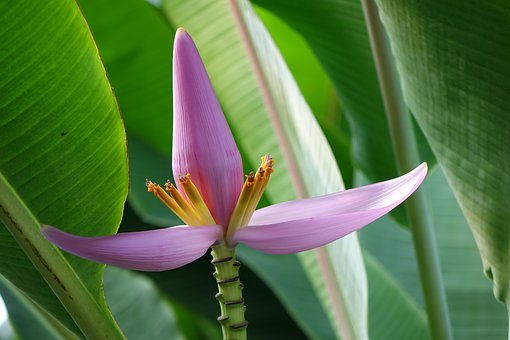
Planting time:
Generally in spring from February to April, when the temperature is stable above 12-14°C.
Harvest time:
From mid-to-late November to December, when the temperature drops noticeably and the first frost appears, and the aboveground parts show withered banana leaves, cut off the stems and leaves, dig out the rhizomes, remove the fibrous roots, and wash them clean before processing. If frosty weather occurs, harvest should be done before the frost. For seed tubers, select Canna edulis with no damage, no pests or diseases, plump and robust, with thick and intact buds, strong vitality, and a single weight of 50-150g. They can be directly buried in soil, or spread out to dry for 3-4d and then buried in soil, covered with Canna edulis stems and leaves, rice straw or other dry grass, and before frost and snow damage arrives, add a plastic film to keep warm and prevent freezing. When the temperature rises in spring, the tubers will sprout and grow into seedlings.
Benefit analysis:
Planting Canna edulis is simple and extensive, with low input and quick results, making it a fast way to become prosperous. In 2017, Quxi Village, Quxi Township, Liancheng County planted more than 70hm2 of Canna edulis, producing 45-90t/hm2 of fresh Canna edulis tubers. The purchase price of fresh tubers was 1.0-1.2 yuan/kg, and the output value of fresh tubers was 45,000-90,000 yuan/hm2. When processed to extract starch, every 100kg of fresh tubers produces 15-16kg of starch, with a market price of 12-14 yuan/kg, and an output value between 90,000 and 165,000 yuan/hm2, which is deeply loved by farmers.
Utilization value:
1. Canna edulis has luxuriant stems and leaves, its leaves are not easy to wither and scorch, it has a long leaf-viewing period, and it is easy to manage, making it a good material for beautifying courtyards. Its rhizomatous tubers are sweet, bland and cool in nature and flavor, and have the effects of clearing heat and removing dampness, calming the mind and lowering blood pressure. Its roots and flowers can also be used as medicine; the tubers are rich in starch and can be boiled for food or used to extract starch, making them an excellent raw material for starch processing.
2. Canna edulis starch has a large granule size, low gelatinization temperature, good paste transparency, high amylose content, good film-forming property, and a very large molecular weight. It has good application properties and is a new raw material source for high-value starch; the starch can be directly processed into foods and food ingredients such as vermicelli and noodles, and can also be used to produce monosodium glutamate, brew alcohol, produce oral and injectable glucose, sorghum syrup and other starch sugars, as well as various non-staple foods such as lotus root starch substitutes;
3. In the textile industry, using Canna edulis starch for yarn sizing has the characteristics of higher adhesion and better smoothness than using grain starch for yarn sizing; Canna edulis starch and stem-leaf fiber can also be used for feed, papermaking, shoemaking, hatmaking, clothing and cultural supplies, etc.
4. Canna edulis residue, stems and leaves can be used as breeding feed, driving the development of the breeding industry. Canna edulis has broad application and market prospects.
High-yield cultivation techniques:
1. Land selection and preparation
Canna edulis has strong adaptability to soil, likes moist and fertile deep soil, is relatively drought-tolerant, and avoids waterlogging. It is advisable to choose a plot with sufficient sunlight, facing the sun and sheltered from wind, and with good drainage. In most areas of southern China, it can be planted regardless of altitude. The best soil is gently sloping sandy loam with deep soil layers, loose and fertile, good drainage, neutral to slightly acidic pH, and rich in organic matter and humus, but it also adapts to growing in fertile clay soil. It can be planted in large areas in rice fields, hillside land and remote plots, and can also be planted scattered on field edges and roadsides such as in front of and behind houses, beside hills and ditches.
For high-yield cultivation, after selecting a suitable plot, winter plowing should be carried out to promote soil maturation and fragmentation. In spring, while preparing the land and making beds, apply 1500kg/hm2 of calcium magnesium phosphate fertilizer and 30t/hm2 of organic fertilizer as base fertilizer. Land preparation should be deep and meticulous, with broken soil and level mud, and fertilizer evenly applied without being exposed on the soil surface. It is advisable to make high beds, with a bed height of more than 30cm. For single-row planting, the bed width is 70cm; for double-row planting, the bed width is 110cm, with a ditch width of 30cm. Drainage ditches should be opened around the field to prevent water accumulation.
2. Seedling selection and treatment
In production, tuber propagation is mostly used. When harvesting in autumn and winter of the previous year, bury the seed tubers in soil and cover them with rice straw, etc., to keep warm and prevent freezing. When the temperature rises in spring and the tubers sprout and grow 2-4 leaves, select robust seedlings with healthy growth and no pests or diseases to transplant to the field. After lifting the seedlings, soak the taro seedlings in 800-fold carbendazim solution for 5-10min to improve disease resistance.
3. Planting density
The planting row spacing is 60-70cm, using high-bed cultivation or hole cultivation, with a planting density of 15000-19500 plants/hm2. When planting scattered on field edges and roadsides, in front of and behind houses, etc., attention should be paid to applying more decomposed organic fertilizer as base fertilizer, and watering sufficiently after planting.
4. Intertillage and earthing up
In the early growth stage, intertillage and weed removal should be carried out in time to prevent weeds from competing with Canna edulis for nutrients and space. During the whole growth period, intertillage and earthing up should be done 2-3 times, and soil from the bed ditches should be placed onto the bed surface to benefit the growth of Canna edulis. During intertillage and earthing up, according to the growth characteristics of the underground stems of Canna edulis, do it deeply in the early stage and shallowly in the later stage, to accelerate the division and expansion of tubers and prevent lodging.
5. Rational fertilization
Fertilizer application is a key measure for high yield of Canna edulis. On the basis of applying sufficient base fertilizer, rational topdressing should be carried out. At the seedling stage, apply 75-150kg/hm2 of 45% potassium sulfate compound fertilizer by watering; in the middle and later stages, combine with intertillage and earthing up. In the middle stage, apply 450-750kg/hm2 of 45% potassium sulfate compound fertilizer; in the later stage, mainly use phosphorus and potassium fertilizers, and avoid partial application of nitrogen fertilizer; before flowering, apply 225-450kg/hm2 of potassium sulfate and 750kg/hm2 of superphosphate, or 750-900kg/hm2 of 45% potassium sulfate compound fertilizer. When fertilizing, the fertilizer should be applied evenly on the left and right sides of the roots to facilitate full absorption of nutrients and balanced plant 3.3.4 Scientific water management. Canna edulis needs more water during the growth period, but has strong drought tolerance and avoids waterlogging. Water accumulation in the field can easily cause root rot and seedling death from waterlogging. The principle of water management is to water once every 15-20d during drought, and pay attention to timely watering after fertilization. Do not irrigate by soaking, and do a good job of drainage and waterlogging prevention during the rainy season.
6. Flower pruning
To avoid nutrient consumption, the flowers should be cut off in time when Canna edulis blooms, so that nutrients are concentrated on supporting the growth of underground stems and increasing yield.
7. Pest and disease control
Canna edulis has strong resistance to pests and diseases, with few pests and diseases, mainly Canna edulis blast, bud rot and stem rot. Canna edulis blast is controlled with carbendazim and thiophanate; bud rot and stem rot can be controlled with chlorothalonil and Fuhuo No. 1. Aphids sometimes occur in the early and middle stages, and can be controlled with pesticides such as dimethoate and imidacloprid.