Planting time for winter jujube saplings, number of plants per mu, and key points for variety selection
Winter jujube normally ripens naturally in October-November of the Gregorian calendar, and it gets the name “winter jujube” because cold weather arrives earlier in the north. So when is the best time to plant winter jujube saplings? How many can be planted per mu? Which varieties are good?
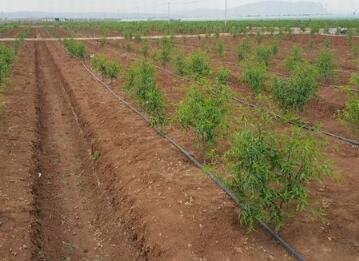
When to plant winter jujube saplings
Winter jujube can be planted in autumn or spring. Autumn planting is done after leaf fall and before the soil freezes over, while spring planting is done after the soil thaws and before bud break. When planting, mark and set points according to the planned spacing between plants and rows, dig planting holes 1 m square, place topsoil and subsoil separately, apply 50 kg of high-quality barnyard manure and 0.5 kg of diammonium phosphate into each hole, and mix evenly with the topsoil. Select high-quality vigorous grafted saplings 1-2 years old, free of pests and diseases, with a well-developed root system, a seedling height of more than 120 cm, a ground diameter of more than 1 cm, and a well-healed graft union. After autumn planting, water thoroughly, build a soil mound 20-30 cm high before winter, clear the trunk and head the young tree, and tie straw around the trunk to prevent wild rabbits from gnawing the bark; in spring, remove the soil mound and cover the tree basin with plastic film; after spring planting, water thoroughly, cover the tree basin with plastic film, and clear the trunk and head the young tree.
What varieties of winter jujube are there?
1. Zhanhua winter jujube: the fruit is medium to large, with a shape similar to an apple, average fruit weight 14-16 g, maximum fruit weight 23.2 g, thin and crisp peel, reddish-brown after maturity, fine and tender juicy flesh, slightly grassy and pungent in flavor, no residue when eaten fresh, and excellent quality.
2. Chengwu winter jujube: the fruit is relatively large, long oval in shape, average fruit weight 25.8 g, maximum fruit weight 32 g, uneven fruit surface, relatively thick peel, dark reddish-brown in appearance, fine and crisp flesh, relatively hard, low in juice, strongly sweet, with first-class fresh-eating quality.
3. Xuecheng winter jujube: the fruit is relatively large, round and slightly flattened in shape, average fruit weight 22 g, and large fruit can exceed 40 g; the flesh is loose and crisp, the texture is slightly coarse, and the juice content is medium to high, but the fruit quality is poor, and some fruits show a “stone outside the stone” appearance.
How to grow winter jujube
1. Site selection and orchard establishment: winter jujube orchards should preferably be established on plots with fresh air, clean water, uncontaminated soil, flat terrain, open topography, sufficient sunlight, fertile soil, good drainage and irrigation conditions, and soil minerals within the normal range.
2. Timely planting: winter jujube has strong adaptability, tolerates drought and poor soil, and has no strict requirements for fertilizer and water; orchard establishment should use a dense, dwarfed cultivation method, generally planting 56 to 111 plants per mu, and the row direction should preferably be north-south.
3. Reasonable fertilization: when planting winter jujube, apply 0.5 kg of superphosphate and 25 kg of organic fertilizer per plant; each year in late May, late June to early July, and early August, apply chemical fertilizer once as a top dressing; in autumn, apply 50 to 70 kg of farmyard manure and 0.5 to 1 kg of nitrogen and phosphorus fertilizer per plant.
4. Drainage and irrigation: before bud break, before flowering, during the young fruit swelling stage, and before overwintering, irrigate each winter jujube tree once thoroughly; at other times, irrigate appropriately according to drought conditions, drain promptly during the rainy season, cultivate and weed promptly after rain, and plow and turn the tree basin in autumn.
5. Flower and fruit management: during the early full-bloom stage, winter jujube should be pinched according to growth vigor, leaving 3 to 5 secondary branches and topping them; at the same time, spray 1 to 2 times with 10 to 15 mg/L gibberellin at the early full-bloom stage; during the fruiting stage, large trees can be ring-barked on the main trunk, and young trees bearing fruit for the first time can be ring-barked on the main branches.
6. Training and pruning: the tree shape of winter jujube depends on planting density; during winter pruning and summer pruning, remove vigorous water sprouts promptly, shorten extension branches, thin and cut out overly dense branches and weak slender branches, so as to maintain tree vigor balance, keep the canopy ventilated and light-transmitting, and promptly retract overly long fruiting branches.
7. Harvest and storage: winter jujube is mostly picked by hand; because ripening time differs on the same tree, it can be harvested in 2-3 rounds according to the situation, which can not only increase yield but also improve quality; after harvest, it is generally stored fresh in cold storage and supplied to the market around New Year's Day and the Spring Festival.