How Many Times a Year Do Strawberries Normally Bear Fruit, and the Causes and Prevention of Deformed Fruit
Strawberry, also known as pineapple strawberry, originated in South America and is widely cultivated throughout China and Europe. Strawberries are highly nutritious, containing a variety of nutrients, and have health benefits. So how many times a year do normally grown strawberries bear fruit? What are the causes and prevention of deformed fruit?
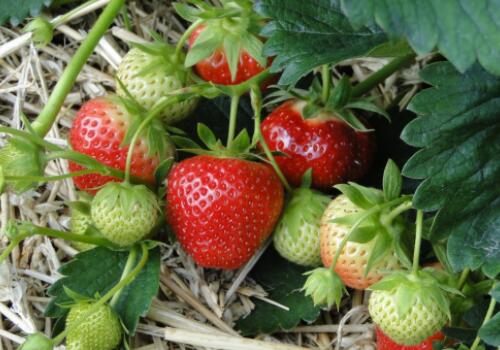
How many times a year do normally grown strawberries bear fruit?
1. The fruiting period of strawberries is very long, but they do not bear fruit all year round; it lasts 6-8 months. In the subtropical regions of the south, they are generally planted in late September and early October, and the fruit ripens 50 days later. Harvesting continues until the arrival of the heavy rains in March of the following year, when it ends, and 2 to 3 batches of fruit can be harvested. In the central region, when greenhouses are used, they are generally planted from late August to early September, and the fruit ripens in about 90 days. Harvesting continues until May of the following year, and 3 to 4 batches of fruit can be harvested. In the northern region, they are generally planted from mid-August to late August, and the fruit ripens in about 100 days. Harvesting continues until June of the following year, and 4 to 5 batches of fruit can be harvested.
2. Strawberries generally begin to sprout in late February, produce flowers around mid-April, and the fruit only fully ripens around mid-to-late May. In other words, strawberries are a fruit of late spring and early summer. Strawberries can generally be eaten around May, but some earlier ones can reach the market in March or April. However, they may have been artificially ripened, so it is not enough just to know when strawberries are on the market; you also need to know how to identify strawberries.
What are the causes and prevention of deformed fruit in normally grown strawberries?
The main causes of deformed fruit in strawberries:
1. The phased ecological environment is unsuitable for the growth and development of some strawberries;
2. Cultivation and management techniques are not adequately carried out. The affected factors include temperature, light, water, fertilizer, pollination, etc., causing poor development of some strawberry plants. Excessive application of nitrogen fertilizer, insufficient application of boron fertilizer, and high temperature and drought. For example, when there is too much nitrogen fertilizer, such as too much nitrogen fertilizer during the flowering period combined with boron deficiency, the content of plant auxin in the growing point increases, causing the growing point to expand in a band shape just before flower bud differentiation, and two or more flowers differentiate at the same time, resulting in 2-3 pedicels blooming simultaneously and forming cockscomb-shaped fruit, double-headed fruit, or multi-headed fruit. Another example is when boron fertilizer is insufficient, the flowers are small and pollination is poor, and the fruit expands on one side while contracting on the other, forming a deformed shape. In hot and dry conditions, excessive watering makes the fruit prone to cracking and exposes the flesh. Insect pollination is inhibited, fertilization is poor, and flattened, misshapen fruit is easily formed.
Prevention and control methods:
1. Select varieties with a high fruit-setting rate. Each region can choose according to local conditions.
2. Apply fertilizer with a scientific formula. Organic fertilizer and inorganic fertilizer should be combined, and an appropriate proportion of phosphorus and potassium fertilizer should especially be included. Per mu, the base fertilizer should be 4000-5000 kg of decomposed farmyard manure, 40-50 kg of superphosphate, 15 kg of potassium sulfate, 0.2 kg of Chilibor, and 30 kg of nitrogen, phosphorus, and potassium compound fertilizer. After planting, apply compound fertilizer once every 20 days or so, 10 kg per mu, and apply once a month in the later period. At the same time, spray Huimanfeng active liquid fertilizer and Sulebor 2-3 times.
3. Carry out related supporting measures well. Choose high-efficiency, low-toxicity pesticides. Strawberries rely on insects for pollination. Sometimes, even within the temperature range suitable for pollination and fertilization, improper pesticide application kills pollinating insects, or the low nectar and sugar content in the flowers cannot attract insects, both of which will affect pollination and fertilization and produce deformed fruit. Avoid controlling pests and diseases during the flowering period, remove young deformed fruits with very abnormal shapes, and regularly thin out old leaves and ineffective axillary buds.