High-yield Varieties of Cluster Pepper (Capsicum annuum) in the Solanaceae Family and Key Points of Cultivation Techniques
Cluster pepper, also known as sky-pointing pepper or small chili, is a perennial plant commonly found in Yunnan, Guizhou, Sichuan, Shanxi, Guangxi and other places. Because it is smaller than other peppers and extremely spicy, it is deeply favored by pepper consumers, and it is now planted in many regions. So which cluster pepper varieties are high-yielding? What are the key points of cultivation techniques?
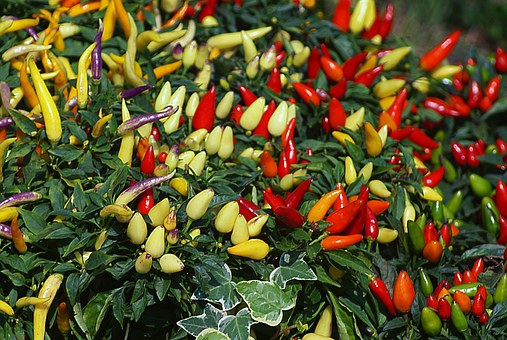
I. Variety Selection
Choose varieties with high yield, good quality, wide adaptability, resistance to pests and diseases, and good marketability.
1. High-quality cluster-bearing cluster pepper varieties
(1) Mantianhong
Good disease resistance, wide adaptability. A mid-maturing variety with good fruit shape, each cluster bearing 6-8 fruits, and excellent marketability. Fruits are 6 cm long and 1-1.2 cm thick, with a single fruit weight of about 5 grams. The plant is tall, with strong branching ability, strong disease resistance and high yield.
(2) Shengnong Chaotian No. 2
Good disease resistance, wide adaptability. An early-maturing variety with good fruit shape, each cluster bearing 6-8 fruits. High yield, fruits about 6 cm long and 0.9-1.1 cm thick. The fruit skin is thin, the spiciness is extremely strong, the fresh fruit has good marketability, and the dried fruit quality is excellent.
2. Upright single-fruit cluster pepper varieties
Danfeng Chaoyang
Mid-early maturing, fruits 5-7 cm long, fruit diameter 0.8-1.2 cm, single fruit weight 4-6 grams, high yield. Strong spiciness, uniform fruit shape, suitable for making green and red peppers and dried peppers; it is an excellent variety suitable for processing and export. Strong disease resistance, tolerant to heat and moisture, high fruit-setting rate, good marketability.
3. Single-fruit cluster pepper varieties
Danfeng
Mid-early maturing, strong disease resistance, wide adaptability. Strong growth, long harvest period, high continuous fruit-setting rate, high yield. The fruit skin is moderately thick, the spiciness is strong, the dried pepper color is deep, and the marketability is good. Fruits 5-6 cm long and 0.9-1 cm thick, with a single fruit weight of about 5 grams.
II. Cultivation Techniques
1. Seed germination
Before sowing in the nursery, pepper seeds need to be germinated, which can promote the pepper seedlings to emerge quickly and uniformly and increase the emergence rate. The specific method is: put seeds dried in the sun for 1-2 days into a cloth bag, first soak them in warm water at 50-55°C for 10-15 minutes for disinfection while stirring constantly. After soaking in warm water, move the seeds into water at about 30°C and continue soaking for 12-24 hours, then place them in an insulated container at 20-30°C for germination, wash them once a day with warm water at about 25°C, turn the seeds over from top to bottom, and germinate for 4-5 days. Once the seeds show white sprouts, they can be sown.
2. Sowing and raising seedlings
(1) Seedbed selection
Choose a fertile plot with flat terrain, good ventilation and sunlight, close to a water source, and loose soil. Plow 20-30 cm before winter for freezing and sun exposure to mature the soil. However, never raise seedlings in continuous cropping on the same plot; plots with underground pests should be treated with pesticides. The area of the seedbed is determined according to the area to be planted in the field. Generally, planting 1 mu of cluster pepper requires 15-20 sq m of seedling raising area and about 150 grams of seeds.
(2) Seedbed preparation
10-15 days before sowing, apply 5000 kg of fully decomposed high-quality farmyard manure, 30 kg of superphosphate and 20 kg of urea per mu, then turn and rake the soil evenly so that soil and fertilizer are mixed uniformly, and make flat beds 1.2-1.5 m wide. The seedling bed requires a level bed surface and straight ridges, with loose, fine soil and no clods in the bed.
(3) Sowing at the right time
In the western Henan region, sowing is generally carried out in late February and early March on a sunny morning. Before sowing, first water the bed thoroughly to ensure sufficient bottom water. After the water seeps down, mix the seeds with 2-3 times their volume of fine soil, mix evenly, and scatter them in the seedling bed. Sow back and forth several times to ensure even sowing, then cover with about 1 cm of fine soil. The covering should be even to prevent the seeds from being exposed on the ground. After sowing, promptly build a small plastic-film arch tunnel or promptly cover the existing greenhouse with film to prevent freezing and increase temperature.
(4) Seedbed management
From sowing until emergence, keep the bed surface moist to prevent soil compaction. When the seedlings emerge, water once to make the cotyledons straighten and the roots take hold and stabilize the seedlings. Keep the seedbed temperature at 20-30°C during the day and 15-20°C at night. During the day, keep the temperature inside the seedbed from exceeding 30°C. On clear days, ventilate appropriately to lower the temperature and prevent leaf scorch; before strong winds and cold waves arrive, cover with straw curtains to prevent seedling frost injury. To prevent the seedlings from growing excessively and becoming leggy, pay attention to timely ventilation and air exchange.
7-10 days before transplanting, gradually increase the ventilation openings until the film is removed to expose the seedlings, so as to lower the seedbed temperature and strengthen seedling hardening, which helps the seedlings recover after transplanting. When the bed soil surface is dry, choose a sunny morning to water and replenish moisture; when the humidity in the bed is too high, ventilate to discharge moisture.
3. Field planting
(1) Field preparation
Cluster pepper prefers fresh land and is not suitable for continuous cropping. Choose non-low-lying land where solanaceous fruit vegetables have not been planted within 2-3 years, and plow deeply before winter for freezing and soil clod formation. When preparing the land in spring, plow deeply and rake finely so that the soil is fine and free of clods, with a plowing depth of about 25 cm.
(2) Fertilizer
According to the fertilization principle of "combining organic fertilizer and inorganic fertilizer, and supplementing nitrogen, phosphorus, potassium and trace fertilizers," carry out optimized formula fertilization. High-quality organic fertilizers suitable for pollution-free production include compost, barnyard manure, decomposed human and livestock manure, green manure, decomposed crop straw, cake fertilizer, etc. Chemical fertilizers and trace fertilizers allowed for limited use include urea, ammonium bicarbonate, ammonium sulfate, phosphate fertilizers (diammonium phosphate, superphosphate, calcium magnesium phosphate, etc.), potassium fertilizers (potassium chloride, potassium sulfate, etc.), zinc (zinc sulfate), boron (borax), etc. Combined with spring land preparation, generally apply 70 kg of phosphate fertilizer, 25 kg of potassium sulfate, 50 kg of nitrogen fertilizer and 3000-5000 kg of farmyard manure per mu. After land preparation, make beds promptly: wide beds 60-70 cm, narrow beds 50 cm, bed height 10-15 cm, and lay plastic film. Land preparation should be completed 7-10 days before transplanting.
(3) Transplanting method
Transplant after Grain Rain when frost has ended (mid-to-late April). Use one ridge with two rows. Plant spacing: about 15 cm for single plants and about 25 cm for double plants. Planting density: 8000-9000 plants per mu for single plants and about 5000 plants per mu for double plants. Break the film and punch holes, transplant with soil, water thoroughly, and firm the soil. When transplanting, remove diseased seedlings, weak seedlings, mixed seedlings and variant plants.
4. Field management
(1) Water management
After the transplanting recovery period, do not water or water less, in order to help increase soil temperature and promote root development. The yield of cluster pepper fruits is mainly concentrated on side branches, so about 20 days after transplanting, promptly pinch off the growing tip to limit main stem growth and promote side branches, so as to achieve high yield.
(2) Fertilizer management
After the cluster pepper sets fruit, gradually increase the amount of watering. If the base fertilizer is insufficient, at the early fruit-setting stage spray the leaf surface respectively with a 2%-3% urea solution, a 0.3%-0.4% potassium dihydrogen phosphate solution, and a 0.2% borax solution for foliar topdressing, supplementing nitrogen, phosphorus, potassium and trace fertilizers.
(3) Disease control:
① Anthracnose
Use 70% thiophanate-methyl wettable powder at 600-800 times dilution or 50% carbendazim-sulfur suspension concentrate at 600 times dilution for spray control of anthracnose.
② Phytophthora blight and early blight
Use 58% metalaxyl-mancozeb wettable powder at 500-700 times dilution to control Phytophthora blight and early blight.
③ Viral disease
Use 20% Virus A at 600 times dilution or 1.5% Zhi Bing Ling at 1000 times dilution for spray control of viral disease.
5. Harvest
The fruits of colorful peppers planted in the open field generally begin to mature successively from mid-to-late August. They should be picked and cut in time to promote growth and improve economic benefits. The cut mature peppers can be sold on the market or strung and hung in a ventilated and dry place to dry into dried peppers, to be kept for consumption or sold as commercial peppers.