When to plant authentic heat-clearing dandelion seeds, plus yield per square meter and plant height
Dandelion, also known as Hua Hualang, Pu Gong Cao, edible dandelion, bed-wetting grass, Western dandelion, and mother-in-law's herb, is a common heat-clearing plant found on hillsides, grasslands, wild mountains, and wasteland. Because it is increasingly recognized by more people, the demand for it in cooking and medicine is very high. So when is the best time to plant dandelion seeds? About how many jin can one square meter produce? How can you plant for high yield?
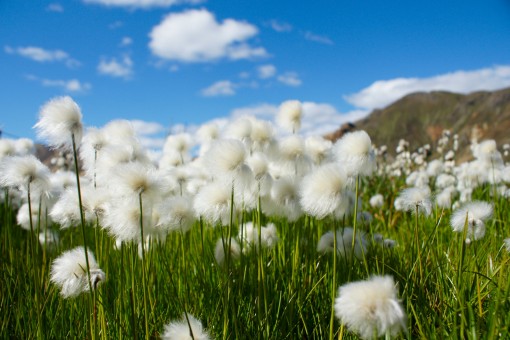
Planting time:
Dandelion seeds have no dormancy period. From spring to autumn, they can be planted as long as the climate is above 15°. The key is whether the seeds can germinate and whether planting is uniform.
Dandelion seeds germinate fastest at 15---10℃, and germinate slowest at 25---30° and above. The seeds mature around mid-May, and can be planted immediately after collection. The seeding rate is 3---4g per square meter, and 25---50g per mu.
Yield per square meter:
For open-field cultivation, the average yield is 0.8-1.0 kg per square meter. For greenhouse cultivation, the average yield is 1.2-1.7 kg per square meter. For glasshouse cultivation, the average yield is 1.5-2.4 kg per square meter.
Planting techniques:
1. Sowing in beds. Open shallow furrows 1 cm deep and 5 cm wide across the bed, sow the seeds evenly into the furrows, cover with fine soil, and press with a wooden roller, with a row spacing of 15 cm.
2. Ridge sowing. Open shallow furrows 1 cm deep and 5 cm wide along the ridges. After sowing, cover with fine soil and press with a wooden roller.
3. Root burial planting. In order to bring dandelion to market earlier and increase income, digging roots in the wild and burying them for planting in a greenhouse can achieve twice the result with half the effort. In late autumn (mid to late October), when dandelions are hit by the first frost and the leaf color changes from green to red, promptly collect dandelion roots in the wild, preferably whole roots. Make beds in the greenhouse with the specifications described above. Plant the roots at a row spacing of 15 cm and a plant spacing of 5 cm, burying them to the original root surface level, so that the root tops are at the soil surface as if exposed yet not exposed, and press firmly by hand. Keep the greenhouse temperature at around 20℃, and dandelions can grow normally. If you want dandelions to reach the market during peak demand, control the greenhouse temperature to limit plant growth, and satisfactory results can be achieved.
4. Field management techniques:
(1) Cultivation and weeding. About 10 days after dandelion emergence, carry out the first cultivation and weeding. After that, cultivate and weed once about every 10 days until the rows close; keep the field free of weeds. After the rows close, weeds can be pulled by hand.
(2) Thinning and final spacing. Thin and set the plants in combination with cultivation and weeding. Thin about 10 days after emergence with a plant spacing of 3-5 cm. After 20-30 days, final spacing can be done with a plant spacing of 8-10 cm. For broadcast sowing, a plant spacing of 5 cm is sufficient.
(3) Fertilizer and water management. Dandelion has strong disease resistance and does not require pest and disease control. The focus of field management is fertilizer and water. It is not strict about soil requirements. When planting dandelion, if the soil surface is not covered, water frequently to keep the soil moist to ensure full stands. After emergence, always maintain soil moisture as well.
(4) Topdressing during the growing period. Topdress 1-2 times during the growing period, and water frequently to keep the soil moist, so as to ensure full stands and the needs of growth after emergence. Young tender plants sown in the same year may not have leaves harvested; wait until the second year to begin harvesting, when the plants have good quality and high yield. For autumn-sown plants, after winter begins, spread 2500 kg of organic fertilizer and 20 kg of superphosphate per mu on the bed surface, which both fertilizes and protects the roots for safe overwintering. After greening up the following spring, chemical fertilizer can be applied together with watering. In late autumn and early winter, one thorough watering should be given.