When to sow Artemisia selengensis? Key points on planting methods and variety selection
Artemisia selengensis, also known as luhhao, narrow-leaf mugwort, water mugwort, green mugwort, etc., is a wild plant commonly found along lakes and grassy flats. It is widely cultivated for its insecticidal and dampness-removing effects. So when should Artemisia selengensis be sown? What are the planting methods? Which variety is good to grow?
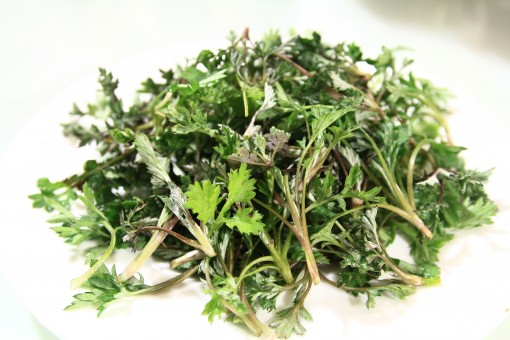
I. Variety selection
Common varieties of narrow-leaf mugwort include Xiaolizi Large-leaf Mugwort and Xiaolizi Broken-leaf Mugwort. Xiaolizi Large-leaf Mugwort, also known as willow-leaf mugwort. The leaves are pinnately trifid, the tender stems are green, with a strong fresh fragrance, thick and tender; it is relatively cold-tolerant, disease-resistant, sprouts early, and has high yield.
II. Sowing and seedling raising
1. Seedling raising time: raise seedlings from June to August each year, and the seedling age is generally 25-35 days.
2. Field preparation and fertilization: the ratio of seedling field to main field is 1:3-4. Field preparation should meet the standards of level field and broken soil, soaked field and clean weeds, and loose topsoil with firm subsoil. Apply sufficient base fertilizer before field preparation, using 1500-2000 kg of farmyard manure and 5-10 kg of 45% high-quality compound fertilizer per mu, or 1000 kg of farmyard manure, 100-120 kg of cake fertilizer, and 10-15 kg of 30% compound mixed fertilizer per mu. Fertilization should be carried out 7 days before seedling raising. Base fertilizer must not be applied in holes or broadcast after sowing, so as to avoid fertilizer damage to seedlings. The seedling bed width should preferably be 1.5-2.0 m including trenches.
3. Seedling treatment: aboveground stems are preferred for seedlings, but underground stems can also be used. When using aboveground stems, first peel off the stems and leaves, then cut the stems into small sections 4-6 cm long, ensuring each section has 2 intact axillary buds or 2 nodes, then soak the small sections in water. During soaking, add 30 g of carbendazim and 1 g of ABT rooting powder per 100 g of water. After 4-5 hours, remove and dry in the shade until sowing.
4. Sowing: this mode uses layering propagation. In the prepared seedling field, use a hoe 15-20 cm wide to dig out sowing rows, then place the seedling sections in the rows, sowing 150-180 sections per square meter, and finally cover with 1-2 cm of soil. Sowing should be done when there is sufficient soil moisture or before rain.
5. Seedbed management:
(1) Common pests during the seedling stage include aphids, cabbage caterpillars, etc., and the main diseases are gray mold and downy mildew. Pest control follows the principle of "apply pesticide when pests are seen," and disease control should use protective agents such as cymoxanil · mancozeb and triethyl phosphonate aluminum before the rows close.
(2) If drought occurs before and after emergence, timely drought resistance and seedling protection should be carried out.
(3) Apply herbicide after sowing and before emergence, using drugs such as alachlor or trifluralin, at about 0.2 kg per mu; application can also be done after emergence, with drugs such as haloxyfop-methyl, quizalofop-P-ethyl, and clethodim.
III. Land preparation and fertilization
(1) It is advisable to choose sandy loam soil with a previous crop other than Asteraceae crops, good irrigation conditions, and fertile soil. Before planting, plow and expose (freeze) the soil clods;
(2) Apply sufficient base fertilizer, using 3000-4000 kg of decomposed organic fertilizer or 150 kg of decomposed cake fertilizer and 30 kg of high-quality compound fertilizer per mu; open beds 1.5-2.0 m wide including trenches.
IV. Planting
Use a small hoe or other tool to dig small rows, arrange the small seedlings in the rows, and cultivate the soil well. The standard for transplanting seedlings is: green leaves, thick stems, and seedling length 15-18 cm. Planting row spacing is 15 cm, plant spacing is 5-6 cm, and 60,000-70,000 plants are planted per mu.
V. Field management
1. Water and fertilizer management: narrow-leaf mugwort is moisture-tolerant but not drought-tolerant. During hot and dry seasons, water frequently to keep the field moist and promote growth. After planting narrow-leaf mugwort seedlings, be sure to irrigate with survival water, using 1000-3500 kg of water per mu. After survival, according to seedling condition, splash-irrigate once with clear manure water or 1% urea water. Before mulching in winter, loosen the soil shallowly and broadcast 10 kg of urea or 20 kg of high-quality compound fertilizer per mu, and water timely if drought occurs. After the Beginning of Spring, apply another topdressing of clear manure water to promote stem and seedling growth.
2. Cultivation and weeding: the underground stems of narrow-leaf mugwort are mainly distributed in the 5-10 cm soil layer. After planting and survival, promptly pull out weeds in the field and loosen the soil by cultivation to promote good root development and accumulate more nutrients.
3. Temperature management: in early to mid-November, after the aboveground parts are killed by frost, remove the narrow-leaf mugwort stems level with the ground, clear dead branches, fallen leaves, and weeds from the field, and after fertilizing and watering for 5-7 days, cover with a greenhouse, while also covering with plastic film inside the greenhouse or covering with a small arch shed. When the daytime greenhouse temperature (large or medium greenhouse or small arch shed) exceeds 25°C, uncover the film for ventilation. Plastic film can also be used directly over field seedlings, with the covering period starting from the first frost and ending at harvest the following year. If the daytime temperature exceeds 5°C in winter and spring, attention should be paid to uncovering the film to prevent old, weak seedlings and spindly seedlings, so as not to reduce their marketability.
4. Thinning: when the seedlings grow to about 3 cm, thin them in time, keeping 3-4 small seedlings per clump. Otherwise, too many seedlings will cause crowding and affect the marketability of Artemisia selengensis.
5. Building sheds for cold protection: the optimum temperature for Artemisia selengensis is 20-25°C. After October, the temperature gradually decreases. When the temperature is below 10°C or there is frost, the stems and leaves wither and Artemisia selengensis grows slowly, but Artemisia selengensis overwinters by underground stems, and the underground stems can sprout above 5°C. To ensure that Artemisia selengensis is marketed during New Year's Day and the Spring Festival, sheds should be built in mid-to-late November before the temperature drops to 10°C for heat preservation and frost protection. Cover with 0.08 cm thick drip-free film. The shed length is 35-40 m, shed width is 4.5 m, shed height is 1.7 m, and north-south orientation is preferable. Keep the temperature inside the shed at 18°C-23°C on sunny days. At noon when the temperature is high, open both ends of the shed for ventilation, so as to avoid excessive growth due to excessively high temperature and avoid rot or blackening of Artemisia selengensis due to excessive humidity and poor ventilation. Remove the covering film promptly when the temperature rises after the Spring Festival.
6. Pest and disease control: narrow-leaf mugwort has strong resistance to pests and diseases. The main diseases are gray mold and root rot, and the main pests are aphids and cabbage caterpillars. For root rot in the early stage, drench the roots with 800-fold liquid of 50% carbendazim wettable powder, or 800-fold liquid of 58% metalaxyl · mancozeb wettable powder. For gray mold in the early stage, spray with 1000-fold liquid of 50% procymidone wettable powder. For cabbage caterpillars, use 1500-fold liquid of 5% chlorfluazuron dispersible liquid concentrate. For aphids, use 2000-fold liquid of 20% imidacloprid wettable powder.
VI. Scientific harvesting
When the tender shoots of Artemisia selengensis grow to 15-25 cm, the top heart leaves have not yet opened, and the color is light green, harvest close to the bed surface. When the temperature is suitable, harvest about once every 30 days; when the temperature is low, harvest about once every 50 days. After cutting the stems, except for keeping a few heart leaves, remove all the other leaves. Grade and tie into bundles according to different thicknesses, then soak in clean water, cover well with a damp cloth, and place in a cool place. After 8-10 hours of softening, they can be marketed.
VII. Reasonable seed retention
After the last harvest in March, select a field reserved for seed seedlings, generally retaining sufficient area at a ratio of 1:5. If the land area is small, first reduce the seed retention field, and after harvesting the previous crop before June-July, increase the area for propagation. The management method of the seed retention field is the same as above.