Is the Desert Rose (Adenium obesum, Tianbao Flower) Poisonous? A Guide to Proper Watering and Dealing with Yellow Leaves
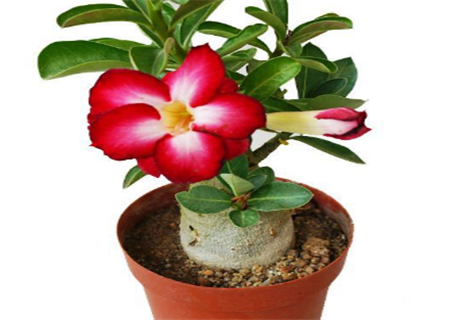
Desert Rose, also known as Tianbao Flower. It is not a rose that grows in desert regions, and it has no close relationship or resemblance to roses. It gets the name Desert Rose because it tolerates extreme heat but not cold, and because its place of origin is close to deserts and its flowers are red like roses. So is the Desert Rose poisonous? How do you water a Desert Rose? What should you do when the leaves of a Desert Rose turn yellow?
1. Is the Desert Rose poisonous?
The entire Desert Rose plant is toxic, and the sap inside the plant is highly toxic.
Handling Desert Rose poisoning
Desert Rose poisoning can cause symptoms affecting the cardiovascular system, such as a rapid heartbeat and irregular heart rhythm. When it occurs, it is more likely to trigger other concurrent symptoms. If poisoning occurs, it is recommended to seek medical treatment immediately and call the emergency number.
2. How do you water a Desert Rose?
1. Spring and autumn are the periods of most vigorous growth for the Desert Rose. During this time, water it thoroughly to keep the potting soil moist, but at the same time be careful not to let it become too wet. When watering, pay attention to watering only when the soil is dry and watering thoroughly once it has dried out. In early spring and late autumn, when temperatures are lower, watering needs to be appropriately reduced.
2. In summer, during its vigorous growth period, you need to ensure sufficient fertilizer and water so that the flowers produced are abundant and vivid. In addition, when repotting once a year, you can also appropriately apply some slow-release base fertilizer in the pot, such as decomposed soybean cake, bone meal, and so on.
3. In winter, reduce watering to keep the potting soil dry, but water it when it becomes too dry. The Desert Rose does not need much fertilizer. During its growing period, you can apply a dilute liquid fertilizer 1-2 times per month, and stop fertilizing in winter. The Desert Rose likes phosphorus and potassium fertilizers, and you can give it a supplement once a month as usual.
3. What should you do when the leaves of a Desert Rose turn yellow?
1. Overwatering is also an important cause of yellow leaves. The Desert Rose is not tolerant of dampness, so the amount of water should not be too much, otherwise it will cause water to accumulate at the roots, leading to root rot, which makes the leaves turn yellow and fall off, and even wither.
2. Cut away the rotted roots and pay attention to watering the Desert Rose reasonably. Do not water too much; water lightly. The Desert Rose is drought-tolerant, so it does not need too much water.
3. Winter is cold with lower temperatures, and the Desert Rose enters its dormant period at this time. It may dry out and drop its leaves in order to reduce its own water evaporation and protect itself. At this time, do not fertilize too much or with too high a concentration, otherwise it will cause the leaves to turn yellow and even die.
4. Maintain a suitable temperature and a reasonable fertilizer amount; do not apply too much. It is best to grow the Desert Rose in a greenhouse. The Desert Rose likes warmth and a well-ventilated growing environment. Poor ventilation will cause the plant to develop root rot and yellow leaves.
5. Place the potted Desert Rose in a ventilated spot indoors, such as a balcony or windowsill, for growing.
6. Pests and diseases are also an important cause of yellow leaves on the Desert Rose. Its main pest is scale insects. When the infestation is severe, it can cause the whole plant to drop its leaves, stop growing, and eventually die.
7. If scale insects are found, promptly use a 2000-fold dilution of 40% omethoate emulsifiable concentrate for spraying and control.