Why the "Queen of Flowers" Rose Doesn't Bloom: Causes, Solutions, and the Best Time and Methods for Cuttings
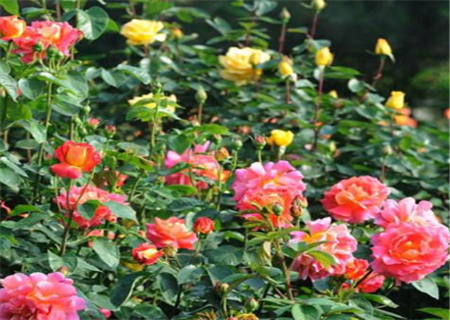
The rose (Chinese rose), called the "Queen of Flowers" and also known as “Yueyuehong,” is generally red, or pink, occasionally white and yellow. It can be used as an ornamental plant or as a medicinal plant. Many farmers love growing roses, so what are the reasons a rose doesn't bloom? How do you deal with it? When is the best time to take rose cuttings? What are the cutting methods?
I. What are the reasons a rose doesn't bloom? How do you deal with it?
1. The soil used for cultivation is poor, or the potting soil has not been changed for a long time; fertility is weak and nutrients are lacking, especially when the phosphorus content is too low, which inhibits the normal differentiation of flower buds and thus affects normal flowering.
2. The growing environment is in a shaded spot with poor ventilation, and light is insufficient, which inhibits the germination of flower buds.
3. Pruning work has not been done properly, branches are too dense, nutrients are dispersed, and the flower buds lack the nutrients needed for growth.
4. In midsummer the temperature is high, raising the soil temperature above 30°C, which inhibits the normal physiological functions of the root system. High temperatures also easily cause water shortage, making the soil layer around the roots dry and hot, which easily leads to wilting of branches and leaves and scorching of leaf edges, and is therefore unfavorable for autumn flowering. Therefore, in summer watering must be sufficient, and the potting soil can be properly mulched, using small pieces of corncob and shortened plant stems. When watering, try to push the mulch aside so that water directly contacts the potting soil, which helps lower the soil temperature and control the amount of water evaporation.
5. In the early spring in the north, the temperature is hard to predict and frost damage occurs from time to time. This period is when the axillary buds of the rose sprout, the flower buds differentiate, and the new shoots grow. Therefore, frost damage from late frost and cold waves must be avoided; otherwise the growth of flower buds will be hindered and it will be difficult to form buds and bloom. New shoots that are frozen will wither, reducing the flowering rate of the first bloom. In summary, timely and effective protective measures must be taken against frost damage.
6. The last reason may be infection by disease, and if the plant does not receive timely and effective control, it will die, and naturally it will not bloom either.
II. When is the best time to take rose cuttings? What are the cutting methods?
1. Live tender bud cutting method
To choose live tender bud cuttings, do it in April to May or September to October. For the cuttings, generally choose healthy branches and leaves of the current year that are free of pests and diseases. After the flowering period, clean off the faded flowers and old leaves on the cuttings. Wait until the branch has built up enough nutrients and the branches are thick and the leaves are strong. On a windless morning, cut off a branch of about 10 cm, keep two compound leaves and two small leaves at the base, and remove the rest of the leaves.
The cut end of the cut branch can be dipped in rooting powder and inserted into soil prepared in advance. The soil should be breathable and well-draining; you can use nutrient soil such as leaf mold or coarse sandy soil. Generally insert two-thirds of the branch, leaving 2 to 3 buds outside. After inserting, water and cover with soil. When new buds grow out and the old leaves have not fallen off, it means the cutting was successful and the cutting has taken root and survived.
2. Hardwood cutting method
The hardwood cutting method works on the same principle as the tender bud cutting method. Choose healthy branches, cut them, treat them, and insert them into the soil. After inserting, water thoroughly. Then set up a frame, cover with plastic film, and place it in a sunny spot to retain moisture and humidity. By the following spring, the film can be removed. When the leaves of the cutting turn green and the root system has grown well, it can be transplanted.
3. Bud cutting method
When new buds grow vigorously in spring, twist or cut off new buds that are thick and plump, wash them and set them aside. Then in the previously prepared broken soil, use a wooden stick to make holes, insert the new buds into the holes to a depth of one-third of the bud length. After inserting, press the surrounding soil firm, water thoroughly, and likewise cover with plastic film. Keep ventilation twice a day, pay attention to soil moisture, and roots will form in about 15 days. After 20 days remove the film and prepare for transplanting.
1. Moderate misting
No matter which cutting method is used, the new seedlings must be cared for after cutting. The last step of cutting is to water thoroughly and then cover with plastic film. Later on, we should often uncover the film to mist the cuttings in order to raise the humidity inside the enclosure. Before misting, check first to see the condition of the seedbed and cuttings, and mist according to the humidity conditions. In hot seasons, mist about once every two days; in cold seasons, mist about once a week. In addition, as the cuttings grow, their water demand will increase, so everyone should judge and adjust as appropriate according to the specific situation.
2. Temperature control
The suitable latitude for growing roses is 23 to 27 degrees. In spring and autumn this temperature is fairly moderate; building a windbreak or using plastic film prevents low temperatures in the morning and evening from freezing the seedlings. In summer, when the temperature is too high, two layers of shade frames need to be built, and in the morning and evening water should also be sprayed onto the shade frames, and the area around the seedlings should also be sprayed, mainly to lower the temperature, because too high or too low a temperature is not good for the growth of the cuttings.
3. Ventilation and air exchange
After the cuttings are done, we build plastic film over the seedlings to make a film enclosure, and spray water inside the enclosure at regular intervals. The seedlings carry out photosynthesis inside the closed enclosure; this only guarantees temperature and humidity. Besides this, we should also regularly open the enclosure for ventilation and keep the air circulating inside.