How many blueberries should you eat per day? An introduction to the growing conditions and methods of this healthy fruit
Blueberry is one of the world's five major healthy fruits, belonging to the family Ericaceae and the genus Vaccinium. The fruit is rich in nutrients and has functions such as preventing cranial nerve aging, protecting eyesight, strengthening the heart, fighting cancer, softening blood vessels, and enhancing the body's immunity, with high nutritional value. So how many blueberries is it better to eat per day? What are the growing conditions and growing methods for blueberries?
I. How many blueberries is it better to eat per day?
Blueberry is a low-calorie, cooling-natured fruit. Many girls buy a box of blueberries to eat at home when they are losing weight. However, blueberries must not be eaten in large amounts; 6 to 10 berries per day is appropriate, and the number of blueberries eaten in a day must never exceed 20 berries, which is usually one small box. Moreover, when exceeding 10 berries, you must stop and wait one or two hours before eating more, otherwise it will seriously harm the stomach and intestines.
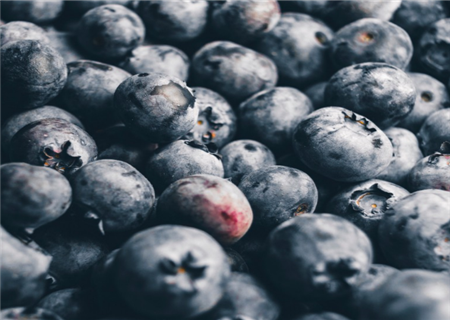
II. Growing conditions for blueberries
1. Climate: Based on China's climatic characteristics and the growth habits of different blueberry cultivar groups, the growing regions can be roughly divided into four production regions: the Changbai Mountain and Greater and Lesser Khingan Mountains blueberry production region, the Liaodong Peninsula and Jiaodong Peninsula blueberry production region, the Yangtze River Basin blueberry production region, and the South China blueberry production region.
2. Soil: Blueberries are suited to loose sandy loam soil with good drainage, with a soil pH of 4.0 to 5.5; the most suitable soil pH is 4.3 to 4.8, the soil organic matter content is 8 to 12%, and the optimal soil water table is 40 to 60 cm, with the soil moist but not waterlogged.
3. Water: The blueberry root system is relatively shallow and is quite sensitive to lack of water. In most cases, timely irrigation is needed according to soil moisture conditions. River water, reservoir water, or groundwater can all be used as irrigation water sources, but water sources with high salinity and high pH should be avoided for irrigation.
4. Terrain: For blueberries, relatively flat land or gently sloping land should be chosen. Although steep mountain land is beneficial for improving fruit quality, it brings a lot of inconvenience to field operations. Valley land or low-lying plots should be avoided for cultivating blueberries, so as to prevent frost damage during the flowering period.
III. Growing methods for blueberries
1. Deep plowing and land preparation: After the blueberry site is selected, deep plowing combined with green manure incorporation should be carried out 1 year before planting, with a depth of 20 to 25 cm as appropriate, so as to deepen and mature the soil. For soil types that do not meet blueberry requirements, soil improvement should be carried out before planting to facilitate organic blueberry growth.
2. Planting time: In the south, where winters are not very dry, planting from autumn to before early spring budbreak is best. In places with dry autumn and winter, planting when the rainy season arrives is appropriate. In places with irrigation conditions, planting can be done in all four seasons, and in Majiang, Guizhou, planting can also be done in summer.
3. Planting density: The planting depth for one-year-old seedlings is 15 to 20 cm, and the soil must be supported and treaded firmly and compactly, achieving “three supports, two treads, and one lift of the seedling.” Rabbiteye blueberry often uses 2×2 m or 1.5×3 m, highbush blueberry 1.2×2 m, and lowbush blueberry (0.5 to 1)×1 m.
3. Pollinator trees: Rabbiteye blueberry must be provided with pollinator trees. Highbush blueberry and lowbush blueberry have relatively high self-fruit-setting rates, but providing pollinator trees can also improve fruit quality and yield. The configuration method uses a 1:1 or 1:2 ratio of main cultivars to pollinator cultivars.
4. Soil management: The blueberry root system is relatively shallow and slender, without root hairs, so the soil is required to be loose and well aerated.
①Clean cultivation method: Clean cultivation can be carried out from early spring to August. After autumn begins, clean cultivation is unfavorable for overwintering. Highbush blueberry cultivated on sandy loam commonly uses clean cultivation, with a cultivation depth of 5 to 10 cm as appropriate; too deep easily damages the root system.
②Sod culture method: That is, growing grass between rows. Compared with clean cultivation, the sod culture method is likewise beneficial for increasing yield and also has the advantages of maintaining soil moisture and facilitating mechanical operations.
③Mulching method: The soil mulching method is widely used in blueberry production and has multiple effects such as increasing soil organic matter, improving soil structure, regulating and maintaining soil moisture, lowering soil pH, and controlling weeds.
5. Fertilization method: When fertilizing blueberries, it is recommended to use organic fertilizer. China's farmland has already suffered serious pollution due to excessive use of chemical fertilizers, ultimately leading to reduced yields and even total crop failure.
①Fertilizer types: Applying nitrogen-phosphorus-potassium compound fertilizer gives better results than applying a single fertilizer. The ratio of nitrogen, phosphorus, and potassium fertilizers is preferably 1:1:1. Ammonium-form nitrogen fertilizers such as ammonium sulfate are preferable, nitrate nitrogen fertilizers are not suitable, and chlorine-containing fertilizers such as ammonium chloride and potassium chloride should not be chosen.
②Fertilization method: Highbush and rabbiteye blueberries can use the furrow application method, with a depth of 10 to 15 cm as appropriate. Fertilization is carried out before budbreak in early spring, and it can also be applied once more during the berry ripening stage.
③Fertilization amount: Excessive fertilization can very easily damage the blueberry plant or even cause the entire plant to die. Therefore, determining the fertilization amount must be done very cautiously and must be based on soil fertility and the nutritional status of the plant.
6. Irrigation method: The blueberry root system is shallow and likes moisture, so timely irrigation is very necessary. However, attention must be paid to the water source and water quality. Deep well water generally has a relatively high pH and high sodium and calcium content, and sulfuric acid can be used to adjust the pH to about 4.5 to 5.5 before irrigation.
7. Disease control: Diseases affecting blueberries include fungal diseases, bacterial diseases, and nematodes, among others. However, China is a newly introduced cultivation region, so the occurrence of pests and diseases is relatively low, and routine preventive work is sufficient.
8. Timely harvest: The fruit ripening period of rabbiteye and southern highbush blueberries is not uniform. Generally, harvesting needs to continue for 20 to 30 days, usually once per week. For fresh eating, the fruit should be picked by hand; for processing, mechanical harvesting can be used.