Green bean benefits and effects, and how to grow them on a balcony
Green bean is another name for the kidney bean, and it has many names. In the north it is mostly called eyebrow bean, and in Lanxi, Zhejiang it is also called eyebrow bean. It is also called vegetable bean, kidney bean, April bean, and so on; in Quzhou, Zhejiang it is called Qingming bean, and in Sichuan and some parts of central China it is called green bean. So what are the benefits and effects of green beans, and do you know how to grow green beans on a balcony?
I. Benefits and effects of green beans
1. Supplementing folic acid
Green beans contain folic acid, so eating green beans can supplement folic acid, and folic acid can promote brain development, and folic acid can also prevent tumors and cancer.
2. Promoting body development
Green beans contain the trace element copper, and copper can promote body development; it is essential for human growth and development. Copper can promote the development of bones, skin, and internal organs, and copper can also promote hair development and nourish and protect hair. Green beans also contain urease, saponin, and various globulins; these substances can improve the human body's immunity and enhance resistance.
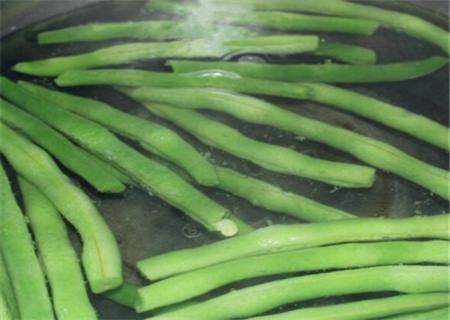
3. Maintaining the body's acid-base balance
Green beans are rich in inorganic salts, and inorganic salts can maintain the acid-base balance in the human body, thereby maintaining the body's various circulatory systems and promoting metabolism.
4. Strengthening the spleen and nourishing the stomach
Green beans contain protein and are rich in various amino acids. In the view of traditional Chinese medicine, green beans strengthen the spleen without being cloying, and tonify qi and strengthen the spleen.
5. Strengthening bones
Generally speaking, strengthening bones refers to foods rich in calcium, so that a large amount of calcium is taken in to prevent osteoporosis, but green beans are not like this. The calcium content in green beans is not very high, but green beans contain a large amount of vitamin K, and vitamin K can increase bone density in patients with osteoporosis, thereby strengthening bones.
6. Protecting the heart
Green beans contain soluble dietary fiber, and these soluble fibers can reduce the deposition of cholesterol in the blood and promote the excretion of cholesterol. They are also rich in vitamin A and vitamin C; these two vitamins can also prevent cholesterol deposition in the blood, and green beans also contain the trace elements magnesium and potassium. These two trace elements can help the human body stabilize blood pressure, thereby reducing the burden on the heart and protecting the heart.
7. Weight loss
Green beans are rich in dietary fiber, and dietary fiber can promote gastrointestinal motility and help the discharge of waste from the intestines. Green beans also contain saponin, which can reduce the human body's absorption of fat and promote fat metabolism. Green beans are nutritious, low in fat, and also very low in calories, so green beans are a low-fat, low-calorie food; therefore, green beans are a very good weight-loss food.
II. Methods for growing green beans on a balcony
Seedling methods for green beans
1. They can be sown directly or grown as seedlings and transplanted. Sow 3-4 seeds per hole, cover with about 2 cm of soil, keep moist, and seedlings emerge in about 1 week. If the weather is too dry, cover with film to retain moisture.
2. If transplanting, it should be done as early as possible; transplant when the first pair of true leaves unfolds. Because the root system has weak regeneration ability, water thoroughly after planting.
Daily management of green beans
1. They have strict water requirements, liking moisture but fearing drought and avoiding waterlogging. Before flowering, water sparingly; generally, do not water unless dry. From flowering to pod-setting, more water is needed; generally water once every 2-3 days, and appropriately increase watering frequency when temperatures are high.
2. Fertilization can usually be combined with watering. In the early growth stage, apply 2-3 rounds of decomposed organic fertilizer mainly based on nitrogen fertilizer. From flowering to pod-setting, spray decomposed organic fertilizer once every 1-2 weeks, requiring a nitrogen-phosphorus-potassium compound fertilizer.
3. The suitable growth temperature is 15-25°C. When higher than 13°C or lower than 15°C, flowers are prone to drop. In summer high temperatures, shade and cool down; in low temperatures, avoid prolonged rain. Dwarf varieties do not need supports; for climbing varieties, when the plant height is 15-20 cm, set up supports or guide the vines to climb a trellis or railing. About 10 days after the flowers fade, the pods can be harvested when they are about 10 cm long. When harvesting, hold the flower stalk with one hand and pinch off the pod with the other, taking care not to pull hard and break the stem.
Pest and disease control for green beans
1. Bean anthracnose: 70% thiophanate-methyl 800x solution, spray at 7-day intervals.
2. Bean rust: 50% carboxin 800-1000x solution, spray at 7-day intervals.
3. Bean aphid: 10% imidacloprid 2000x solution.
4. Whitefly: 25% buprofezin 1000-1500x solution spray.
Harvesting green beans
About 10 days after the flowers fade, the pods can be harvested when they are about 10 cm long. When harvesting, hold the flower stalk with one hand and pinch off the pod with the other, taking care not to pull hard and break the stem.