Is jasmine suitable for indoors? Quick cutting method and care tips
Jasmine, also known as Xianghun, Molihua, Meili, Meili, Mali, Moeli, Moeli, and Muli pear flower. It symbolizes purity and elegance. Jasmine flowers are extremely fragrant and are a famous raw material for scented tea and an important raw material for essential oils; the flowers and leaves are used medicinally to treat red, swollen, painful eyes, and have cough-relieving and phlegm-resolving effects. So, is jasmine suitable for indoors? What are the quick cutting methods for jasmine? And what are the care precautions for jasmine?
I. Is jasmine suitable for indoors?
Jasmine is quite suitable for indoors, and this is true from every aspect. However, the number should not be too many.
1. The premise, of course, is that it is not toxic. Once this condition is met, there is basically no worry about keeping it indoors. Otherwise, no matter how good-looking it is, it will still make us uneasy.
2. Its ornamental value is also very strong; it is a fine ornamental plant. Especially when it reaches the flowering period, it is very suitable for indoor ornamental use. We can see that the plant's flowers are not only beautiful but also very elegant.
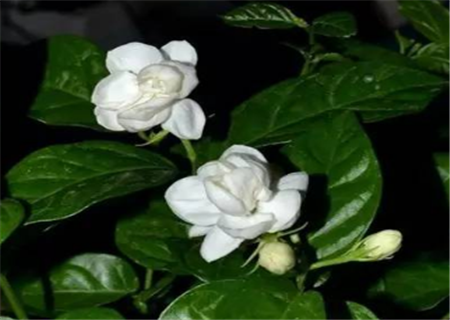
3. In addition, as a plant, it naturally has a certain purifying effect on the environment. Absorbing carbon dioxide, releasing oxygen, absorbing dust, and absorbing some harmful gases, among other things, its effects are all quite good. Also, it gives off a delicate fragrance. It has no adverse effect on the human body; instead, it has a refreshing effect. However, the number should not be too many, otherwise the fragrance will also be too strong.
4. The number of jasmine kept indoors should not be too many. The first reason has already been mentioned above, which is that the fragrance may be very strong. Second, it will also attract quite a few small insects. In addition, when placing the plant indoors, attention should also be paid to light; it cannot be too weak, especially during the flowering period.
II. Quick cutting method for jasmine
1. Prepare a container
You can prepare a transparent soda bottle or glass bottle. If it is a soda bottle, do not use the top cap, and also wash the bottle clean. Finally, add clean water 2 to 3 cm deep, and that is enough. The bottle must be transparent, so that when the jasmine branch is placed inside, it can also receive light.
2. Trim the branch
Cut a healthy jasmine branch, preferably one that has already flowered, about 7 to 9 cm long. The leaves at the bottom must be removed to avoid rotting after being submerged in water. At the top, only 2 to 4 leaves are enough; if there are more, the branch will not be able to satisfy the transpiration of the leaves, and the rooting rate will be very low.
3. Insert into water
Next, simply place the branch into the water, then put the cutting pot in a warm and ventilated place. Be sure not to expose it to direct sunlight, because direct sunlight will intensify the transpiration of the leaves, while a plant without roots can absorb only a very limited amount of water, which may cause the branch to die. Normally, if the water runs low, just add some water.
4. Rooting and sprouting
Cuttings can be taken at any time, but the most suitable time is from April to June, because this period is the most suitable for plant hydroponic cuttings. If there are no accidents, generally in about 2 to 3 weeks, this branch will take root and sprout. Normally, the water amount must be controlled; it cannot be too much or too little, so that growth is better promoted.
5. Transfer to hydroponics
Isn't the hydroponic cutting method for jasmine very simple? After the jasmine branch has rooted, it can be transferred to hydroponics. Of course, soil culture is also possible; this depends on personal preference. For hydroponics, use a suitable flowerpot, with about 2/3 of the root system submerged in water, and the remaining roots left in the air for breathing. Normally, nutrient solution can be dripped into the water to let the hydroponic jasmine grow better.
III. Jasmine care precautions
1. Suitable light
Jasmine likes a semi-shaded environment; it can neither be exposed to direct sunlight all the time nor be completely shaded. If the light is too strong, the leaves are easily scorched, so the sunlight should be properly blocked. But if there is no light for a long time, the jasmine branches will also become slender, and the leaves will turn yellow. Suitable light is very important.
2. Control temperature
The most suitable temperature for jasmine growth is around 25°C, that is, April to June and September to October each year. Reaching this temperature indoors should be easy. In winter, do not let jasmine overwinter in an environment below 5°C, otherwise the plant is prone to frostbite, and in severe cases it may freeze to death.
3. Change water and fertilize
Hydroponic jasmine should have its water changed regularly. Before roots have grown, the water can be changed once every 2 to 3 days. After roots have grown, changing the water once every half month is enough. When changing the water, some nutrient solution can be added to the water. During the flowering period, because a large amount of nutrients is consumed, more nutrient solution can be added to make more flowers bloom.