The Benefits and Uses of Four O'Clock Flower (Mirabilis jalapa) and How to Grow It from Seed
When I was a child in the countryside, I often saw four o'clock flowers. Back then I didn't know their scientific name. They go by many names - some people call them roughe flower, others call them landmine flower, because their seeds look like landmines. Though unassuming, the roots and leaves of four o'clock flower can be used medicinally. So what are the benefits and uses of four o'clock flower? How do you grow it from seed? What are the benefits of four o'clock flower root for men?
I. Introduction to Four O'Clock Flower
1. Overview of Four O'Clock Flower
Four o'clock flower has many names, and they vary by region - for example, rouge flower, rice-cooking flower, landmine flower, grass jasmine, night darling, night flower, bath flower, and more. It belongs to the Nyctaginaceae family. Although its name contains "jasmine," it is not jasmine.
2. Morphological Characteristics
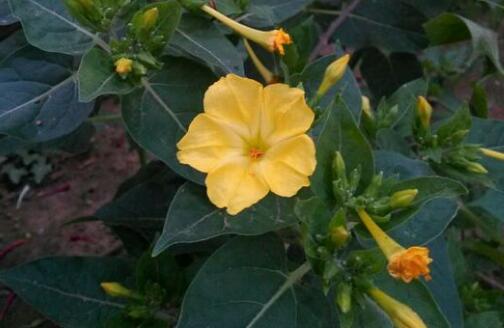
Four o'clock flower is a perennial herbaceous plant that can grow to about 1 m tall. Its leaves are ovate-triangular, opposite, emerald green, with lighter-colored veins inside. The flowers are trumpet-shaped with five-lobed petals, 2 to 3 cm in diameter and 4 to 5 cm long, mostly bright red or purple, though there are also white, pink, yellow, and bicolored varieties. The fruit is hard and black, closely resembling a landmine, which is why it is also called "landmine flower."
Four o'clock flower blooms from 4 PM to 10 AM the next day, which is why it is called "four o'clock flower" in English. Because it often blooms during the time when people bathe and cook dinner in the evening, it also has the aliases "bath flower" and "rice-cooking flower." The flowers wilt the following morning. Because the floral tube of four o'clock flower is long and slender, large nocturnal Lepidoptera have difficulty reaching the nectar, and its pollination is generally carried out by hawk moths.
II. Benefits and Uses of Four O'Clock Flower
1. Ornamental Value
Four o'clock flower is a flowering plant with low-maintenance management, very easy to cultivate, and with relatively high ornamental value. It has a faint jasmine fragrance and is an excellent landscaping plant.
2. Medicinal Value
Benefit 1: The roots and leaves of four o'clock flower can be used medicinally, with effects of promoting urination, clearing heat, and invigorating blood to dissipate stasis. In some folk remedies, the entire plant can be used as medicine, treating irregular menstruation, urinary tract infections, diabetes, traumatic injuries, prostatitis, adnexitis, cervicitis, mastitis, carbuncles, amenorrhea, leukorrhea, and many other conditions.
Benefit 2: The fruit of four o'clock flower, ground into powder and mixed with water for external application, can treat skin ulcers. The white powder inside the seeds (also called endosperm) can treat facial spots, acne, and yellow watery blisters on the skin; when these burst and ooze yellow fluid, it can also be used as cosmetic powder.
Benefit 3: The flowers of four o'clock flower can be used for colitis, abdominal bloating, and diarrhea.
Benefit 4: The stems and leaves of four o'clock flower treat sores, ulcers, swellings, and boils. Use fresh four o'clock flower, mash it and apply as a poultice, or decoct it in water for external washing.
3. Usage and Dosage of Four O'Clock Flower
Internal use: decocted in water, 15-25 g (25-50 g fresh).
External use: mash and apply.
4. Dietary Contraindications for Four O'Clock Flower
The roots, stems, and seeds of four o'clock flower all have a purgative effect. Pregnant women should not take it, to avoid any impact on the fetus and the pregnant woman herself.
5. Folk Remedies Using Four O'Clock Flower
(1) For leukorrhea: Stew 1 liang of white-flowered four o'clock flower root, 5 qian of white hibiscus, and 5 qian of white peony with meat and eat.
(2) For profuse uterine bleeding: Stew 2 liang of red-flowered four o'clock flower root, 1 liang of red cockscomb root, 1 liang of dizziness herb, and 5 qian of rabbit-ear fern with pig trotters and eat.
(3) For carbuncles and back sores: Take one fresh four o'clock flower root, peel and wash it, add a little brown sugar, mash it, apply to the affected area, and change twice a day.
Note: If you need to take four o'clock flower, it is best to consult a professional doctor for advice before use.
III. Benefits of Four O'Clock Flower Root for Men
According to the Supplement to the Compendium of Materia Medica, four o'clock flower root can "treat breast carbuncles and white turbidity." White turbidity, also called dripping white, is post-urination white discharge caused by chronic prostatitis. If this persists long-term, it can greatly affect sexual function. Therefore, four o'clock flower has a certain therapeutic effect on prostatitis in men. If you need to take it, it is best to consult a professional doctor for advice before use.
IV. How to Grow Four O'Clock Flower from Seed?
Four o'clock flower is a very easy plant to cultivate and can be managed with minimal care. With sunlight, water, and soil, it will grow well, so propagation by seed is extremely easy. Seeds will sprout about 2 weeks after sowing.
1. Soil
Four o'clock flower is not demanding about soil. This plant is highly adaptable, but for better growth, fertile soil with good drainage is preferable. It can be grown in open ground or in containers.
2. Climate
Four o'clock flower prefers a warm and humid climate. It is not cold-tolerant and grows best in slightly shaded areas.
3. Container Growing of Four O'Clock Flower
Before sowing four o'clock flower, you can soak the seeds in water for one hour. This way, after the seeds swell from absorbing water, burying them in soil will give a higher germination rate. Of course, soaking is not required, and as long as a constant temperature is maintained, this flower can be sown in all four seasons and managed with minimal care.
4. Open-Field Cultivation
In the south, direct-sow in open ground in mid-to-late March; in the north, in mid-to-late April. Sow 3-4 seeds per hole, and after seedlings emerge, keep 2 vigorous plants per hole. Management is relatively minimal - aside from applying some base fertilizer when preparing the soil, generally no further fertilization is needed. If the weather is not dry, there is no need to water.
If you want four o'clock flowers in different colors, you can plant several colors together.
Who would have thought that the four o'clock flower commonly seen by the roadside in childhood has so many benefits, especially its certain therapeutic effects on gynecological conditions, and in summer it can also help repel mosquitoes. If you come across four o'clock flower outside, why not save its seeds and take them home to plant!