Is the death flower datura poisonous? Can you be poisoned just by smelling it, and how does it differ from the red spider lily?
In rural areas there is such a flower called “yang lazi”, but its real name is actually datura. Datura flowers can be used not only for anesthesia, but also to treat diseases. However, some people use datura flowers for home decoration, and this is not acceptable. Because datura flowers are poisonous, can you also be poisoned just by smelling them? Is it the same as the red spider lily? What are the differences?
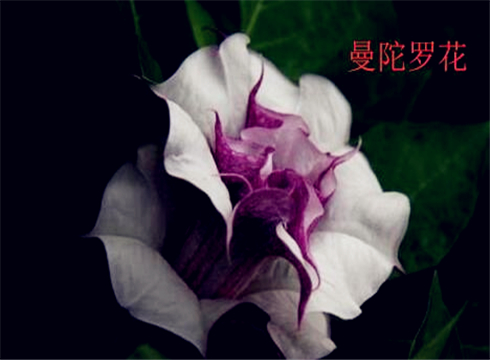
I. Is the datura flower, one of the top ten death flowers, poisonous?
1. The entire datura plant is poisonous, especially the seeds in the fruit, which are the most toxic; the young leaves are the second most toxic. Dried leaves are less toxic than fresh leaves. Under normal circumstances it can kill a horse in a short time, and it also causes great harm to humans.
2. The main toxic components of datura flowers are atropine, scopolamine, hyoscyamine and so on. After poisoning, a state of extreme sympathetic nervous system excitement appears.
3. What should be done in case of datura flower poisoning?
(1) If you accidentally eat datura flowers, the fastest method is to induce vomiting; after inducing vomiting, go to the hospital as soon as possible for gastric lavage.
(2) After datura poisoning, gastric lavage should be performed immediately with potassium permanganate solution or tannic acid, and then magnesium oxide, charcoal powder or a general antidote should be taken orally.
(3) After datura poisoning, administer a saline laxative by gavage, and at the same time inject glucose solution intravenously to promote the excretion of the toxin.
(4) For traditional Chinese medicine detoxification after datura poisoning, 30 grams of licorice and 60 grams of mung beans can be decocted in water and taken continuously without interruption.
II. Can you also be poisoned by smelling datura flowers?
Smelling the fragrance of datura flowers will not cause poisoning; as long as you do not eat its leaves, branches or roots, there is no problem. However, do not smell it for too long.
III. Are datura and the red spider lily the same?
No, they are not. The red spider lily, also known as manjusaka, is a variety of Lycoris radiata. Datura is a wild upright woody annual herbaceous plant in the Solanaceae family. Both flowers have connections with Buddhism and both represent death, but they can be completely distinguished by their morphology.
IV. Differences between the red spider lily and datura
1. Morphological differences between the red spider lily and datura
Red spider lily: Lycoris radiata is a perennial herbaceous plant, with a nearly spherical bulb covered by a purplish-brown membrane, 1-3 cm in diameter. The leaves are narrowly strap-shaped, about 15 cm long and about 0.5 cm wide, with blunt tips, dark green, with a pinkish-green band in the middle. The umbel is terminal, the flower stem is about 30 cm tall, and the flowers are bright red. The flowering period is August-September, and the fruiting period is October.
Datura: Datura is a wild upright woody annual herbaceous plant in the Solanaceae family, 0.5-1.5 m tall, with a stout cylindrical stem, light green or purplish, woody at the lower part. The leaves are alternate, opposite in the upper part, ovate or broadly ovate, with acuminate tips. The flowers are solitary in the branch forks or leaf axils, upright, with short pedicels; the calyx is tubular, 4-5 cm long; the corolla is funnel-shaped, greenish in the lower half and white or light purple in the upper part. The capsule is upright, ovoid, 3-4.5 cm long and 2-4 cm in diameter, with hard prickles on the surface or sometimes without prickles and nearly smooth, turning light yellow when mature.
2. The red spider lily and datura belong to different families and genera
Red spider lily: The red spider lily is a variety of the species Lycoris radiata in the plant kingdom, phylum Angiospermae, class Monocotyledoneae, order Asparagales, family Amaryllidaceae, genus Lycoris.
Datura: Datura is a plant in the plant kingdom, phylum Angiospermae, subphylum Angiospermae, class Dicotyledoneae, subclass Asteridae, order Solanales, family Solanaceae, tribe Datureae, genus Datura.
3. The red spider lily and datura have different alternative names
Red spider lily: The alternative names of the red spider lily include red spider lily, manjusaka, dragon claw flower, old crow garlic, garlic-head grass, ghost-raising fire, ghost flower, hell flower and so on.
Datura: The alternative names of datura include mandala, manda, manzha, manda, heart-drunk flower, dog walnut, foreign golden flower, maple eggplant flower, ten-thousand peach flower, naoyang flower, big trumpet flower, mountain eggplant and so on.
V. Similarities between the red spider lily and datura
1. Both have very pleasant names, and both also have very mysterious legends.
2. Both have connections with Buddhism. Datura is one of the four famous flowers of Buddhism. The red spider lily, also called manjusaka, is one of the four flowers in the Lotus Sutra.
3. Both are poisonous. Legend says that datura seeds are extremely toxic, and the rhizome of the red spider lily is poisonous.
4. Both are inauspicious flowers; both flowers represent death. It is said that datura flowers bloom on the road to heaven, representing darkness, hope, death and so on. The red spider lily covers the road to hell, representing sorrow, longing and death.