Dandelion Planting Methods, Key Points for Cultivation, and Analysis of Benefits and Risks
Dandelion is one of the plants we saw quite often in childhood, but in recent years it has become increasingly rare in cities. As a perennial herbaceous plant, dandelion is hard to forget for many people because of the beauty of its seeds drifting with the wind. So how should farmers grow dandelion? What should be noted when cultivating dandelion artificially? What are the benefits and risks of growing dandelion?
I. How to grow dandelion?
1. Dandelion is a perennial plant with a persistent root system. Under wild conditions, a two-year-old plant can already flower and set seed. Early summer is the flowering period, and the number of flowers increases with the number of years of growth. Some individual plants produce more than 20 flowers, and improved varieties can produce as many as more than 20 flowers per plant. After flowering, the seeds mature in 13 to 15 days.
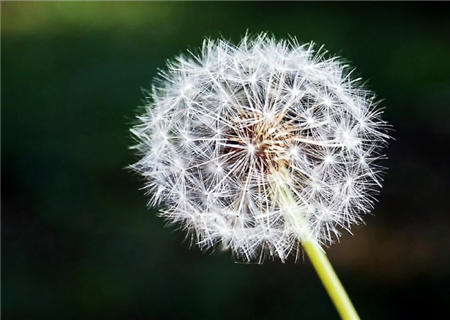
2. When the outer shell of the flower head turns from green to yellow-green and the seeds turn from milky white to brown, they can be harvested. Do not wait until the flower head splits open to harvest, otherwise the seeds are likely to scatter and be lost, causing relatively large losses. Generally, each capitulum contains more than 100 seeds. The 1000-seed weight of large-leaf dandelion is about 2 grams, and the 1000-seed weight of small-leaf dandelion is about 0.8 to 1.2 grams.
3. When collecting seeds, the flower heads of dandelion can be picked off and kept indoors for one day of after-ripening. After the flower heads have fully opened, dry them in the shade for 1 to 2 days until the seeds are half-dry, then rub off the fluff at the tips of the seeds with your hands, and finally dry the seeds in the sun for later use.
4. In places where wild dandelion resources are abundant, the roots of wild dandelion can also be dug up directly for cultivation. Usually in October, after digging up the roots, they are concentrated and planted in greenhouses at a spacing of 8 cm × 3 cm. After planting, water thoroughly. By February of the following year, new leaves will sprout. At this time, apply organic fertilizer once more, and once they have grown to a certain extent, the leaves can be harvested for market.
II. What should be noted when cultivating dandelion artificially?
1. For seed harvesting, dandelion can flower and set seed after two years of cultivation. The longer the growing period, the more flowers it produces, with a maximum of more than 20 flowers. After flowering, the seed maturation period is very short, generally about half a month. Whether the seeds are mature depends on the color change. When the outer shell of the flower head turns from green to yellow and the color of the flower head turns from white to brown, it means the seeds are mature and can be harvested.
2. Dandelion is both drought-tolerant and alkali-tolerant, and prefers loose, fertile, well-drained sandy loam soil.
3. If you want to bring it to market early and seize the market, you can dig up roots in the wild and then plant them in a greenhouse, achieving twice the result with half the effort. Plant the roots at a row spacing of 15 cm and a plant spacing of 5 cm, and bury them to the level of the original root surface. By controlling the temperature, you can control the growth of dandelion. For example, to make dandelion available on the market during the peak demand season, control the greenhouse temperature so that plant growth is restricted, and satisfactory results can be achieved.
4. If you need the seedlings to emerge earlier after sowing, you can soak them in warm water at 50-55°C, stir until the water cools, then soak for another 8 hours, remove them, wrap the seeds in a wet cloth, and place them in a location at about 25°C. Cover them with a wet cloth on top, and water once each morning and evening with warm water at 50°C. After 3—4 days, when the seeds begin to sprout, they can be sown. The sowing rate is 11.25 kg per hectare.
5. During the growing period, dandelion should be watered frequently to keep the soil moist. After the seedlings emerge, dandelion needs a large amount of water, so maintaining a moist soil state is the key to dandelion growth.
6. For sown dandelion, applying chemical fertilizer is not encouraged. Although applying chemical fertilizer makes the young plants and leaves dark in color and causes rapid growth, it loses the essence of green plants and also loses the wild flavor and style of dandelion. Generally, the yield per hectare is 9000—10500 kg.
III. Benefits of growing dandelion
The leaves, roots, and stems of dandelion can all be used as medicine. About 600 kg of dried product can be produced per mu. Calculated at 6 yuan per kg, the benefit per mu is about 3600 yuan. Dandelion is a perennial herbaceous plant. After two consecutive years of growth, its roots can be dug out and dried in the sun. The price of the roots is more than twice that of the stems and leaves. The root yield can reach about 300 kg per mu, with a price of 13 yuan per kg, so the benefit per mu can reach 3900 yuan. In addition, since it can also be eaten as a vegetable, the benefit per mu is about 7000-8000 yuan.
IV. Risks of growing dandelion
At present, Chinese herbal medicine cultivation is a good project, with higher economic benefits than previous grain crop cultivation. However, too many people follow the trend, causing the price of dandelion seeds to rise sharply. Moreover, not everyone can grow good dandelion. The planting region and cultivation techniques are extremely important, so there are certain risks in growing dandelion. Planting should be adapted to local conditions, and good cultivation techniques must be mastered.