Is Growing Winter Jujube Profitable? A Detailed Guide to Cultivation and Management Techniques
Winter jujube (also known as Yanlaihong, apple jujube, rock sugar jujube, Huanghua winter jujube, Miaoshang winter jujube, Zhanhua winter jujube) generally matures naturally and goes on the market in October-November of the Gregorian calendar. Because the weather in the north turns cold relatively early, it is named “winter jujube”. Is growing winter jujube profitable? How do you plant winter jujube trees? How do you manage them?
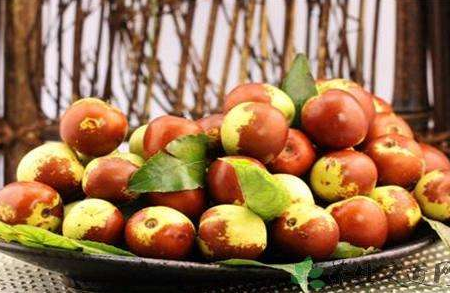
I. Prospects for growing winter jujube trees
1. Winter jujube is rich in nutrients
Winter jujube is a fruit with very rich nutritional value. According to measurements, winter jujube contains sugar, protein, organic acids, pectin, vitamin A, vitamin E, iron, potassium and various other vitamins and minerals. Each 100 grams contains 303.8 milligrams of vitamin C.
Medical research has shown that the abundant vitamin C in winter jujube can soften blood vessels and is an ideal medicine for preventing high blood pressure, coronary heart disease and arteriosclerosis. Eating winter jujube regularly can improve human health.
Research has also found that winter jujube contains a bioactive substance called cyclic adenosine monophosphate. This substance has a strong damaging and inhibitory effect on cancer cells in the human body. Since ancient times, China has had the saying “three jujubes a day keeps you young forever”.
2. Winter jujube has strong adaptability
Winter jujube is drought-resistant, waterlogging-tolerant, cold-resistant and high-temperature-tolerant. The optimum temperatures for its growth and development are: average daily temperature in spring of 13°C to 14°C, average daily temperature in summer of 18°C to 25°C, and average daily temperature in winter not lower than minus 15°C.
However, winter jujube has extremely strong temperature adaptability. During the winter dormant period, it can safely overwinter even at minus 30°C, and it can still flower and bear fruit at an absolute high temperature of 45°C. At the same time, winter jujube can adapt to both rainy and humid climates and dry, rain-scarce climates. Winter jujube is not strict about soil requirements. Whether mountainous land, plains or sandy beaches, both acidic and alkaline soils can be used to plant and establish an orchard.
South China is rich in barren mountain resources. Developing winter jujube production not only does not compete with grain for land, but winter jujube also has a long lifespan. Cultivating winter jujube can also expand vegetation, conserve soil and water, and improve the ecological environment. It is an excellent tree species integrating economic and ecological benefits, and is praised as “woody grain, iron-rod crop”. Its development prospects are very attractive.
3. Winter jujube production has high benefits
Winter jujube fruit is tender, juicy, sweet and fragrant, and is very popular with consumers. In addition, winter jujube comes on the market during the off-season for fruit, so its market price has always been high. This is especially true in large and medium-sized cities in the southern provinces of China, where prices are even higher because they need to be shipped in from the north every year. In recent years, the retail price in the Hunan market has been 10 yuan to 16 yuan per kilogram, and in Guangzhou 20 yuan to 24 yuan per kilogram. Some reports say that winter jujube is extremely scarce on the international market and in short supply, with South Korea at 36 US dollars per kilogram and the European and American markets at an average of as much as 1 US dollar each. The market is very broad. Therefore, some experts believe that developing winter jujube production in the south will become a “golden industry” in agricultural structural adjustment.
4. How much does it cost to invest per mu of winter jujube
Winter jujube has a small canopy, grows relatively slowly, and flowers and bears fruit early. Dense planting is generally used, with plant and row spacings generally of 2×3 m, 3×3 m, 2×4 m and 3×4 m, planting 56-111 trees per mu. It is recommended to first use a density of 2×3 m, so that early high yield can be obtained, and after more than ten years, thinning or transplanting can be carried out to avoid excessive density. Buy seedlings, spray enzyme fertilizer, and then plant, with no need to fill gaps. After that, spray enzyme fertilizer every month, and drip irrigate or flush apply full-element liquid fertilizer weekly. According to Master Guo, a jujube farmer in Zaoyuan Village, Huangsheng Town, Zhanhua County, winter jujube costs nearly 1000 yuan per mu.
II. Winter jujube cultivation techniques
1. Site selection and orchard establishment: When establishing an orchard, choose high-quality virus-free seedlings that are robust in growth, have well-developed root systems and are free from pest and disease damage. The orchard site should preferably be one with fresh air, clean water quality, uncontaminated soil, flat terrain, open topography, sufficient light, fertile soil, good drainage and irrigation conditions, soil containing no harmful or toxic substances, soil minerals within the normal range, and no pesticide residues or pollution.
2. Timely planting: Winter jujube has strong adaptability, tolerates drought and barren soil, and is not strict about fertilizer and water requirements. Orchard establishment should use dense-planting and dwarfing cultivation, generally 2 to 3×3 to 4 m, planting 56 to 111 trees per mu, which has an obvious effect on increasing the early yield of young trees. Winter jujube has relatively high light requirements, and the row direction should preferably be north-south.
3. Fertilizer and water management: Winter jujube has a relatively high demand for phosphate fertilizer. When planting, apply 0.5 kg of superphosphate and 25 kg of organic fertilizer per tree. Apply chemical fertilizer once each in late May, late June to early July, and early August every year. In autumn, apply organic fertilizer in furrows, with 50 to 70 kg of farmyard manure and 0.5 to 1 kg of nitrogen and phosphorus fertilizer or the same amount of three-element compound fertilizer per tree. Irrigate thoroughly once each before bud break, before flowering, during the young fruit swelling stage and before overwintering. At other times, irrigate appropriately according to drought conditions. Drain promptly during the rainy season, and cultivate and weed promptly after rain. Plow and turn the tree basin in autumn.
4. Flower and fruit management: First, pinch the tips of jujube heads at the early full-bloom stage, leaving 3 to 5 secondary branches for pinching according to growth vigor. Second, spray clean water once every 1 to 3 days from the early jujube flowering stage to the full-bloom stage, for a total of 3 to 5 sprays. Third, hormone treatment: spray 1 to 2 times with 10 to 15 mg/L gibberellin at the early full-bloom stage. Fourth, girdling and ring cutting: for young vigorous trees, perform trunk ring cutting at the full-bloom stage; when the trunk diameter reaches more than 5 cm, perform girdling, with a girdling width of 0.5 to 1 cm. Large trees in the fruiting stage can be girdled on the trunk, while young trees that have just begun to bear fruit are generally girdled on the main branches, so as to achieve both fruiting and tree maintenance. The cut should preferably heal in about 20 days, so as to intercept nutrients on the tree and protect the fruit.
5. Training and pruning: The tree shape of winter jujube depends on planting density. For 55 to 100 trees per mu, a small canopy and open-layered shape should be used to maintain ventilation and light penetration. The trunk height at planting is 70 to 80 cm, and 5 to 6 main branches are gradually developed year by year. During winter and summer pruning, promptly remove water sprouts, shorten extension branches, and thin and cut overly dense and weak branches, so as to maintain tree vigor balance, keep the canopy ventilated and light-transmitting, and promptly retract overly long fruiting branches. This renews and rejuvenates local branches.
6. Disease control: The main pests and diseases of jujube trees include spider mites, peach fruit moth, jujube inchworm, jujube rust, jujube fruit shrinkage disease, and jujube witches' broom. During the bud break and leaf expansion stage, spray 40% omethoate emulsifiable concentrate at 1000 times 1 to 2 times to control jujube inchworm. From late May to early June during the occurrence period of spider mites, spray 15% saomanjing emulsifiable concentrate at 2500 times 1 to 2 times. From mid-July to mid-August, spray pyrethroid pesticides 2 to 3 times to control peach fruit moth and jujube inchworm. In July, August and September, spray a fungicide once every 15 to 20 days. A 200-times amount or Bordeaux mixture can be used alternately with carbendazim 800 times solution or thiophanate-methyl wettable powder 1000 times solution to control jujube rust and fruit shrinkage disease. If jujube witches' broom is found, prune diseased branches for mild cases and remove them promptly for severe cases.
7. Harvest and storage: Winter jujube is a fresh-eating variety and is mostly picked by hand. On the same tree, winter jujubes mature at different times, so they can be harvested in 2 to 3 batches according to conditions. Harvesting in batches can not only increase yield but also improve quality. After harvest, they are generally stored fresh in cold storage. Under low-temperature conditions, ethylene production in winter jujube can be inhibited. The best cold storage temperature is about 1°C, and the relative humidity should be maintained at about 98%, to supply the market around New Year's Day and the Spring Festival.
III. Stage-based management of winter jujube trees
1. Dormant period (November to March of the following year)
(1) After leaf fall, remove grass bundles, scrape bark, prune diseased and pest-infested branches, dead branches and damaged branches, sweep up dead branches and fallen leaves in the jujube orchard, and burn them in a centralized manner to eliminate overwintering pests and diseases.
(2) After scraping off old bark, whitewash the trunk (whitewash formula: 0.5 part vegetable oil, 3 to 5 parts lime-sulfur mixture stock solution, 0.1 part salt, 10 parts quicklime, 30 parts water), and in combination with whitewashing, brush off overwintering tortoise wax scale and San Jose scale on the trunk.
(3) Before the soil freezes, deep-plow the tree basin, pick up cocoons and pupae, eliminate pests overwintering in the soil such as jujube inchworm, green plant bug, peach fruit moth, jujube gall midge and peach hawk moth, and water once with freezing water.
(4) In late November and early March, spray the whole tree once each with 5°Be lime-sulfur mixture to eliminate overwintering spider mites, scale insects and dry rot disease.
(5) In mid-to-late March, wrap a 6 to 10 cm wide plastic strip around the lower part of the tree, with the upper part turned back, to prevent jujube inchworm from climbing the tree. At the same time, tie a p1000-times fenvalerate pesticide ring, replacing it once every half month, to kill jujube inchworm and jujube bud weevil.
(6) Before bud break, apply nitrogen fertilizer in combination with watering. For 3-year-old trees, apply 150 to 250 grams of urea or diammonium per tree; for fruiting trees, apply 500 to 1000 grams of urea per tree. For jujube orchards with little-leaf disease or yellow-leaf disease, apply 500 to 1000 grams of zinc sulfate or ferrous sulfate per tree, using ring-shaped multi-point hole application. For saline-alkali land, spray 20 to 30 milliliters of Hekang saline-alkali eliminating agent on the ground per tree before watering. Cover young trees with plastic film after watering.
2. Bud break period (April)
(1) Before sprouting, carry out training and pruning, cultivate and adjust the framework structure, make the layout reasonable, and ensure ventilation and light penetration. Young trees 1 to 4 years old generally do not have branches thinned; for trees 5 years and older, handle overly dense branches and water sprouts; for fruiting branch groups 7 to 8 years old, renew them promptly; for trees whose branches have not been pulled, pull branches to open the angle.
(2) At the early sprouting stage, spray 0.3 to 0.5°Be lime-sulfur mixture to control red spiders and scale insects.
(3) Use black light traps to kill adult jujube leaf roller moths.
(4) After sprouting, promptly remove jujube heads in improper positions or excess ones.
(5) In mid-to-late April, spray 5% cascade emulsifiable concentrate 1000 times or 10% imidacloprid 4000 to 6000 times or chlorpyrifos 1500 times + diflubenzuron No. 3 2000 times solution to control jujube inchworm, red spider, jujube leaf roller, jujube bud weevil, green plant bug, jujube gall midge, etc.
(6) In late April, spread phoxim granules within the tree basin within 1 m of the trunk and shallow hoe to kill emerged jujube gall midge, jujube bud weevil, etc.
3. Shoot emergence and leaf expansion period (early and mid-May)
(1) In early May, spray diflubenzuron No. 3 2000 times + 99.1% Caltex decis emulsifiable concentrate 200 to 300 times (or + guochongdi 1000 times) solution to control jujube gall midge, red spider, gypsy moth, green plant bug, jujube inchworm, etc., spraying 2 times consecutively at 10-day intervals.
(2) In mid-May, in dry years, irrigate the jujube orchard once with pre-flowering water, and apply 150 to 300 grams of diammonium phosphate per young tree and 500 to 1000 grams per fruiting tree. For upright-growing jujube heads, pull branches to open the angle, improve canopy ventilation and light conditions, moderate growth vigor, and promote fruit set.
4. Early flowering period (late May)
(1) In late May, pinch the jujube heads, pinch secondary branches from late May to early June, and pinch jujube hanging shoots in mid-to-late June. The earlier the pinching, the better the effect of preserving flowers and fruit.
(2) Before flowering, spray 10% liuyangmycin 1000 times + 10% nicotine emulsifiable concentrate + thiophanate-methyl 800 times or miediejing 2000 times + thiophanate-methyl 800 times solution to control jujube rust mite, jujube leaf roller, red spider, jujube black spot disease, etc.
(3) From late May to early June, preferably after rain, spread phoxim granules within the tree basin within 1 m of the trunk to kill peach fruit moth and other pests.
5. Flowering period (June)
(1) When each jujube hanging shoot has 3 to 8 flowers open, carry out girdling or ring cutting. Generally, the girdling width is 1/10 of the diameter, and the widest should not exceed 1 cm. Healing in 25 to 30 days is preferable. Large trees and vigorous trees can be girdled somewhat wider, while small trees and weak trees should be girdled narrower. Trees too thin or too weak for girdling can instead have 2 to 3 ring cuts made on the trunk or main branches at 3 to 5 cm intervals, followed by another ring cut after 1 week. Ten days after girdling, apply 1000-times guochongbike to prevent collar borer. Generally, a jujube tree can only be girdled once per year, and individual overly vigorous trees can be girdled twice.
(2) In early to mid-June, when jujube hanging shoots have 5 to 8 flowers open, spray 15 mg/kg gibberellin once, and at the same time add 0.2 to 0.3% borax and 0.5% glucose to increase fruit set rate.
(3) When about 50% of flowers are open, spray clean water 2 to 3 times consecutively in the evening at 2-day intervals, or add 0.3% urea or 600-times zaotefeng, to help preserve flowers and fruit.
(4) In late June, manually capture pests such as scarab beetles, yellow-spotted stink bugs and jujube bud weevils.
(5) From late June to early July, spray manchongqing 2000 times + baoer 2000 times + iprodione 600 times + zaotefeng 800 times to control jujube leaf roller, peach fruit moth, cotton bollworm, beet armyworm, red spider, tortoise wax scale, yellow-spotted stink bug, ring rot disease, rust disease, jujube leaf spot disease, etc.
(6) From late June to early July, apply 150 to 250 grams of diammonium phosphate and 500 grams of potassium sulfate per young tree, and double the amount for fruiting trees, and irrigate once with fruit-promoting water in combination with fertilization. After watering, spread 20 to 25 cm thick wheat straw or weeds in the jujube orchard, then cover with soil and press firmly to prevent wind from blowing it away.
6. Young fruit period (July)
(1) In early July, spray Bordeaux mixture at double strength once to prevent jujube rust. Use black light traps to kill adult leopard moth, and spray BT emulsion 500 times to control peach fruit moth and also control tortoise wax scale nymphs.
(2) In early to mid-July, thin fruit. For strong vigorous trees, leave 1 fruit per jujube hanging shoot; for moderate trees, leave 1 fruit per 2 jujube hanging shoots; for weak trees, leave 1 fruit per 3 jujube hanging shoots, so as to increase single fruit weight and reduce fruit drop.
(3) In mid-July, spray jingjunte 600 times + 100 to 140 international units agricultural streptomycin + zaotefeng 600 times to control beet armyworm, cotton bollworm, jujube rust, jujube leaf spot disease, ring rot disease, fruit shrinkage disease, etc.
(4) In late July, spray lüdebao 400 times + baiweite 1500 times to control jujube rust, jujube leaf spot disease, ring rot disease, red spider, etc.
7. Fruit enlargement period (August)
(1) In early August, spray 1% nongkang 751 aqueous solution 300 times + 100 to 140 international units agricultural streptomycin to control jujube fruit shrinkage disease and jujube spot disease.
(2) In mid-to-late August, spray 10% nicotine emulsifiable concentrate or 10% polyoxin to control jujube leaf roller, fruit borer, spot leaf fall disease and fruit disease.
8. Fruit coloring period (September)
(1) In early September, spray diniconazole 1000 times + 140 international units agricultural streptomycin + zaotefeng 600 times + Meilin calcium to control jujube rust, anthracnose, fruit shrinkage disease, peach fruit moth, tortoise wax scale, etc. At the same time, it can improve fruit quality and enhance fruit storage tolerance.
(2) In early September, tie grass bundles at the base of the trunk and large branches to attract overwintering pests such as jujube leaf roller, jujube owlet moth and red spider.
(3) In mid-September, spray lunmeijunqing 600 times + potassium dihydrogen phosphate 300 times to control ring rot disease.
(4) In mid-to-late September, apply base fertilizer in the jujube orchard. For 1 to 3-year-old trees, apply 10 to 30 kg organic fertilizer, 0.25 kg calcium fertilizer and 0.15 to 0.25 kg urea per tree, using expanded-hole ring fertilization. For 4 to 8-year-old trees, apply 50 to 75 kg organic fertilizer, 0.5 to 1 kg calcium fertilizer and 0.2 to 0.5 kg urea per tree. Trees deficient in iron or zinc can be given additional iron and zinc fertilizer.
9. Fruit maturity period (October)
(1) In early October, spray yinguo 600 times + high-efficiency calcium + agricultural streptomycin to improve fruit quality and storage tolerance and control fruit rot disease.
(2) Starting from early to mid-October, harvest winter jujube in batches. Harvesting is best done after the morning dew has dried.
(3) After harvesting the fruit, spray the tree once with carbendazim 600 times or thiophanate-methyl 800 times, and pick up diseased and pest-damaged fruits for centralized destruction to reduce sources of pests and diseases.