What are the benefits and effects of fingered citron fruit? A detailed explanation of how to eat it and how to grow it
Fingered citron is usually used as a traditional Chinese medicine, or as an ornamental plant because of its unusual fruit shape. So what are the benefits and effects of fingered citron fruit? How do you eat it? How do you grow it?
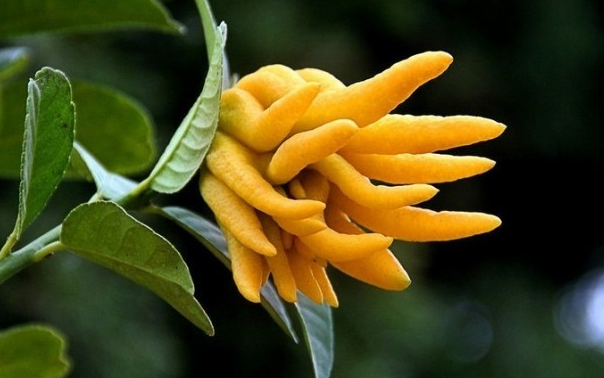
I. Benefits and effects of fingered citron fruit
1. Boosts immune capacity. Fingered citron fruit is comprehensive and rich in nutrients, and eating it regularly is beneficial for strengthening the body's resistance.
2. Lowers blood pressure. The protein and calcium content of fingered citron fruit is 2-3 times that of cucumber, and its vitamin and mineral content is also significantly higher than that of other melons; it is also very low in calories and is a low-sodium food, making it a health vegetable for patients with heart disease and high blood pressure. Eating fingered citron fruit regularly can promote urination and sodium excretion, and has the function of dilating blood vessels and lowering blood pressure.
3. Relieves cough and reduces phlegm, boosts qi and nourishes blood. In traditional Chinese medicine, fingered citron fruit as a medicinal material has the effects of regulating qi and harmonizing the middle, soothing the liver and relieving cough, and is suitable for people with indigestion, chest tightness and abdominal bloating, vomiting, liver-stomach qi pain, and bronchitis with cough and excessive phlegm.
II. How to eat fingered citron fruit
1. Fingered citron fruit infused in water. The method is to first wash the fingered citron fruit, cut it into thin slices, then place them in a clean colander, spread the fingered citron slices out in the colander, and put them in a sunny place to dry. Store the dried fingered citron slices; when drinking water, put 1 to 2 slices into a cup, then pour in an appropriate amount of boiling water, and you can add an appropriate amount of honey to the boiling water.
2. Fingered citron fruit soaked in honey. Fingered citron fruit soaked in honey has a certain effect on treating cough with excessive phlegm. The method is: take a few finger-like fruits from a fresh fingered citron, put them in a windy place to dry off part of the moisture. Then wash and slice them. Take a clean glass bottle, put an appropriate amount of honey in it, put the prepared fingered citron slices into the glass bottle, let the honey cover the fingered citron slices, then seal it, put it in a cool place, and after about 3 months it is ready to eat.
When symptoms of cough with excessive phlegm appear, in addition to receiving standard treatment at the hospital, during the recovery period you can take an appropriate amount of fingered citron fruit slices soaked in honey, then add an appropriate amount of boiling water to dilute it and drink it, which has a certain phlegm-reducing effect. However, it is best not to drink it while taking medication.
3. Fingered citron and rose drink. The method is: cut the fingered citron into shreds or slices, put them in a windy place to dry, then take about 10 g. Buy an appropriate amount of rose flowers at a supermarket or online store, take about 5 g each time, put the fingered citron and rose flowers into a teacup, pour in boiling water, and drink.
4. Fingered citron, sugar and ginger drink. Take 10 g of fingered citron slices and 10 g of cut ginger slices, put them together, then add an appropriate amount of brown sugar and stir well. When you have a cold with distension and discomfort in the ribs and flanks, you can drink it after steeping it in boiling water, or you can boil it in water in a pot and drink it.
III. Fingered citron growing techniques
1. After the fingered citron has survived planting, watering should be little but frequent. In summer, in addition to watering once in the morning and once in the evening, also spray water on the leaves 2-3 times to increase the surrounding air humidity, which is good for growth and development. After the beginning of autumn, appropriately reduce watering to prevent excessive shoot growth and fruit drop.
2. After moving indoors in winter, water once every 3-5 days, generally watering at around 11 a.m., and keep the potting soil "slightly moist, more than half moisture"; the potting soil is better kept slightly dry. When dust accumulates on the leaves, spray water to wash it off, and be sure not to spray water too frequently. Fingered citron has a relatively large fertilizer requirement during the growing period, and a lack of nutrients easily causes flower and fruit drop.
3. Fertilization is divided into 4 stages: the spring shoot growth and development period (late March to early June), with temperatures of 25-35°C, which is most suitable for the growth and development of fingered citron; buds germinate and produce a large number of branches, so apply dilute cake fertilizer water once every 7 days (dilute cake fertilizer water is 500 grams of cake fertilizer added to 20 kilograms of water, and after decomposition add water to dilute), to promote growth and flower bud formation.
The vigorous growth period (mid-June to mid-July) coincides with the flowering and fruit-setting period, so apply alum fertilizer water once every 3-5 days (250 grams of ferrous sulfate, 2500 grams of cake fertilizer, added to 20 kilograms of water, and after decomposition add water to dilute). If there is rainy and continuously overcast weather, it is not suitable to use liquid fertilizer; instead, an appropriate amount of decomposed cake fertilizer residue can be buried in the pot, with the burying position in the middle and lower soil near the edge of the pot. To promote fruit development and strong branches, spray a 0.3% potassium dihydrogen phosphate foliar fertilizer once every 7-10 days; do not use urea or other nitrogen fertilizers during this period.
During the fruit growth period (late July to late September), apply a compound fertilizer mainly of phosphorus and potassium and containing calcium and nitrogen once about every 10 days, to promote full fruit coloring.
In the fruit ripening period (October), in order to keep the fruit hanging on the branches for a long time without dropping and to restore tree vigor, after the fruit ripens, apply a small amount multiple times, in layers and in different directions, which to a certain extent promotes even distribution of fruit-bearing branches, short and thick branches, and dark green, thick leaves.
IV. Growth and propagation of fingered citron
1. Cutting propagation
Preparation of cuttings: before cutting, select a robust 7-8-year-old mother tree, cut off old, robust branches that are growing vigorously and free of pests and diseases, remove the leaves and tender tips, and cut them into cuttings 17-20 cm long. The survival rate of cuttings is over 90%, and the seedlings grow robustly as well. Cuttings from young trees or water sprouts must not be used, because such branches often do not bear fruit easily after planting. Fingered citron
Land preparation and cutting: for the seedbed, it is best to choose sandy soil with a relatively deep soil layer, so that seedlings can be taken out later. After the land is selected, plow deeply and harrow finely, apply human and animal manure water, and make high beds 1.3 m wide, with bed furrows about 30 cm wide and about 20 cm deep.
Cutting can be done in spring from February to March and in autumn from August to September, and autumn cutting is best. With autumn cutting, roots can grow in the same year, and after sprouting the following spring the growth is rapid. When cutting, open horizontal furrows on the bed, with a furrow spacing of 23-27 cm; insert the cuttings into the furrows at a plant spacing of 15-17 cm, and be sure not to insert them upside down. Usually about 12000-15000 cuttings are needed per mu. After cutting, cover with soil and press firmly, so that one bud at the tip is exposed above the soil surface, and water if the soil is dry.
Seedling stage management: after cutting, water and irrigate at any time; also build a shed for shade, and do a good job of drainage when there is a lot of rain. When the seedlings are 7-10 cm tall, remove the clustered weak seedlings, leaving only one strong seedling per plant. Weed in time, and apply light human and animal manure water or ammonium sulfate 3-4 times; after one year of cultivation, they can be transplanted.
2. Grafting propagation
Carry it out in spring and autumn. It is better to use citron or lemon as the rootstock. The rootstock is generally propagated by cuttings or sowing. Grafting methods include:
(1) Approach grafting: carry it out in early to mid-August to September. Select a 4-5-year-old plant with a stem diameter of 2-3 cm, a well-developed root system, and robust growth as the rootstock. At the lower part of the stem, cut off the branches below the branching point, leaving only one branch, then shave off some cortex on one side of the cut branch position downward. Then select a branch produced in the previous spring or autumn as the scion, similar in thickness to the rootstock, 5-7 cm long, and also shave off part of the lower cortex on one side of the lower part of the scion. Then place the cut surface of the rootstock against the cut surface of the scion so that the two surfaces fit closely, bind the middle tightly with plastic film, and after about one week it can heal. After healing, cut off the rootstock portion above the graft union.
(2) Cleft side grafting: in early to mid-March, cut the rootstock flat at 5-7 cm above the ground, smooth it with a grafting knife, and choose a smooth part slightly with wood as the slanted cut surface, 1-1.5 cm deep. The scion should retain 2-3 buds, and its lower end should be cut into a wedge shape 1-1.5 cm long. Then align one side of the rootstock cut with the scion bark, insert it tightly into the rootstock cut, and tie it with plastic film; generally after half a month it heals and sprouts and grows. At this time, loosen the soil and weed. After 45-60 days, it begins to send out shoots; at this time the binding material must be removed, otherwise the new shoots are easily bent.