Why is my Anthurium (flamingo flower) losing its leaves, and how should I care for it?
Anthurium, also known as flamingo flower, symbolizes a grand future and good fortune. Its blooming period is from February to July, and with good care it can bloom continuously all year round. However, many people who grow anthuriums run into the problem of leaf drop, so what causes anthurium leaf drop? And how should it be cared for?
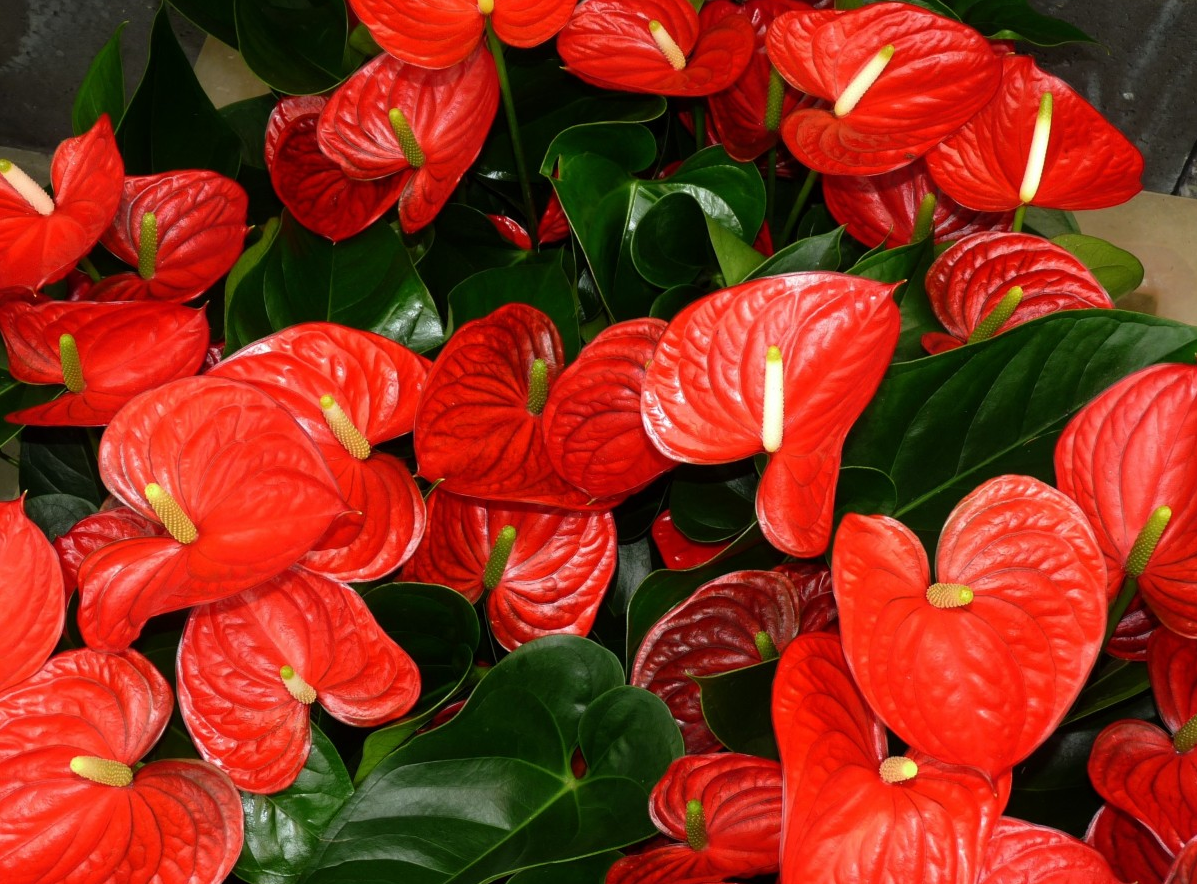
1. Why does anthurium drop its leaves?
1. Improper watering
If you water too much or too often, leaving the soil wet and waterlogged for long periods, the roots rot easily. Once the roots rot, their ability to absorb nutrients is affected, so the leaves lack nutrients, turn yellow and drop. If this happens, drain the water away promptly, and water appropriately from then on, not too much.
2. Improper fertilizing
If you do not fertilize for a long time, the plant lacks nutrients, the leaves wither from lack of nutrients and eventually drop, and the stems become very thin and spindly. In this case, replace the soil promptly and add fertilizer to the soil. Too much fertilizer is also bad: the leaves thicken, gradually turn yellow and drop. If you notice this, stop fertilizing, replace the soil, rinse the roots clean with water, and replant them in new soil.
3. Unsuitable soil
For those growing plants in the north, the soil and water in many places have a higher salt and alkali content, and most northern soil is on the alkaline side, with very little soluble iron. Iron deficiency causes leaf drop, so it is best to prepare slightly acidic soil and add some iron to it.
4. Unsuitable temperature
Everyone knows what the weather in the north is like. Even when grown indoors in the north, it is very hard to keep anthuriums alive, because indoor temperatures in northern winters are very low and the leaves die and drop. If your home is very hot in summer, water evaporates quickly too, so replenish water in time.
5. Improper light
Anthurium is naturally a shade-loving plant. If you leave it in an unsuitable spot for a long time, expose it to blazing sun, or never give it a bit of light and keep it in a dark area, it becomes very weak, the leaves cannot grow normally and they fall off.
6. Pests and diseases
If disease organisms attack it, such as leaf spot or mosaic virus, spots will appear. If pests attack it, such as scale insects, red spider mites or aphids, the leaves fade, shrivel and may even drop off directly. In that case, buy the corresponding pesticide and spray to kill them.
2. How should anthurium be cared for?
1. Control the temperature
Many indoor potted plants fail after just one winter, and the main reason is temperature. Anthurium is very sensitive to cold. If your home does not have air conditioning running often in winter, or heating, then overwintering really needs special attention. Generally, once the temperature falls below 10°C, cold damage can occur at any time, and early spring needs even more care. Many flowers do not die in winter but in the early spring when temperatures swing hot and cold.
2. Suitable light
All things grow by the sun, but sometimes light that is too strong is not a good thing. For anthurium, be careful that the light is not too strong. Anthurium is a shade-loving plant, so it should be placed in a bright spot indoors, ideally with some scattered light. Do not expose it to strong light, otherwise the leaves easily discolor and scorch, seriously hurting its ornamental value.
3. Keep it moist
Anthurium likes moisture. Water it once the surface of the potting soil is dry, roughly once every 2-3 days. Anthurium also has certain requirements for air humidity, so mist around the leaves regularly. This keeps the flowers bright and full. If the temperature is on the low side, anthurium grows more slowly, so control watering to avoid root rot.
4. Light fertilizer, applied often
Anthurium likes fertilizer fairly well. Fertilize once every 2 weeks, which can be done at the same time as watering, and apply phosphorus and potassium fertilizer before blooming. The best time to fertilize is morning or evening. In winter, fertilize once a month. In addition, anthurium also needs some liquid fertilizer: drip one or two drops in when watering, once every 3-5 days is enough, and once every half month in winter. Do not use foliar fertilizer on anthurium, because its surface has a waxy layer that blocks absorption.
5. Keep the aerial roots
Anthurium sometimes has part of its roots exposed above the soil surface. Many growers worry this is bad for the plant and quickly bury them back. Never do this. These exposed roots are called aerial roots, and they exist to absorb nutrients and breathe better. Burying them is like blocking their breathing, and it also leads to poor blooming.