What to Do When a Kumquat Tree Drops Its Leaves? Potted Care Methods and Precautions
The kumquat tree is very well suited to being kept at home during festive occasions, and it is especially popular as a spring-welcoming flowering plant during the Spring Festival. So what should you do when a kumquat tree drops its leaves? How do you care for it in a pot? What precautions are there?
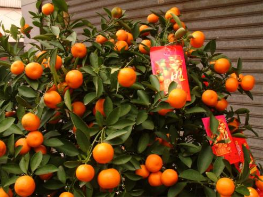
I. What to Do When a Kumquat Tree Drops Its Leaves?
Kumquat trees generally drop leaves due to insufficient nutrients, improper watering and pest damage. Leaf drop is relatively common with insufficient nutrients and improper watering. These are all problems caused by improper care. Pests and diseases are also often caused by improper care. The main reasons for kumquat leaf drop are as follows:
(1) Insufficient nutrients: The kumquat tree likes to grow in slightly acidic, fertile, loose soil with good aeration and drainage. Sometimes the kumquat tree drops its leaves because of insufficient nutrients. Leaf drop is mostly seen when nitrogen fertilizer is lacking. During the growing period of the kumquat tree, we generally need to add some acidic fertilizer to it. If the soil is compacted, we also need to loosen the soil in time or replace it with some fertile, loose soil. In winter, the kumquat enters its dormant period, and we should stop fertilizing. If chemical fertilizer is applied, it can easily cause root burn, and root burn can also lead to leaf drop. The kumquat tree is not cold-tolerant, and if the winter temperature is too low, it can also cause leaf drop.
Remedies: Do not fertilize the kumquat tree in winter. If the temperature is too low, we had best take some cold-protection and warming measures for it, or place it indoors in a spot with plenty of light for care. If nitrogen fertilizer is lacking, we can add some appropriately, but do not over-fertilize. In addition, the growth of the kumquat tree requires regularly applying some ferrous sulfate solution to supplement iron, to prevent the leaves from turning yellow and dropping due to iron deficiency.
(2) Improper watering: Watering too much or too little will both cause the kumquat tree to drop leaves. Like the vast majority of plants, overwatering leads to water accumulation that soaks the roots, causing poor respiration and leaf drop. Conversely, long-term water shortage will also cause leaf drop due to insufficient water.
Remedies: Watering the kumquat tree by the method of "water when dry, keep dry between waterings" is the best approach. This ensures that the kumquat tree will neither be short of water for long nor suffer from waterlogged roots.
(3) Pest damage: The kumquat tree easily attracts insects, and the common pests are red spiders and yellow spiders. Once the kumquat tree is attacked by these insects, it will drop leaves, and the first sign is yellow spots appearing on the leaves.
Remedies: Insufficient light is a common factor leading to pest outbreaks, so we should usually give the kumquat tree more sunlight, letting ample sunlight strengthen the kumquat tree's ability to resist pests and diseases. After red spiders appear, we should promptly use pesticides for spray control.
II. How Should a Potted Kumquat Tree Be Grown?
If potted citrus is not managed properly, it often only blooms but does not bear fruit or bears little fruit, or even does not bloom at all. To make potted citrus bloom and bear fruit every year, scientific management must be carried out in aspects such as water, fertilizer and pruning, so as to achieve the goal of abundant fruit.
1. Choosing a pot: The choice of flower pot for growing small kumquats is very important. We should try to choose unglazed clay pots with good aeration, as this can ensure that the roots of the small kumquat tree have enough oxygen supplied. In terms of the shape of the flower pot, we should try to choose one with a large volume, which is good for root growth.
2. Choosing soil: The soil for growing small kumquats should be neutral soil, and it should be rich in humus nutrients, with aeration also ensured, so we can mix humus soil and sandy soil to prepare the soil, which works very well.
3. Watering: Small kumquats need relatively more watering, because the growth of small kumquats requires a lot of water. We should choose morning or evening for watering, and water more in summer to keep the soil moist, while watering less in winter.
4. Pruning: Pruning small kumquats requires method. We can prune them into a round-headed shape, a three-branch cup shape or other shapes we like.
5. Fertilizing: Citrus likes fertilizer, and normally thin fertilizer should be applied more often. During the growing period of citrus, some cake fertilizer can be sprinkled on the surface of the pot, so that each watering lets some fertilizer seep into the soil and enhances fertility. After the beginning of autumn, fertilizing is reduced, to avoid excessive nutrients in the plant, which promotes autumn shoots and causes them to compete with the fruit for nutrients, resulting in fruit drop.
6. Repotting: Because potted citrus has little potting soil, the nutrient supply is very limited. After many years, the soil fertility becomes lacking, and the citrus will weaken year by year, blooming less and bearing little fruit. To keep citrus blooming and bearing fruit every year, repotting is necessary. Cut off the old roots at the ends of the roots, first put the new soil in the sun for 2 days to disinfect it, then mix in an appropriate amount of fertilizer, and transplant the pruned small kumquat into it.
7. Light: Small kumquats like to grow in places with ample light. We should let small kumquats get as much sun as possible. If we cannot provide enough sunlight for small kumquats, their blooming and fruiting will be reduced.
III. Precautions for Growing a Kumquat Tree
1. Appropriate fertilizer
After each pruning of the kumquat tree, apply one round of decomposed organic fertilizer, such as human and livestock manure or plant fertilizer, all of which are fine. It is best to fertilize once every ten days thereafter, and keep the temperature up to standard and the water supply ample. Only this helps the normal growth of the kumquat tree. If its fruit has been picked off, apply quick-acting phosphorus fertilizer to promote the growth of its flower buds.
2. Watering method
During the flower bud differentiation stage, the kumquat tree should be watered less. Only when the new tender shoots show signs of wilting can normal watering resume. This can control the plant from becoming overgrown, which would lead to insufficient nutrients, and can also promote flower bud differentiation. Moreover, during the flowering stage and the fruit-setting stage, large amounts of water must not be given; normal watering can only resume after the fruit has set steadily.
3. Pruning method
To make the kumquat tree's shape more beautiful and to bear more fruit, pruning must be carried out once every year before the sap starts flowing. Cut off its dead branches, diseased and pest-infested branches and branches with overly dense leaves, keeping only 3 to 4 healthy, evenly distributed branches, and keep 2 to 3 new buds on each branch.
4. Propagation method
The kumquat tree can be propagated by grafting, with methods including bud grafting and grafting, and cleft grafting. If rootstock is used, use seedlings of trifoliate orange, bitter orange and the like, and in spring from March to April the cut-grafting method can be used, while the bud-grafting method can be used from June to September. But generally the kumquat tree is propagated by the approach grafting method, carried out from April to July.