How to grow Boston ivy: benefits, drawbacks, and will it damage walls?
Boston ivy, also known as “flying centipede,” is a green plant that combines beauty, medicinal value, and environmental friendliness. So how do you grow Boston ivy? What are the benefits and drawbacks? Will it damage walls?
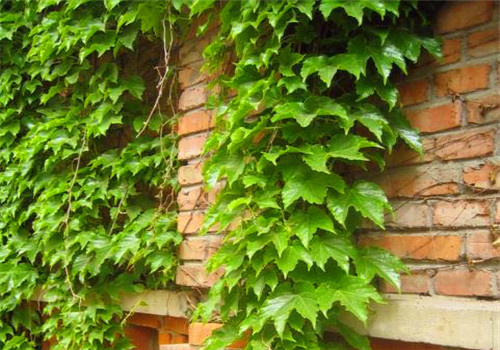
I. How much do Boston ivy seedlings cost?
Boston ivy seedlings are not expensive, and if you buy in bulk there are plenty of discounts. Generally they cost 0.5 yuan per plant (50 cm tall); the taller the seedling, the more expensive it is.
II. How do you grow Boston ivy? When is the best time to plant?
Boston ivy has extremely strong vitality, so there are many ways to grow it. The planting time depends on the propagation method used.
1. Growing from seed
If you choose to grow from seed, the most important thing is to treat the seeds. The specific steps are as follows:
(1) Harvest or buy Boston ivy seeds, and rub off the skin and flesh of the fruit.
(2) Wash them clean with water and dry them in the sun.
(3) Place them in damp sand to overwinter.
(4) In early March of the following year, sow them in the open ground, then cover them with a layer of plastic film before the seedlings emerge.
2. Growing from cuttings
(1) Around March, cut healthy Boston ivy stems and vines, preferably about 25 cm long.
(2) Water the ground where you plan to plant the Boston ivy well, then insert the stems and vines into the soil. Be sure to provide shade; they will take root and survive in about 1 week.
3. Growing by layering
(1) Choose a cloudy, damp day in the rainy season for layering. March to April and July to August are suitable for layering.
(2) Press the stems and vines of the Boston ivy directly into the soil, and after they take root and sprout, cut them from the parent plant so they become independent seedlings.
4. Seedling-stage management
The most important part of growing Boston ivy is to sprinkle water frequently to keep the soil moist. When the weather is cold, cover it with a layer of plastic film, uncovering it by day and covering it at night.
III. What are the benefits and drawbacks of growing Boston ivy? Will it damage walls?
1. Benefits of growing Boston ivy
(1) Cleaning the air: Boston ivy has a strong ability to absorb dust particles in the air. If you live by a roadside or construction is going on outside your neighborhood, planting a patch of Boston ivy is a fairly good choice.
(2) Cooling, moisturizing, and removing dampness: Boston ivy likes to “climb walls.” It not only provides shade, but can also act as a “natural air conditioner,” drawing heat out of the wall.
In this way, summer is cooler and more moisturized, while a dry autumn can have dampness removed, thereby increasing the humidity in the room and making people feel very comfortable.
(3) Decorative effect: Whether grown indoors or outdoors, Boston ivy is a very pleasing “home decoration,” giving a sense of quiet vitality.
(4) Can be kept as an everyday medicine: If you accidentally bump or bruise yourself and get a black-and-blue swelling, just pick a small piece of Boston ivy, crush it, and apply it to reduce swelling and relieve pain, promote blood circulation, and dissolve blood stasis.
2. Drawbacks and harms of growing Boston ivy
(1) It easily attracts mosquitoes, insects, snakes, and ants: Boston ivy is a favorite habitat for mosquitoes, insects, snakes, and ants. Not only do they live comfortably there, but it also provides good cover.
(2) Damaging walls: Boston ivy is very good at “finding cracks to set foot in.” As long as the wall has the slightest crack, Boston ivy will spread its roots and stems into the wall crevices, and those mosquitoes, insects, snakes, and ants will follow them in, which is bad for the wall.
IV. How much can Boston ivy grow in a year? What is the maximum length it can reach?
Boston ivy's growth rate is quite astonishing. It can grow about 2-5 m in a year, and at most it can grow to around 20 m.