What to Do When Pothos Leaves Turn Yellow, How to Grow It More Vigorously, and Can It Remove Formaldehyde
Pothos is a plant in the genus Epipremnum. It survives on contact with water, and because of its tenacious vitality it is known as the “flower of life”; it can be grown in pots, or a few stems can be broken off and grown in water. It has an extremely strong air-purifying function, which is why it has earned the reputation of “green purifier,” and it is often used to decorate living spaces. So, what should you do when pothos leaves turn yellow? How can you grow it so it becomes more vigorous? Can it remove formaldehyde?
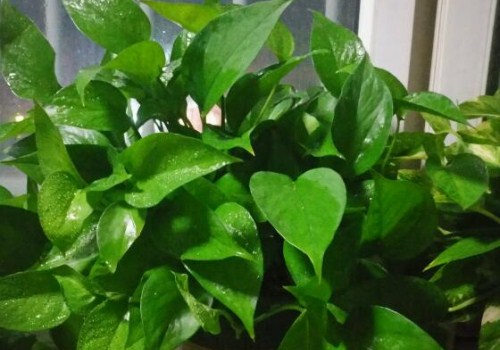
I. What should you do when pothos leaves turn yellow?
Pothos is a shade-loving plant. It likes hot and humid environments, and dislikes direct sunlight; it likes scattered light, likes shade, and likes soil rich in humus that is loose, fertile and slightly acidic. Pothos is very easy to keep alive: as long as the temperature is not too low and water is guaranteed, it will not die. But note that if it is not cared for properly, its leaves will turn yellow. So do you know the specific reasons why pothos leaves turn yellow, and how to solve them?
Reason 1, overwatering: Overwatering pothos will cause tender leaves to turn dark yellow, the leaves as a whole to become dull and lusterless, and the stems to become thin and yellow-green.
Solution: Stop watering, loosen the soil a little, and place the pothos in a spot with plenty of scattered light or good ventilation so the water evaporates as quickly as possible; or take it out of the pot, repot it, and then care for it according to the habits of pothos.
Reason 2, too little watering: Watering pothos too little will cause the leaf tips and leaf edges to dry out, while new tender leaves remain normal and old leaves turn yellow and fall off.
Solution: Water the pothos immediately, giving it a thorough soaking in one go.
Reason 3, too much light: Pothos is a shade-loving plant. Too much light will cause the leaves as a whole to turn yellowish, and in severe cases yellow spots will appear on the side of the leaves facing the sun; these are the marks of leaves scorched by strong light.
Solution: Place the pothos in a cool spot, water it a little appropriately, and remove the yellowed leaves.
Reason 4, too little light: Pothos is a plant that likes scattered light. A cold, dark and enclosed environment will make the green leaves lack chlorophyll, causing them to turn yellow.
Solution: Place the pothos in a spot with plenty of scattered light.
Reason 5, temperature too low: Pothos prefers a high-temperature environment. If the temperature is too low, pothos will enter a dormant period, causing its leaves to turn yellow.
Solution: If it is winter, you can place the pothos in a warmer spot; if all the leaves turn yellow and fall off, new leaves will still grow in spring. If it is not due to the effects of winter, then make sure to keep it in a warm environment, and the yellowing of the leaves will improve somewhat.
Reason 6, too much fertilizer: Too much fertilizer for pothos will cause excessive nutrition, burn the roots, and make brown tips appear on new leaves.
Solution: Stop fertilizing and rinse the soil with clean water so that some of the fertilizer is washed away; or water more to dilute the excess fertilizer; or simply replace the growing medium.
Reason 7, too little fertilizer: Too little fertilizer for pothos will cause malnutrition, making tender leaves fade in color to yellow or pale green, and old leaves gradually turn yellow.
Solution: Apply more fertilizer, but be careful not to overdo it.
Reason 8: Deteriorating water quality. If the water quality for pothos deteriorates, it will affect the plant's health and cause its leaves to turn yellow.
Solution: Change the water, and check whether the roots have gone bad; if they have, cut off the damaged roots, then add a little nutrient solution to the water.
II. How can you grow pothos so it becomes more vigorous?
1. Choose soil cultivation: Compared with water cultivation, pothos grown in soil is more robust, the vines it grows are brighter in color, and its climbing ability is stronger.
2. Prepare loose, breathable soil: Pothos likes soil rich in humus that is loose, fertile and slightly acidic. Nutrient soil or peat soil will both work, as they are relatively rich in nutrients.
3. Summer care: Summer is when pothos grows fastest. It should receive 3-4 hours of scattered light every day, avoiding direct sunlight; pay attention to watering and keep the soil moist; fertilize reasonably to keep nutrition sufficient; and wipe the leaf surfaces often so dust does not settle on them.
4. Winter care: In winter, pothos is in its rest period, so there is no such thing as vigorous growth; it is enough for it to overwinter safely.
III. Can pothos remove formaldehyde?
Pothos can remove formaldehyde. Pothos is an excellent foliage plant. It can be placed in studies, on windowsills, on walls, on wall fences, in entrance halls, in hotels, under tree shade and so on, and it is a plant quite suitable for indoor placement. It can absorb harmful gases such as formaldehyde, benzene and trichloroethylene from the air, playing a role in air purification. However, the effect of pothos in removing formaldehyde is very weak, and it cannot be used as the main method of formaldehyde removal; usually it is still better to open the windows and ventilate more.
IV. Is it better to grow pothos in water or in soil?
Pothos is a plant that can be grown both in water and in soil, and each has its pros and cons. The advantage of water cultivation is that pothos grows faster, it is more hygienic, and there is no need to water it; you only change the water occasionally. The disadvantage is that, due to a lack of nutrients, pothos grows slowly in the early stage, and the plant produced is more delicate, with a paler color. The advantage of soil cultivation is that, because it can absorb the fertility of the soil itself, pothos grows more robustly, its leaves are thicker, and its color is a more emerald green. The disadvantage is that it needs frequent watering, soil turning, fertilizing and so on, requiring more investment of time and energy.