How do you grow lucky bamboo so it takes root, and how many stalks at home are the most auspicious?
People living in cities nowadays, without land to plant flowers and grass, use all kinds of pots and vases to grow all sorts of green plants, some hydroponically and some in soil. There is one called lucky bamboo (Dracaena sanderiana) that can be grown either way. So how do you grow lucky bamboo so it takes root? And how many stalks placed at home are the most auspicious?
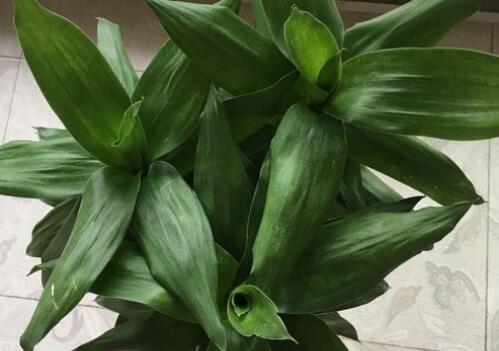
I. How do you grow lucky bamboo so it takes root?
Lucky bamboo is a plant native to the Canary Islands and subtropical regions, and home growers choose both hydroponic and soil cultivation. It also has many other names, such as longevity bamboo, fortune bamboo, and lucky pagoda, and it is an elegant green plant with the charm of bamboo.
1. The hydroponic method for rooting lucky bamboo is as follows:
(1) Before placing the bought lucky bamboo in a vase, first cut it at an angle with scissors to increase its absorption area. (The water in the vase can be rainwater; if it is tap water, it still needs to sit for one or two days.)
(2) After putting the lucky bamboo into the vase (the water inside does not need to be too deep, just enough to cover its roots), put in some small iron pieces, iron nails or similar iron items, as this can quickly promote rooting in lucky bamboo.
(3) During this process, place the lucky bamboo in a spot with plenty of light, and it is not recommended to change the water; instead, add just a little water each time. If you want the lucky bamboo to root quickly, you can also put in one vitamin B2 tablet.
2. The soil cultivation method for rooting lucky bamboo is as follows:
(1) Soil-cultivated lucky bamboo is different from hydroponic lucky bamboo, and the choice of container is especially important. Generally, to grow a good pot of lucky bamboo, it is best to choose an earthenware pot.
(2) Lucky bamboo grows well in sandy soil and clay soil with good drainage; you can dig some up in a vegetable garden, or buy it specially online.
(3) Keep the soil in the lucky bamboo pot moist, and never let the soil dry out completely, otherwise the leaves of the lucky bamboo can easily turn yellow.
(4) You can change the soil for the lucky bamboo once every one or two years in spring, and water it once every two or three days. The lucky bamboo should have light but not be exposed to harsh sun; during severe cold in winter and high heat in summer, it is best to keep it indoors to avoid killing the lucky bamboo.
II. How many stalks of lucky bamboo placed at home are the most auspicious?
1. Placing one stalk of lucky bamboo: since ancient times, one has the meaning of beginning, and one stalk also carries the meaning of unfolding a grand plan, so choose one lucky bamboo that is both beautiful in form and large to keep at home.
2. Placing four stalks of lucky bamboo: if you feel that growing just one is too few, you can choose to grow four; besides bringing wealth, they can also better purify indoor air.
3. Placing five stalks of lucky bamboo: five stalks of lucky bamboo represent earth in the five elements, and lucky bamboo grows even better with earth, and it can also bring good fortune.
4. Placing nine stalks of lucky bamboo: "nine" was regarded as a mysterious number in ancient China, and nine is the greatest, as in ancient times the emperor was called "the supremely honored one" (jiuwu zhi zun). In addition, nine also carries the meaning of "long-lasting," representing enduring forever, so its symbolism is also excellent.
III. What are the taboos and favorable positions for placing lucky bamboo?
1. A taboo placement for lucky bamboo - the wealth position: in feng shui, it is said that although lucky bamboo contains the words "wealth and honor," it truly should not be placed at the wealth position in the home, because its leaves are relatively small and it is not very good at gathering wealth. (The wealth position is generally at the diagonal direction from the living room entrance.)
2. A taboo placement for lucky bamboo - the main entrance: lucky bamboo cannot be placed at the main entrance, as this will let the family's wealth run out.
3. A taboo placement for lucky bamboo - the toilet: lucky bamboo cannot be placed near the toilet in the home, because the toilet has relatively heavy yin energy and can easily attract bad things.
4. A taboo placement for lucky bamboo - beside metal objects: placing lucky bamboo next to metal objects will bring bad luck.
5. A favorable placement for lucky bamboo - the Wenchang position: a prosperous Wenchang position is helpful for both studies and career.
6. Favorable placements for lucky bamboo - the refrigerator and the desk: placing it by the kitchen refrigerator can relieve some of the negative energy, while placing it on the desk can purify the air and soothe the mood at the same time.
IV. What should you do if the leaves of lucky bamboo turn yellow?
1. If the leaves of hydroponic lucky bamboo at home turn yellow, you can:
(1) Crush half an aspirin or one vitamin C tablet (vitamin B12 also works), then put it in water, stir it evenly, and pour it into the vase.
(2) Throw a rusty iron piece or iron nail into the vase of hydroponic lucky bamboo.
2. If the leaves of soil-cultivated lucky bamboo turn yellow, you can:
(1) If the yellowing is caused by harsh sun exposure, move the lucky bamboo to a cool, ventilated place.
(2) If the yellowing of the leaves is caused by insufficient light, move it to a place with plenty of light.
(3) If the yellowing of the leaves is caused by too much fertilizer, stop fertilizing and rinse away some of the excess fertilizer with water; if the yellowing of the leaves is caused by too little fertilizer, apply more fertilizer, just make sure not to apply too much at a time.