What to do when the leaves of bamboo palm (fernleaf hedge bamboo) turn yellow? These few tricks will make the leaves as green as jade
Bamboo palm is loved by many people for its emerald-green appearance and ease of cultivation, and is often grown at home or in offices, adding a touch of vitality to life. So, what are the reasons for bamboo palm leaves turning yellow? What should you do when bamboo palm leaves turn yellow? Let me teach you a few simple tricks to make bamboo palm as green as jade! Let's take a look together!
I. Reasons for bamboo palm leaves turning yellow
1. Improper watering
Both overwatering and underwatering can cause bamboo palm leaves to turn yellow. With overwatering, the new leaves of bamboo palm turn pale yellow and the stems dry up and shrivel; with underwatering, bamboo palm lacks water, and the leaf edges turn yellow and the leaves drop.
2. Poor water quality
The growth of hydroponic bamboo palm is affected by water quality. If the water quality is poor and bacteria breed, then the bamboo palm leaves will turn yellow.
3. Improper fertilizing
Over-fertilizing leads to "excess nutrients," and bamboo palm will have difficulty absorbing them due to too much fertilizer, causing the leaves to turn yellow. If bamboo palm goes without fertilizing for a long time and is severely short of nutrients, the leaves will also turn yellow and drop.
4. Inappropriate light
The growth of bamboo palm requires suitable light. Too much light causes the leaf edges to wither and turn yellow, and even yellow spots to appear; insufficient light prevents bamboo palm from carrying out photosynthesis normally, and the leaves will turn yellow and drop.
5. Improper root trimming
The fibrous roots of bamboo palm grow quickly and need regular trimming, cutting off excess roots and leaves to prevent excessive consumption of nutrients. If the roots are trimmed improperly, whether over-trimmed or not trimmed at all, it may also cause the leaves to turn yellow.
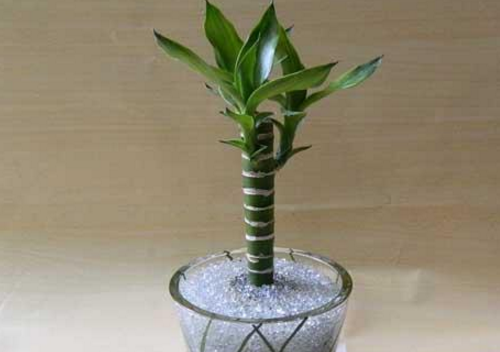
II. What should you do when bamboo palm leaves turn yellow?
1. Water reasonably
When watering normally, just make sure to water thoroughly and completely in one go. In winter, growth is slow, so the amount of water should be reduced and the watering frequency should be lowered.
2. Pay attention to water quality
Hydroponic bamboo palm should be given attention regarding water quality; it is best to let the water stand overnight before changing the water so that chlorine evaporates.
3. Fertilize reasonably
Fertilizing should involve applying an appropriate amount of nitrogen fertilizer, which can make bamboo palm leaves even greener. If too much fertilizer is applied, then the water should be changed promptly or the roots should be rinsed before placing them back in the vase.
4. Appropriate light
Cut off the yellow and rotten leaves, and regularly place bamboo palm outdoors in the light for a few hours each day.
5. Trim the roots
In summer, a moderate amount of trimming can be done; in winter, when the weather turns cold, bamboo palm roots and leaves must not be trimmed.
III. Simple tricks for growing bamboo palm
Trick one: Bamboo palm is a light-loving and semi-shade-tolerant plant and cannot be exposed to direct sunlight. In summer, pay attention to shading to avoid direct sunlight and excessively high temperatures.
Trick two: Change the water and trim the roots and leaves on a regular schedule, and you can spray a sterilizing and antibacterial agent on the root area before inserting it into the water.
Trick three: In winter, it is recommended to move it indoors, and the room temperature should preferably not be lower than 16 degrees, which can prevent the leaves from turning yellow.
Mastering the above key points can largely prevent bamboo palm leaves from turning yellow and add a touch of green to your home. Have you mastered them?