What to Do When a Money Tree (Pachira aquatica) Has Yellow Leaves? Find the Cause and Solve It Easily
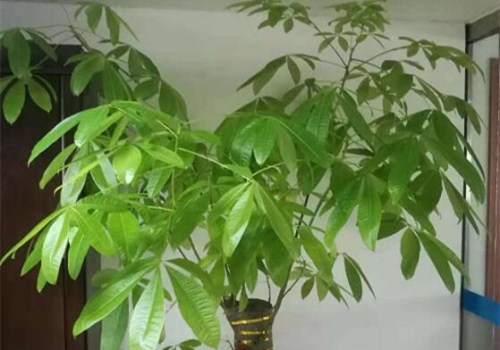
The money tree's scientific name is Pachira aquatica, a plant in the order Malvales, family Malvaceae, symbolizing “wealth.” It grows 4-5 m tall, has an umbrella-like shape, is fairly shade-tolerant, easy to care for, and very suitable for indoor cultivation. Although it is easy to care for, improper care can still cause yellow leaves. So what should you do when a money tree has yellow leaves? In fact, as long as you find the cause, you can solve it!
1. Why is the money tree called by this name?
The money tree was introduced from abroad, and its English name is: Pachira macrocarpa. Generally speaking, we give it a Chinese name based on how its English name is pronounced, so it came to be called "Pachira macrocarpa." The first part was read by the people of Guangdong who first introduced it as "fa cai la" (meaning "getting rich"), and the second part was read as "Malabar chestnut," so this plant has two names, namely the auspicious "money tree" and the somewhat baffling "Malabar chestnut."
2. What should you do when a money tree has yellow leaves?
First you need to find the cause of the yellow leaves on the money tree, and only then can you prescribe the right remedy and find a solution. So what are the causes of yellow leaves on a money tree?
Cause 1: Soil alkalization. The money tree likes acidic soil. When the soil becomes alkaline, the plant suffers from nutritional deficiency due to a lack of absorbable soluble iron and other elements, and the final result is that the leaves gradually turn yellow and wither.
Solution: Apply a certain amount of ferrous sulfate to the soil. This can both increase soil fertility and acidify the soil. Note: do not use vinegar. Although vinegar can quickly make the soil acidic, because the change is drastic, it will damage the organic matter in the soil and reduce soil fertility.
Cause 2: Direct strong light or excessive shade. The money tree likes sunlight, but it cannot tolerate direct strong light. Scorching sun exposure will cause the leaf tips and leaf margins of young leaves to scorch, or the leaves to yellow and fall off; it also does not like excessive shade. If it is placed in a shaded spot or a place with insufficient light, the newly grown branches and leaves will become pale yellow and leggy, and the old leaves will become dull and fall off in large numbers.
Solution: If it is exposed to direct strong light, it is recommended to move the plant to a semi-shaded place and water it appropriately. The yellowed leaves will slowly fall off, and once new buds grow, it will be fine; if it is excessively shaded, it is recommended to place the plant in a ventilated spot on a balcony or a place with scattered light.
Cause 3: Temperature too high or too low. The money tree likes a warm environment, and the suitable temperature for growth is 20°C~30°C. If the temperature is too high, transpiration becomes too strong, the roots cannot supply enough water and nutrients, and the leaves will gradually dry up and turn yellow; if the temperature is too low, for example, when the winter temperature is below 16°C, the leaves are prone to turning yellow and falling off, and below 10°C it is very likely to die.
Solution: If the temperature is too high, promptly move the plant to a cool place and sprinkle water to lower the temperature; if the temperature is too low, appropriately raise the care temperature to avoid frost damage to the plant.
Cause 4: Overwatering. The money tree likes a moist environment, but too much watering will cause waterlogging, resulting in a lack of oxygen in the soil, hindering the plant's normal respiration and absorption of water and nutrients. In severe cases, it will cause root rot. After being affected, the young leaves first turn pale yellow, and then the old leaves also gradually turn yellow.
Solution: Immediately stop watering, move the money tree to a ventilated place and loosen the soil so that the moisture in the soil evaporates quickly; you can also place a towel or sponge at the bottom of the flowerpot to absorb water, and replace it with a new one once it is soaked through; you can also use a hair dryer to blow on it; if none of these work, you will have to change the soil.
Cause 5: Underwatering. Because the money tree likes a moist environment, if you water too little, the surface of the potting soil will crack, or the top of the potting soil will be moist while the bottom is dry, which will affect the roots' absorption of water, causing the leaves to become dull and lusterless. First the lower old leaves age, and gradually wither and fall off from bottom to top.
Solution: If the surface of the potting soil has cracked, water gradually. First moisten the soil surface, then water a little at a time every hour, gradually watering thoroughly. Do not water thoroughly all at once, to avoid the roots swelling from absorbing water and affecting growth.
Cause 6: Too much fertilizer or long-term lack of fertilizer. The nutrients absorbed by the money tree are limited. If too much fertilizer is applied, the remaining fertilizer will burn the roots and stems of the money tree, causing root rot and thus yellow leaves; if fertilizer is lacking for a long time, the soil will lack nitrogen and other nutrient elements, causing the branches and leaves to become weak and the leaves to be thin and yellow.
Solution: If there is too much fertilizer, water promptly to dilute the nutrients in the soil and reduce fertility. If the roots have already rotted, take the plant out of the pot, clean up the rotten parts, replace with new soil, and replant; if fertilizer has been lacking for a long time, promptly repot it, replace with new loose and fertile potting soil, or gradually apply more thin, well-rotted liquid fertilizer or compound flower fertilizer.
Cause 7: Branches and leaves too dense. The money tree has relatively strong growth capacity. If the branches and leaves are too dense, the branches and leaves hidden at the bottom will turn yellow and droop due to insufficient light and lack of ventilation.
Solution: Prune part of the branches to allow ventilation and light penetration.
Cause 8: Strong stimulation. When the money tree receives strong stimulation, such as using pesticide at too high a concentration, or being polluted by toxic gas, or suddenly being watered with cold water when the temperature is high, the leaves are prone to turning yellow and scorching, or even the whole plant dying.
Solution: Use pesticides reasonably, eliminate sources of air pollution, and do not water with cold water around noon in midsummer.
Cause 9: Damage from pests and diseases. When the money tree is affected by pests and diseases, such as leaf spot disease, it will cause yellow spots or patches to appear locally on the leaves; infestation by pests such as scale insects and red spider mites will also cause localized yellowing, withering, or even falling off of the leaves.
Solution: Strengthen ventilation and promptly spray pesticides for prevention and control. If the plant is withering very severely, it is recommended to buy a new one.
3. How often should a money tree generally be watered?
The money tree is fairly tolerant of moisture and also somewhat drought-tolerant. When watering, touch its soil and wait until the potting soil is dry before watering. When watering, water thoroughly. Basically, water once a week in summer, once a month in winter, and once every half a month in spring and autumn. There must be no waterlogging, otherwise it will cause root rot.
In summer, you can water in the cooler morning or evening, and morning watering is best. At noon the temperature is high, so it is not suitable to water; in winter, when the temperature is low, it is better to water between 10 a.m. and 2 p.m.; in spring and autumn, because the temperature and humidity are both relatively suitable, you can choose to water before the sun sets in the evening.
The money tree likes slightly acidic water. Therefore, you can choose to water with natural water such as rainwater or river water. If it is tap water from home, it is better to let it sit for 1-2 days before watering. You can also apply some nutrient solution at the right time. Do not pour tea or beverages into it, as this is harmful to the plant's growth.
Summary: Although the money tree is easy to care for, improper care can also cause its leaves to turn yellow. You can find the corresponding solution according to the specific cause. The money tree does not need too much water, so you can wait until the potting soil is dry before watering, and the number of waterings differs in each season; note that there must be no waterlogging, otherwise the roots will rot.