What to Do When Osmanthus Leaves Turn Yellow? Indoor Growing Methods and Tips
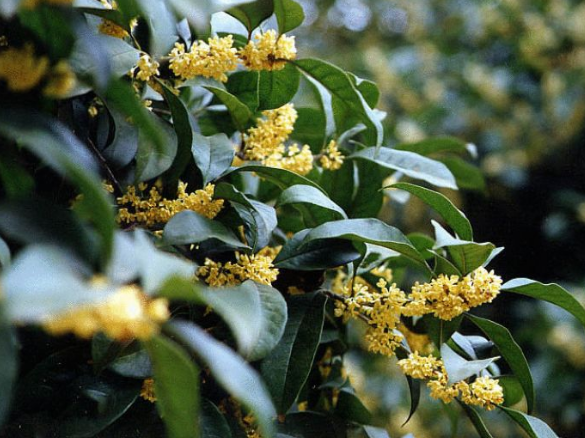
Osmanthus is one of China's ten traditional famous flowers, an excellent garden tree that combines greening, beautification and fragrance, being both ornamental and practical. Osmanthus can be so pure it seems to rise above the dust, yet so rich its scent carries far and wide, making it truly unique. Especially in mid-autumn, when clusters of osmanthus bloom in profusion, and on a quiet night with a full moon, drinking wine and admiring the osmanthus, with its aged fragrance filling the air, leaves one feeling refreshed and invigorated. So what should you do when osmanthus leaves turn yellow? Is it suitable for growing indoors? How can you grow it well?
I. What to Do When Osmanthus Leaves Turn Yellow
When osmanthus leaves turn yellow, you need to take measures targeting the cause: if it is caused by an unsuitable temperature, give it an appropriate temperature; if it is caused by overwatering, reduce watering and do not water until the soil is dry; if it is caused by too little or too much fertilizer, fertilize reasonably; if it is caused by unsuitable soil, appropriately change the soil.
1. Appropriate temperature
15-28°C is the optimal temperature for osmanthus growth. If the summer temperature is too high and you do not cool it down or still leave it exposed to the sun, its leaves will easily turn yellow. If the winter temperature is too low and you do not take appropriate insulation measures, it will also cause its leaves to turn yellow. Therefore, when growing osmanthus, pay attention to cooling in summer and you can place it in a relatively shady spot; pay attention to keeping it warm in winter and you can move it indoors.
2. Reasonable watering
This flower is not tolerant of waterlogging. Once it is overwatered, it easily leads to root rot, and root rot will inevitably cause yellow leaves. Therefore, when planting this plant, be sure to choose loose soil with good drainage. In addition, do not water too frequently in daily care, nor water too much at one time; just water after the potting soil has dried.
3. Correct fertilization
If there is too little fertilizer, it will cause yellow leaves in this plant, so during its growing period we should apply fertilizer reasonably; both liquid fertilizer and compound fertilizer are fine, but note that the concentration applied must not be too high. In addition, we should repot and change the soil in time to ensure the potting soil does not become compacted and that there are enough nutrients in the soil. It is worth noting that when fertilizing, you must not be impatient; applying too much fertilizer at once or using too high a concentration is not good for its growth and may even cause root burn and yellow leaves.
4. Changing the soil
Relatively speaking, it prefers slightly acidic soil. If the soil is on the alkaline side or becomes alkalized, the leaves of this plant may turn yellow. To maintain soil acidity, you can mix a little ferrous sulfate or leftover beer into the water when watering. Likewise, note that both the ferrous sulfate solution and the beer must be diluted, and the concentration must not be too high.
II. Is Osmanthus Suitable for Growing Indoors?
1. Osmanthus is very suitable for growing indoors
Osmanthus is non-toxic and does no harm. You can grow it indoors with confidence.
Osmanthus is one of China's traditional famous flowers. In mid-autumn, after the flowers bloom in profusion, clusters upon clusters of osmanthus look truly spectacular and are highly ornamental. In addition, it can also give off a fragrance, with its aged scent filling the air and giving people a feeling of refreshment and invigoration.
Osmanthus blooms in autumn, which is exactly the harvest season. Therefore, its symbolism includes "harvest." There are very many poems and verses describing it, and it carries rich cultural heritage. There are also many legends about it, such as "Wu Gang Chopping the Osmanthus," and so on. Growing it indoors is quite charming and delightful.
2. Points to note
Some friends may be allergic to osmanthus pollen, so this needs attention if growing it indoors. After the plant blooms, keep a certain distance from it. Some friends may also find the fragrance too strong to bear, so they should also be cautious when deciding whether to grow it.
If growing it indoors, the most important thing to note is light. It needs to be placed in a spot with good light, otherwise its growth will be weak and it will produce few flowers.
III. How to Grow Osmanthus Well
1. Potting soil
Osmanthus likes fertile, well-drained, slightly acidic soil. You can mix leaf mold or peat, garden soil, and sandy soil or river sand.
2. Watering
Before new shoots emerge, osmanthus should be watered sparingly; it is enough for the soil to be slightly moist. Too much water will not only affect new root growth but may also cause root rot. Reduce watering during the rainy season, and increase watering during the hot summer season. Water once each morning and evening; when the sun is strong, you can appropriately spray some water mist, and do not let water accumulate in the pot.
3. Fertilizing
During the growing period, fertilize frequently but in small amounts. After sprouting, you can apply dilute cake fertilizer water once every half month, which helps new branches grow better; in May, to make the branches more mature, you can apply phosphorus and potassium fertilizer once every 10 days. After each fertilization, water and loosen the soil, which can help it grow better.
4. Light
When growing osmanthus, sunlight must be sufficient. It is a long-day plant, so it needs to receive full sunlight to promote photosynthesis and grow better; if light is insufficient, its branches will be very thin and flower buds will be difficult to form.
5. Temperature
The temperature suitable for osmanthus growth is 15-28°C, and the lowest temperature it can tolerate is -13°C. Seedlings must not be in a high-temperature environment while growing; shade measures should be taken, otherwise they can easily wither.