Why Is Your Rubber Plant Dropping Leaves? Growing Methods and Precautions
The rubber plant (Ficus elastica) has thick, sturdy small branches and broad, fleshy, leathery, glossy leaves in green or dark green, making it an excellent potted foliage plant. So why is your rubber plant dropping leaves? What growing methods and precautions are there for the rubber plant?
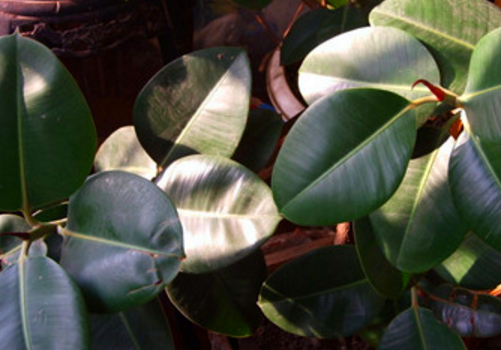
I. Why is your rubber plant dropping leaves?
1. The plant has not been repotted for a long time, causing the soil to become compacted. In the early stages of growth, the rubber plant needs to be repotted once a year, with the pot diameter increasing year by year. After 6 to 8 years of growth, it can be repotted once every three years. If it is not repotted for a long time, the potting soil will become severely compacted and the soil aeration will be poor, causing the fibrous roots of the rubber plant to suffocate and die, unable to absorb water and nutrients, which leads to the leaves turning yellow and dropping.
2. The plant has not been fertilised for a long time. The rubber plant likes heavy fertiliser and heavy watering. Not fertilising for a long time will cause malnutrition, leading to yellowing leaves.
3. The overwintering temperature is too low. The minimum temperature the rubber plant can adapt to for growth is 6 to 8 degrees. If the indoor temperature in winter is below 5 degrees, the leaves will turn yellow and drop.
4. Overwatering or overfertilising. Although the rubber plant is a plant that likes water and fertiliser, if it is watered or fertilised too much, especially from August to September when the weather is still rather muggy, overwatering will cause water to accumulate in the pot; or if it is overwatered during overwintering while the plant is in its dormant period and transpiration is reduced, the water in the pot cannot be drained in time; or if raw fertiliser, heavy fertiliser or concentrated fertiliser is applied by mistake, root rot will occur due to water damage or fertiliser damage, causing the leaves to turn yellow. If the root rot is caused by fertiliser damage, the roots will be accompanied by an unpleasant smell.
5. The indoor air is too dry, and the water in the potting soil is not enough to supply the transpiration of all the leaves, causing some leaves, especially the lower old leaves, to turn yellow and even drop.
6. Poor indoor ventilation. If the room is not ventilated for a long time, a large amount of harmful gases will accumulate, such as an excessively high concentration of carbon dioxide, which will also cause yellowing and leaf drop.
7. Long-term shading. The rubber plant is a tropical species that likes sunlight and cannot tolerate shade. If it does not get sunlight for a long time indoors, yellowing and leaf drop will also occur.
8. It may be infected with grey mould (Botrytis).
II. Growing methods and precautions for the rubber plant
1. Adjusting the light. The rubber plant likes light, with moderate to high light intensity during the growing period, but in summer direct strong light should be avoided to prevent the leaves from being scorched; in winter it should be placed indoors near a spot with plenty of light. If it is placed in shade for a long time, the leaves are prone to turning yellow or dropping. In addition, the rubber plant has a rather stubborn fixed orientation, so once it is growing it should not be moved around easily, but if it grows too vigorously in one direction, the direction should be turned appropriately to encourage balanced growth.
2. Adjusting the temperature. The rubber plant prefers a high-temperature environment, with an optimum growing temperature of 25 to 30°C, but when it exceeds 35°C, it should be moved to a cool, ventilated place. In winter the indoor temperature should be kept above 10°C, otherwise the leaves will turn black and yellow and even drop. Keeping the rubber plant in a low-temperature and wet-soil environment for a long time also easily causes root rot.
3. Watering. The rubber plant likes water. During the growing period, a sufficient water supply should be ensured, watering on schedule every day to keep the potting soil moist. In the hot summer season, water once each morning and evening, and use a spray bottle to mist the leaves. In autumn, reduce the amount of watering; in winter, decide whether to water based on the soil moisture.
4. Fertilising. The rubber plant needs a large amount of fertiliser during its growing period. In seasons around 25°C, apply a nitrogen-based compound fertiliser or fermented dilute cake fertiliser water once a month. When young rubber plants are repotted each year, humus should be added to the potting soil and sufficient base fertiliser applied. Plants 4 to 8 years old can be planted in wooden tubs and given top-dressing 3 to 4 times a year, which will keep the branches lush and the leaves abundant.
5. Preparing the growing medium. The growing medium for potted rubber plants needs to be slightly acidic, fertile, moist and rich in humus. The growing medium is usually made up of peat soil, leaf mould and river sand at 1/3 each, with a small amount of base fertiliser added.