Reasons for Yellowing Leaves on Clivia and Solutions and Care Methods
Clivia is an ornamental flower of the genus Clivia in the Amaryllidaceae family, with extremely high ornamental value. Placed at home, it is both decorative, beautifies the home, and purifies the air. However, during the growing process, yellowing leaves may occur, so what causes Clivia leaves to turn yellow? What to do? How to care for it?
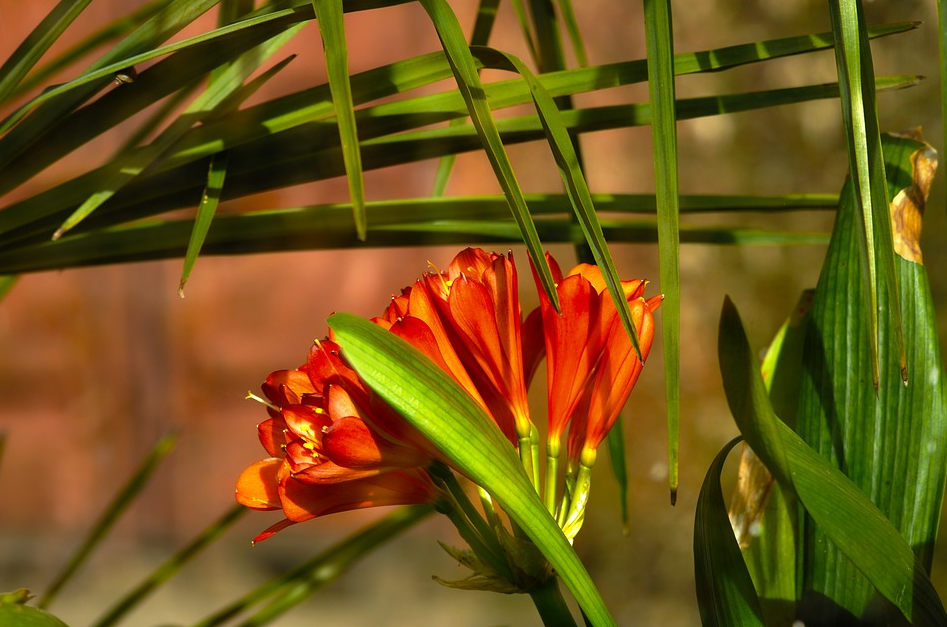
I. Manifestations and Causes of Yellowing Leaves on Clivia
1. Entire leaf turns yellow
Sometimes, you will find that Clivia begins to turn yellow imperceptibly. At first it is just a little bit, gradually developing until the entire leaf is yellow, which is very unsightly.
When Clivia shows this condition of the entire leaf turning yellow, it may be caused by strong light exposure. Excessively strong sunlight will scorch the leaves of Clivia, causing the leaves to turn yellow.
2. Localized yellowing of leaves
The leaves of Clivia can also show yellowing at the leaf edges, yellowing or scorching of the leaf tips.
Localized yellowing of Clivia leaves is mostly caused by overwatering. This is because in daily care, improper care of Clivia and excessive watering cause root hypoxia, resulting in poor growth of Clivia. It may also be because fertilization is incorrect, with fertilizer too concentrated, causing root burn and localized yellowing of Clivia leaves. As well as soil that is not aerated, poor root respiration and poor drainage, or a growing environment that is not sufficiently ventilated and airy, and other such reasons.
3. Yellow spots on Clivia leaves
Yellow spots on Clivia leaves mainly manifest as yellow or yellow-brown spots appearing on the leaves, gradually expanding and harming the leaves.
This situation is mostly because Clivia has developed leaf spot disease or anthracnose, or has been invaded by pests. This causes yellow-brown diseased spots to appear on Clivia leaves, even harming the entire leaf.
4. Other manifestations of yellowing Clivia leaves
Besides the above situations, yellowing of Clivia leaves can sometimes also show as withered yellow, grayish yellow, weak yellow, and other phenomena, as well as yellowing caused by normal metabolism when new roots grow from the leaf axils of the old lower leaves of Clivia and continue to grow.
If Clivia has been cared for over a long period, then it is a normal metabolic phenomenon. But if new leaves and tender leaves show withered yellow, grayish yellow, or weak yellow phenomena, it may be caused by improper watering, overly strong light, or excessive fertilization.
II. Solutions
1. Entire leaf turns yellow
When the entire leaf of Clivia has turned yellow, it not only affects the ornamental value of Clivia but is also unfavorable to its growth. At this time, cut off the yellow leaves and provide shade treatment for Clivia, which can alleviate the yellowing of the leaves.
2. Localized yellowing of leaves
Localized yellowing of Clivia leaves is actually mostly due to improper daily care, and in summary, the daily care work for Clivia must be done well. Do a good job in water and fertilizer management, water and fertilize reasonably, avoid the potting soil being too wet or concentrated fertilizer burning the roots, which causes Clivia leaves to yellow. Also pay attention to frequently ventilating Clivia, so that it grows in a well-ventilated environment, and pay attention to the choice of soil.
3. Yellow spots on leaves
When Clivia shows leaf lesions due to pests and diseases, choose a suitable treatment method according to the disease situation, and you can choose suitable pesticides for spraying treatment. In daily care, do a good job in disease prevention measures, with prevention first and combining prevention with treatment.
4. Other manifestations
For yellowing leaves caused by normal metabolism, there is no need to worry too much; just cut off the old leaves of Clivia to keep it looking nice. But if Clivia shows symptoms of withered yellow, grayish yellow, or weak yellow leaves, daily care work still needs to be done well. Pay attention to watering and avoid water accumulation; provide appropriate shading; apply thin fertilizer frequently, which can improve the yellowing of Clivia leaves.
III. How to Care
1. Water when dry, water thoroughly
Watering Clivia has always been a big problem. Many people either water too much or too little, ultimately causing Clivia to either have root rot or yellow leaves.
In fact, Clivia does not need especially frequent watering, because its fleshy root system can store some water. Generally speaking, Clivia sold in flower markets is grown in very loose soil such as pine needles, and these Clivia need to be watered about once every 3~5 days.
If Clivia is grown in very sticky soil such as garden soil, it is best to water once every 1~2 weeks, because the water in the soil does not evaporate easily, and too much watering will cause water accumulation.
Of course, the most scientific watering method is actually to water when dry and water thoroughly, that is, after the top 2~3cm of soil has dried out, water Clivia thoroughly.
2. Light should be moderate
How to give Clivia sunlight? Many people are probably also hesitant. Leave it outside all the time, and you worry it will get scorched; leave it indoors all the time, and you worry it will not get sunlight……
In fact, Clivia is quite suitable for placement on a south-facing balcony with good light. Except in summer, when Clivia should be moved to an indoor living room to avoid direct light, in other seasons it can be placed directly on the balcony.
In addition, for Clivia grown indoors, the flower pot should be rotated 180 degrees every 1 week, mainly to prevent the leaves from growing crooked.
IV. Feng Shui Role of Clivia
1. Improve career fortune
Its blooming period is relatively long, and when it blooms, the flowers are brightly colored and beautifully shaped, looking simple and elegant. But in fact, Clivia is one of the few flowers whose flowers and leaves can both be enjoyed. Besides many people growing Clivia in their own homes, we can often also see it on office desks or in entryways and other places. Why is that? It turns out that Clivia can absorb some harmful gases, making the air fresher, and people naturally feel better when working. Especially for people engaged in literary and artistic work, growing a Clivia at home or in the workplace can help their literary and artistic career advance further!
2. Enhance wealth fortune
Clivia has always been regarded as a flower of wealth and honor. Indeed, growing one at home and matching it with the decoration style naturally reveals that this is an elegant and refined beautiful flower, and people even call it the flower of wealth. Growing and caring for it in a bright living room is said to not only promote family harmony but also enhance the family's wealth fortune. Who would not love such a flower?
3. Announcing good news
If the Clivia you grow at home suddenly blooms and displays its beauty ahead of time, then good things may be happening in the family. This saying is called by many people Clivia announcing good news. When Clivia blooms, the flowers cluster together, looking like the embroidered ball used in ancient times for choosing a marriage partner, appearing very festive and auspicious, so people are more willing to associate it with auspicious matters.