What to Do When a Money Tree's Leaves Turn Yellow? Cause Analysis and Prevention Methods
The money tree (Pachira aquatica) is a popular potted plant. It does not just symbolize wealth; it is also a natural air purifier that can combat the exhaust fumes produced by burning tobacco, making it an important decorative item for the home. Many people like to keep one at home, only to find that before long its leaves start turning yellow. So what is causing the money tree's leaves to turn yellow? What should you do? How can you prevent it?
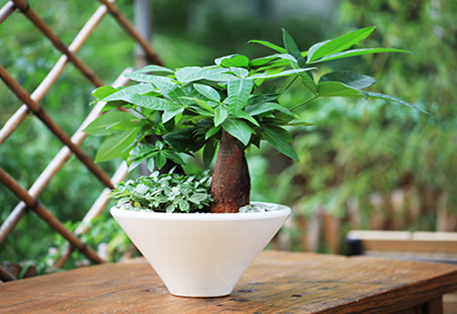
I. Causes of Yellowing Leaves on a Money Tree
1. Improper watering
The money tree likes a warm, humid climate. Both overwatering and underwatering can cause the leaves to turn yellow.
When overwatered, the soil in the pot stays constantly too wet, the money tree's roots cannot breathe properly, the roots and stems rot, and this gradually spreads to the branches and stems, until finally the leaves turn yellow, wither and drop off, and in severe cases the whole plant dies. When underwatered, the top of the potting soil is moist while the bottom is dry, which not only affects nutrient uptake but also causes the leaves to become dull and lusterless, gradually turning yellow and dropping from the bottom up. The money tree is silently protesting your laziness~.
2. Improper lighting
The money tree likes sunlight, but it cannot tolerate strong direct light. Scorching sun or long-term shade can also cause the leaves to turn yellow.
Placing the money tree in an indoor corner, with too much emphasis on its decorative effect, keeps the money tree in a shaded environment for a long time. This causes new branches and leaves to come in pale yellow and spindly, while the old leaves become dull and drop off in large numbers. On a scorching summer day, when you can only sit indoors in the air conditioning, how can the money tree withstand the assault of the blazing sun? If you forget to move it into the shade at noon, then you will just have to accept the sorry sight of yellowing leaves.
3. Too much fertilizer
Impatient as you are, you must be worried that the money tree will become malnourished from a lack of fertilizer, right? But over-fertilizing is no good either. The nutrients a money tree absorbs are limited; if you fertilize too much, after the plant has absorbed enough nutrients, the leftover fertilizer will scorch the money tree's roots and stems, causing the leaves to turn yellow.
4. Unsuitable temperature
Some people hate summer and winter, because one is too hot and the other too cold. Plants are actually the same. The suitable temperature for money tree growth is 20°C~30°C; too high or too low will both affect its growth.
If the temperature in the money tree's growing environment is too high, transpiration becomes too strong, the roots cannot supply enough water and nutrients, and the leaves gradually dry out and turn yellow. But if the temperature is too low, for example when winter temperatures fall below 16°C, the leaves easily turn yellow and drop off, and below 10°C the plant is very likely to die.
5. Pests and diseases
When the money tree is attacked by fungi or bacteria, it develops leaf spot disease; localized necrosis appears on the leaves, producing yellow patches or spots, and in severe cases the entire leaf turns yellow and drops off.
Not only do pathogens covet the money tree; many pests such as red spider mites and scale insects can also cause its leaves to turn yellow, so you need to observe carefully.
6. Overly dense branches and leaves
The money tree has fairly strong growth ability, so its branches and leaves grow vigorously. If you do not have a habit of regular pruning, then the branches and leaves hidden at the bottom will turn yellow and droop due to insufficient light and poor ventilation.
7. Alkaline soil
Soil is an essential factor for money tree growth. Most of the soil in northern regions contains more salt and alkali, but the money tree prefers acidic soil. Being unable to adapt to the soil is no small matter: when the soil lacks the iron the money tree needs, the result of malnutrition is yellowing leaves.
II. What to Do When a Money Tree's Leaves Turn Yellow
1. Ventilate promptly, repot, or replenish water
When you have overwatered, place the plant by a window for good ventilation and loosen the soil more. If the potting soil cannot dry out in a short time and has turned muddy, you can place a layer of absorbent cotton cloth under the bottom of the pot and replace it with a fresh one once it is soaked through, or use a fan on low to blow on it. If you have tried everything and the soil still has not dried out, then it is time to change the soil.
When you have underwatered and the soil surface has cracked, if the leaves have not all turned yellow yet, replenish water gradually. First moisten the soil surface, then water a little every hour, gradually watering thoroughly. Avoid watering thoroughly all at once, so that the roots do not swell from absorbing water and affect growth.
2. Move it to a semi-shaded spot
For situations where the money tree's leaves turn yellow due to sudden exposure to sunlight, the chances of saving it are not great. When leaves turn yellow from excessive sun exposure, the leaves lose water severely and are very hard to restore in a short time, so it is recommended to move the plant to a semi-shaded spot. With proper watering, the yellowed leaves will gradually drop off, and once new shoots grow it will be fine.
3. Trim the roots and change the soil
When over-fertilizing causes the money tree's roots to rot, take the plant out of the pot, clean up the rotted parts, replace the soil with fresh soil, and replant it. Alternatively, water the plant to dilute the nutrients in the soil and reduce the fertilizer strength.
4. Raise the temperature
In summer, when the money tree's leaves turn yellow due to excessively high temperatures, promptly move the plant to a cool place and sprinkle water to lower the temperature. If the yellowing is not severe, it will slowly recover and grow again. In winter, appropriately raise the maintenance temperature to avoid frost damage to the plant.
5. Spray pesticides
Improve ventilation and spray pesticides promptly. For different pests and diseases, choose the corresponding fungicide, spraying once every 5~7 days; after 3~4 sprays it will basically improve. (Recommended pesticides: carbendazim, chlorothalonil, Huahuashen)
6. Prune promptly
Many plant lovers let the money tree in their home grow into the shape of a straw hat and still do not prune it. As a foliage plant, a money tree's lush branches and leaves are of course important. But when there are too many leaves and they hinder the plant's growth, that is your fault.
The money tree grows relatively fast. For potted plants with dense branches and leaves, you can prune away a portion of the branches. There is no need to be reluctant; new shoots will soon grow, and the plant will grow even more luxuriantly.
7. Acidify the soil
The money tree is suited to growing in acidic soil. Promptly changing the soil's acidity or alkalinity can remedy a yellowing money tree. You do not need to take it out of the pot or change the soil; you only need to apply a certain amount of ferrous sulfate to the soil, sprinkling it directly into the pot. This both increases the soil's fertility and acidifies the soil, killing two birds with one stone.
In the process of acidifying the soil, note that you should not use vinegar. Although vinegar can indeed quickly make the soil acidic, because the method of change is too aggressive, it will damage the organic matter in the soil and lower the soil's fertility.
III. How to Prevent Leaves from Turning Yellow
1. Control the amount of watering
So that you will not end up crying over your money tree's yellowing leaves, we should do everything well before it turns yellow, starting with the amount of watering. Watering a money tree should follow the principle of "do not water until dry, and water thoroughly when you do." Under normal care, watering once every 15~20 days is enough.
2. Reasonable lighting
When caring for a money tree, you should do your best every day. Starting in late April, choose a clear, warm noon and move it outdoors or onto a balcony to receive sunlight, starting with 1~2 hours and then gradually extending the time; you will get unexpected results.
Of course, in summer it is best to set the time in the morning or evening, when the sunlight is milder and will not harm the money tree.
3. Moderate fertilization
When fertilizing a money tree, follow the principle of "light fertilizer, frequent application," fertilizing according to the plant's growth. During the growing season, apply a liquid fertilizer or mixed flower fertilizer once every 1 to 2 weeks, and when repotting the plant, promptly add well-rotted base fertilizer.
4. Control the soil's pH
Actually, most of the soil in households is bought directly from the market, and the soil in the pot is acidic. But why does the yellowing of leaves still occur? This is related to our watering and soil changing. When watering, try to choose acidic water (rainwater, river water, tap water that has been left standing); in addition, you can usually water with a ferrous sulfate solution to keep the soil's pH within a suitable range.
5. Clean the branches and leaves regularly
First, prune promptly, cutting off overly dense, spindly and diseased branches to enhance the plant's light penetration. Second, clean the dust off the leaf surfaces; too much dust on the leaves not only affects their appearance but also reduces photosynthesis, causing the leaves to turn yellow.
6. Prevent and control pests and diseases promptly
When growing a money tree indoors, pests and diseases are hard to avoid because of ventilation, light and humidity, so the key is to take preventive measures. Except on rainy days and in winter, ensure the air in the care environment flows freely; in the hot, humid season, spray a fungicide once each time as a preventive measure.
7. Maintain a suitable temperature
The money tree is relatively sensitive to temperature: hot and it turns yellow, cold and it also turns yellow, so a suitable temperature is very important. The suitable growing temperature for a money tree is 22~35°C; above 35°C, growth slows down. The minimum winter temperature is 16-18°C (basically comparable to indoor temperature); below this temperature the leaves turn yellow and drop off, and below 10°C the plant easily dies