Spider Plant Care Guide and Solutions for Yellow Leaves, Can It Be Placed in the Bedroom?
Spider plants are easy to grow and highly adaptable, making them one of the most traditional hanging plants for the home. Their leaves are slender and soft, with small plantlets emerging from the leaf axils, hanging down from the edge of the pot, spreading and trailing gracefully like flowers, and staying green year-round. So how do you care for a spider plant? What should you do if the leaves turn yellow? Can it be placed in the bedroom?
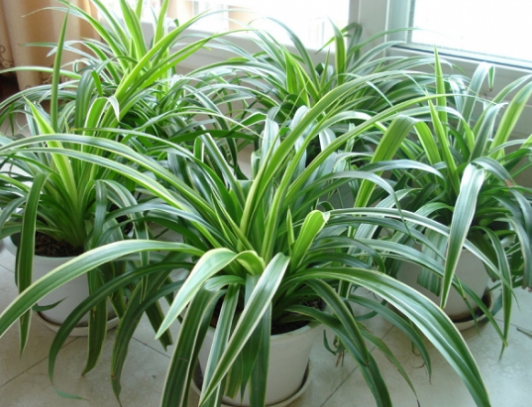
I. Spider Plant Care Methods
1. Pot and Soil Selection
When growing spider plants, you can use clay pots, plastic pots, porcelain pots, or ceramic pots. If you want to grow them as hanging plants, choose pots with hanging hooks. The size of the pot should be chosen according to the growth condition of the spider plant; generally, choose one slightly larger than the plant to give it room to grow.
Spider plants adapt well to various soils and are easy to cultivate. You can use fertile sandy loam, humus soil, peat soil, or fine sandy soil as potting soil, and apply a certain amount of base fertilizer before planting.
Spider plants generally need repotting once every 2—3 years, done in March each year.
2. Light and Temperature
Spider plants prefer semi-shaded environments and are rather afraid of direct sunlight. In summer and autumn when sunlight is intense, strong light can cause the leaves to turn yellow and wither, or even kill the entire plant. So in summer, pay attention to shading, place the spider plant in a cool, ventilated spot, and keep the environment humid. In winter, let the spider plant receive some direct sunlight appropriately.
Spider plants like warm climates and cannot tolerate severe cold or extreme heat. Their most suitable growing temperature is between 15—25°C, and the wintering temperature should not be lower than 5°C. In summer, take measures to prevent heat and lower the temperature, and in winter when the temperature drops below 5—7°C, take care to protect against cold and keep warm.
3. Watering and Fertilizing
Spider plants like humid environments, so keep the potting soil moist. In summer, water generously and also spray water on the leaves and stems every evening to keep the air humid. In winter when the temperature is below 5°C, water less and do not let the potting soil get too wet, otherwise the leaves will easily turn yellow. Normally, maintain normal humidity; it should be neither too dry nor too wet.
During the peak growing seasons of spring and autumn, apply a diluted liquid fertilizer about once every half month, mainly organic fertilizer. During high temperatures in summer and the dormant period in winter, stop additional fertilizing. For variegated varieties, apply less nitrogen fertilizer, otherwise the markings on the leaves will fade, affecting the ornamental effect.
4. Propagation Methods
Spider plants can be propagated by cuttings, division, or sowing. Cutting propagation and division propagation can be done anytime from spring to autumn, while sowing propagation is mainly done in March each year.
II. Precautions for Spider Plant Care
1. Pruning
During routine care, pay attention to pruning the spider plant, cutting off yellow leaves at any time. When repotting, you can also cut off old roots, rotten roots, and excess fibrous roots. In early to mid-May each year, you can prune the old leaves of the spider plant.
2. Pest and Disease Control
Spider plants generally are not prone to pests and diseases. However, root rot caused by waterlogged potting soil and poor ventilation can occur, as well as damage from pests such as scale insects, aphids, whiteflies, and mites. In these cases, spray pesticides promptly for control.
3. Care Taboos
Spider plants tolerate high temperatures but not scorching sun. If exposed to strong sunlight, the leaves are easily scorched, so shading is needed in summer. At home, you can place the spider plant indoors in bright light for enjoyment. In summer, increase water supply and sprinkle water frequently to raise air humidity.
Spider plants are not cold-tolerant; keeping room temperature above 5°C allows them to overwinter safely. When winter temperatures are low, place the spider plant in full light, water sparingly so the potting soil is slightly on the dry side, and do not fertilize.
III. Causes and Solutions for Yellow Spider Plant Leaves
1. Excessive Fertilizer Burning the Plant
Flower-loving friends may be just too good to their spider plants! They add too much fertilizer~ You should know that although fertilizer is a good thing, the saying "going beyond the limit is as bad as falling short" applies here~ If you fertilize too much, the spider plant cannot absorb all the fertilizer, and the remaining fertilizer will burn the root system. This then shows up in other parts of the plant as yellow leaves.
Solution
Stop fertilizing immediately, water with plain water, or repot with fresh soil. Also, pay attention to your regular fertilizing routine~
Spider plants normally do not need much fertilizer. If you want them to grow vigorously, you can soak bean dregs in water, ferment fully, then dilute and use. You can also use a little compound fertilizer, preferably organic fertilizer, and a compound fertilizer containing nitrogen, phosphorus, and potassium is best, applied once every half month. When the temperature is below 4°C, stop fertilizing the spider plant.
2. Too Much Light
Spider plants are semi-shade plants, so whether or not to expose them to sunlight becomes a dilemma for many flower lovers. Spider plants cannot go without sunlight, as that would reduce the chlorophyll in the leaves and cause them to turn yellow. But they also cannot be exposed to harsh sunlight, which is torture for them. If the sun is too strong, the spider plant will be "dried out"~ and the leaves will also turn yellow!
Solution
We need to let the spider plant receive at least four hours of diffused light each day. You can also place it under an indoor incandescent lamp or on a balcony. In summer when the sun is very strong, place the spider plant in a shaded area and do not expose it to harsh sunlight.
3. Improper Watering
Spider plants like humid environments, and the potting soil should not be too dry, but this does not mean you should just keep watering them non-stop! There are limits to watering spider plants. Too much water, combined with poor drainage causing waterlogged soil, means the roots cannot breathe, which shows up on the leaves as yellowing!
Another reason is that the spider plant has been watered without soaking through for a long time, causing the roots to lose water, and the lower old leaves turn yellow.
Solution
If you have watered too much, loosen the soil promptly and control the moisture. Also, when watering normally, make sure to water thoroughly. Below, the editor has also written about everyday watering methods~
Spider plants are not suited to daily watering, so flower lovers can "be a little lazy"! Generally, water spider plants about once every ten days in winter, and every 3-5 days in summer depending on how dry it is. Water thoroughly and ensure good drainage.
If the air is dry, you can frequently use a spray bottle to spray and wash the leaves and stems. This increases air humidity, prevents the leaf tips from drying out, and keeps the leaf surface clean, improving the ornamental value - multiple benefits in one~
Also, pay attention to the timing of watering. It is best to water in the morning or evening, not at noon. Suddenly giving a spider plant a pot of cold water in the heat of the day will chill it to the core and give it a "cold." Also, during the growing season, you can appropriately increase the amount of water~ but not too much~
4. Unsuitable Temperature
The suitable growing temperature for spider plants is 15-25°C. They grow fastest at 20-24°C, stop growing above 30°C, and the wintering temperature is 5°C. If the temperature is too low, it will also show on the spider plant's leaves~ the leaves will turn yellow~ So flower lovers in the north must remember to move spider plants indoors in winter~
Solution
The best solution is of course to give the spider plant a suitable temperature~ The most suitable growing temperature is 20-24°C. Just try to maintain this temperature normally~
5. Insufficient Nutrition
I wonder if everyone has overlooked the most fundamental issue for spider plants - the potting soil.
All the nutrients a spider plant needs come from the soil it is rooted in. So if the potting soil is not changed for a long time, some elements that we easily overlook will gradually disappear, and the spider plant will lack the nutrients it needs for growth. All of the spider plant's "discomfort" will show on its leaves, and the leaves will turn yellow.
Solution
The best way to solve this problem is of course to repot the spider plant~ Remember to mix in fertilizer when repotting~ This can avoid nutrient deficiency and root burn.
IV. Can Spider Plants Be Placed in the Bedroom?
Spider plants can be placed in the bedroom.
A fresh and elegant bedroom can make people feel relaxed and happy, and a bedroom full of greenery gives people the best rest experience. The spider plant's air-purifying function keeps your bedroom air fresh.
So, spider plants can be placed in the bedroom. But choose slightly smaller mature plants, and 1-2 pots is appropriate. It is best to place them on the windowsill or on the wall opposite the bed. This eliminates everyone's concerns, meets the bedroom's need for fresh air, and also lets the spider plant grow well. A triple win - of course you should do it right away!
Air pollution in today's social environment is particularly severe. Placing a pot of spider plants in a child's room is a great choice - it serves as decoration, purifies the air, and research shows that children who have more contact with green plants benefit in their thinking development and healthy growth.
But pay attention to keeping the room ventilated and keeping the plant healthy. If a small child has a cold, it is better to move the spider plant to another room during the cold. For a child with a severe cold and nasal congestion, it affects his or her breathing; moving the plant out at night helps the child breathe more easily.
V. Feng Shui for Placing Spider Plants in the Bedroom
A bedroom generally should be quiet, peaceful, and cozy. You can use spider plants, lilies, tuberoses, calla lilies, and other plants suitable for the bedroom for decoration. Placing a spider plant in the bedroom can promote harmony between husband and wife, allowing both body and mind to rest in warmth and quiet. It is best to hang the spider plant diagonally across from the bed, so when sitting on the bed reading, you can glance at the flowers and plants on the wall, pleasing to the eye and relaxing your eyes.
Of course, if the bedroom windowsill faces the sun, you can place it directly on the left side of the bedroom windowsill - left is considered the place of honor - which will let the spider plant grow very vigorously and add charm to your bedroom.