Causes of Yellowing Leaves in Rice Seedlings and Control Methods
We are now in the period of vigorous rice growth. Many farmers have noticed their rice turning yellow at night. We need to analyze whether it is happening in individual plants or across the board, or whether it was caused by some chemical applied. So what causes yellowing leaves in rice seedlings? How can it be effectively treated? How can it be prevented and controlled?
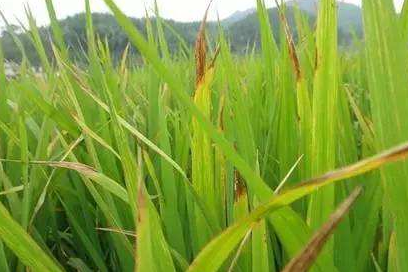
I. Causes of Yellowing Leaves and Dry Leaf Tips in Rice Seedlings
During the growth period of rice seedlings, the leaves are relatively tender and have poor stress resistance and disease resistance. Combined with changeable weather, problems such as yellowing leaves and dry tips can occur when management is improper.
1. Caused by nutrient deficiency
This is especially likely to occur when the seedbed has not been hilled up with soil or has not been prepared with nutrient soil. It generally becomes more obvious after the 2.5 to 3-leaf stage of the seedlings, and yellowing seedlings with dry leaf tips and other symptoms basically appear across the board.
2. Caused by improper management
When field temperatures are too high or too low, or humidity is too high or water is insufficient, it can also lead to nutrient deficiency, causing leaves to turn yellow, have dry tips, or turn white or brown, and the disease will spread downward and outward. Improper ventilation can also cause dry tips; when temperature discomfort is the cause, it is generally more obvious at the air vents.
3. Caused by pests and diseases
Large temperature fluctuations and improper management can cause damping-off and bacterial wilt, among others. Damping-off in particular can cause seedlings to turn yellow and die with dry tips, with death occurring in multiple spots and patches. Thrips damage can cause leaves to curl lengthwise and dry up, looking like fire from a distance, and insects can be seen when the curled leaves are opened.
4. Caused by improper fertilization or pesticide application
When supplementing fertilizer through the leaves or applying pesticides for pest and disease control, if the concentration is too high, the spray is uneven, or the seedlings are not rinsed promptly after spraying fertilizer, it can easily cause leaf burn. Symptoms such as chlorosis and yellowing, or dry leaf tips, then appear.
II. How to Effectively Treat
1. For nutrient deficiency
Be sure to promptly use a high-nitrogen water-soluble fertilizer, or supplement with urea + monopotassium phosphate through the leaves to relieve it.
2. For improper management
Be sure to ventilate and remove the film at the right time to harden the seedlings; the seedling bed should not be excessively short of water, nor should it be watered too much. In addition to strengthening routine management, after it occurs you can promptly spray Bihu, or brassinolide + seaweed acid, or Meizhouxing + monopotassium phosphate to relieve it. This enhances stress resistance and disease resistance and promotes rapid recovery.
3. For pests and diseases
For damping-off, promptly spray Jiatongfu, or Ruimiaoqing and other chemicals + rooting agent, or Meizhouxing, or seaweed acid for control. For thrips, you can spray clothianidin, or imidacloprid, or carbosulfan for control.
4. For improper fertilization or pesticide application
In addition to promptly strengthening water and fertilizer management, promptly spray Bihu, or brassinolide + seaweed acid or Meizhouxing on the leaves to relieve it, so as to alleviate the phytotoxicity and quickly restore normal growth.
III. How to Prevent and Control
1. When spraying rice fields with organophosphorus pesticides such as trichlorfon, profenofos, chlorpyrifos, triazophos, and phoxim, excessive dosage or too high a concentration may cause phytotoxicity to rice, with small brown spots appearing on the leaves. Phytotoxicity is more likely to occur especially when mist sprayers are used during high-temperature periods.
2. Yellowing rice leaf tips may be caused by potassium deficiency, and spraying nitrogen fertilizers such as urea will worsen the potassium deficiency symptoms. If the healthy parts of the rice leaves do not show nitrogen-deficiency yellowing, do not spray urea. If the healthy parts of the rice leaves do show yellowing, you can mix urea with monopotassium phosphate for spraying, using 500 grams of urea and 100——150 grams of monopotassium phosphate per 50 kilograms of water.
3. The concentration of monopotassium phosphate sprayed in rice fields must not be too high, otherwise it may harm the rice seedlings; generally spray at a concentration of 0.2%——0.3%.
4. For rice varieties that show reddening or yellowing leaf tips, fertilizer and water management should be strengthened when planting that variety, avoiding long-term waterlogging and root suffocation in the field.