How to grow night-blooming jasmine (Telosma cordata) and its toxicity: can it repel mosquitoes, be kept in the bedroom, or be eaten?
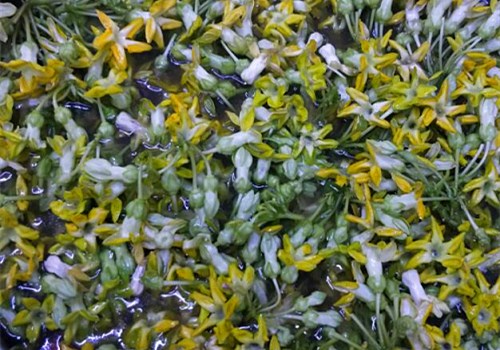
Night-blooming jasmine, also known as night fragrant flower, night orchid fragrance, night clove and thousand-mile fragrance, is a twining vine in the family Apocynaceae (subfamily Asclepiadoideae). Its flowering period is from May to August, and it rarely produces fruit. The flowers are tubular and yellow-green, fragrant, with the scent becoming stronger at night. So, what is the method for growing night-blooming jasmine? Is it toxic? Can it repel mosquitoes or be placed in the bedroom? Can it be eaten?
I. What is the method for growing night-blooming jasmine?
1. Propagation: Night-blooming jasmine can be propagated by cuttings, layering, division and seed sowing. Cuttings are the most commonly used method and can be done at any time except winter. For cuttings, choose healthy, pest-free branches that carry 2 to 3 buds; then remove the lower leaves, treat the cut end of the branch with a rooting powder or similar agent, and insert it about 3 cm deep into the substrate; keep the temperature at around 20°C to 24°C. After inserting, water thoroughly, cover with plastic film, and place in a fairly shaded spot or scatter straw on top of the film. Ventilate daily and mist frequently; once the cuttings have rooted, they can be transplanted into pots at the right time.
2. Cultivation: Night-blooming jasmine prefers loose, well-drained, organic-rich, slightly acidic soil. It can be mixed from peat soil or leaf mold + coarse river mud + farmyard manure, and the bottom of the pot can be filled with granular crushed brick to aid drainage. Night-blooming jasmine requires a sunny, well-ventilated environment and dislikes harsh midday sun. It is a heavy feeder, so fertilize little and often, applying a liquid fertilizer once every 10 to 15 days. Night-blooming jasmine has high water needs; water more in summer, up to once a day if necessary, and in winter just keep the soil moist, taking care to avoid waterlogging. Night-blooming jasmine is a twining vine and needs a trellis; once the plant has climbed onto the trellis, pinch out the tips promptly to encourage branching.
3. Care: After night-blooming jasmine finishes flowering, promptly cut off the spent flower stalks, remove dead and over-dense branches, and shorten leggy branches. Repot regularly; repotting is best done in early April. When repotting, remove some of the old soil and old roots, replace with fresh soil, and prune the branches. Pay attention to preventing and controlling pests and diseases.
II. How should night-blooming jasmine be cared for in winter?
Night-blooming jasmine is not cold-hardy. After leaf drop in winter it stops growing, and in severe cases the whole plant dies. Therefore, take special care: if the outdoor temperature is too low, move it to a balcony or a bright spot during the day, and move it indoors at night, using air conditioning or a heater to control the temperature. Keep the soil moist but not waterlogged; it must not be too wet, otherwise it is prone to cold damage. Fertilizing can be paused.
III. Is night-blooming jasmine toxic? Can it be placed in the bedroom?
Night-blooming jasmine is toxic. Its fragrance contains a harmful substance, and at night it releases a large amount of waste gas, which can cause dizziness, wheezing, coughing and insomnia, and makes people with high blood pressure and heart disease feel especially suffocated and uncomfortable. If children breathe it in, it can affect their nervous system. Therefore, it is not recommended to place it in the bedroom, but it can be placed on a balcony or outdoors.
IV. Can night-blooming jasmine repel mosquitoes? Can it be eaten?
The fragrance of night-blooming jasmine is toxic and mosquitoes dislike it, so it can be used to repel mosquitoes. Although the fragrance is toxic, its leaves, flowers and fruit can be used as medicine, with effects of clearing the liver, improving eyesight, removing eye films, and drawing out toxins and promoting tissue regeneration. Moreover, the fresh flowers and flower buds are a semi-wild vegetable and can be eaten; they can be served cold dressed, fried with eggs, or made into soup. Dishes made from them include cold-dressed night-blooming jasmine, night-blooming jasmine fried with eggs, night-blooming jasmine egg soup, night-blooming jasmine lean pork soup, and night-blooming jasmine crucian carp soup.