Why water lilies close at night, how to grow them, and how they differ from lotus and bowl lotus
The water lily is a perennial aquatic plant of the family Nymphaeaceae and the genus Nymphaea. Its flowers are solitary and float on or rise above the water surface, in colors of white, blue, yellow or pink, blooming by day and closing at night. So why do water lilies close at night? What are its planting methods? How does it differ from lotus and bowl lotus?
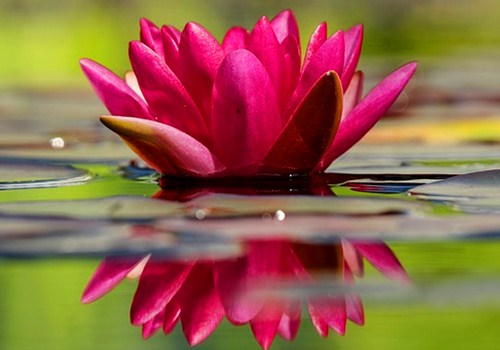
I. Why do water lilies close at night?
The water lily has a habit: its flowers open by day and close at night, and because it spreads by day and curls up at night it is known as the “beauty sleeping among flowers.” The water lily's sleeping, like that of the sensitive plant and the Venus flytrap, is a plant stress response, an instinct shown in the face of changes in the natural environment. This trait of waking at sunrise and closing at sunset makes the name water lily truly fitting.
II. What are the planting methods for water lilies?
1. Propagation: Water lilies are mainly propagated by division and by sowing seeds. For division, dig out rhizomes with plump new buds and cut them into sections, each section with 1 bud, and bury them in the surface soil with the terminal bud facing up; after a little sun, add shallow water, and when the new buds begin to sprout, deepen the water level. For seed propagation, first make an artificial opening in the seed, then place it in a container, add water, and put the container in a sunny place to germinate; tender shoots appear in about five days. Change the water every three days before germination, and every five days after germination.
2. Cultivation: Water lilies can be grown in vats, in pots, or fully in water. First choose a flower vat without a drainage hole or a bottomless nutrient pot, place evenly mixed nutrient soil in the bottom, and bury the germinated, well-growing propagule in the center of the pot with the terminal bud exposed. Then add water to 2-3cm above the soil layer, and gradually increase the water level as it grows; in autumn, lower the water level, and before winter freezing, deepen the water level all at once.
3. Care: When water lilies enter their peak growing period, fertilize in a timely manner, applying thin fertilizer frequently; do not apply too much fertilizer, to avoid burning the seedlings, causing weed growth or polluting the water. Regularly remove underwater algae and debris, keep up light and ventilation, promptly remove spent flowers and dead leaves after blooming, and also pay attention to preventing and controlling pests and diseases.
III. What are the differences between water lilies and lotus and bowl lotus?
Difference 1. Different species: The water lily is a perennial aquatic herb of the family Nymphaeaceae and the genus Nymphaea; lotus and bowl lotus are both perennial aquatic herbs of the family Nelumbonaceae and the genus Nelumbo, except that bowl lotus is the small-to-medium type of lotus.
Difference 2. Different leaves: The water lily's leaves are elliptical, with a natural notch, generally floating on the water surface, and it often stays in one place and grows slowly; the leaves of lotus and bowl lotus are round, without a natural notch, and some float on the water while some stand above it, easily covering an entire pond.
Difference 3. Different flowers: The water lily's petals are relatively pointed, the flower shape smaller and more compact, and the flowers mostly float on the water surface; the petals of lotus and bowl lotus are more spread out, the flower shape larger, rounder and fuller, and the flowers mostly rise above the water surface to open.
Difference 4. Different fruits: The water lily has no lotus pod at the center of its flower, and its root is a tuber, not a lotus rhizome; lotus and bowl lotus have a lotus pod at the center of the flower, and their root is a lotus rhizome, not a tuber.
IV. Can water lilies be placed in the bedroom?
Water lilies are not harmful to people, but they still should not be kept in the bedroom, because water lilies like sunlight and a well-ventilated environment, and need at least 6 hours of direct sunlight every day. Placed in the bedroom, they not only grow slowly but also bloom with difficulty, and even if they bloom, the flowers are relatively weak. Although water lilies cannot be kept in the bedroom, they can be placed on the balcony. Water lilies have a spiritual quality, and keeping them at home means attracting fortune and wealth.