When Is the Best Month to Plant Black Goji Berry? Detailed Guide to Propagation Methods and Management Techniques
Black goji berry, also known as black fruit goji berry (Lycium ruthenicum), is called "Qonuoying—Harmag" in Mongolian and "Pangma" in Tibetan medicine, and belongs to the genus Lycium in the Solanaceae family. So when is the best month to plant black goji berry? How many years until it bears fruit? Where is black goji berry suitable for planting? How is it propagated?
I. When Is the Best Month to Plant Black Goji Berry?
The sowing period for black goji berry is from late March to mid-April. For drilling, open furrows at a row spacing of 30cm with a furrow depth of 0.5~1cm, mix the seeds with some fine sand evenly, sow evenly into the furrows, cover lightly with fine sand, press lightly and then water, keep the soil moist, and give a light irrigation with a small amount of water every 1~2d. At a temperature of 17~21 degrees Celsius, seedlings emerge in 5~7d.
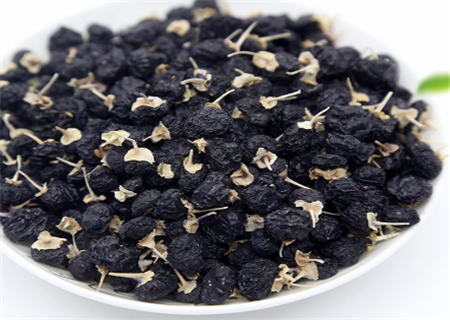
II. How Many Years Does It Take for Black Goji Berry to Bear Fruit?
If grown from seed, it can bear fruit in three years; some saplings bear fruit in the same year.
III. Where Is Black Goji Berry Suitable for Planting?
The producing areas of wild black goji berry are Qinghai, **, Golmud, and Tibet. Needless to say, Qinghai, **, Golmud, and Tibet are quite suitable for large-scale planting of black goji berry, as the natural climate in these places is quite suitable for the growth of black goji berry. At present, many people in our areas grow black goji berry, but no one in other cities has yet attempted large-scale planting of black goji berry, as the environment and climate of other cities cannot meet the environmental requirements for black goji berry growth.
IV. How Is Black Goji Berry Propagated?
1. Cutting propagation: Cutting-propagated seedlings bear fruit early and can maintain the superior traits of the mother plant. Generally, after the sap stops flowing and before black fruit goji berry buds sprout, select 1-year-old leggy branches or thick branches with plump buds from superior individual plants, cut them into 18~20cm long cuttings, and at a plant-row spacing of 20cm-50cm, insert the cuttings obliquely into prepared beds to 2/3 of their depth, then press firm, tread solid, water, and keep the soil moist frequently. The survival rate is 85%~90%.
2. Seed propagation: Before sowing, soak the stored seeds in 40 degrees Celsius warm water for 24h to increase the germination rate; the germination rate is generally around 90%. The sowing period is from late March to mid-April. For drilling, open furrows at a row spacing of 30cm with a furrow depth of 0.5~1cm, mix the seeds with some fine sand evenly, sow evenly into the furrows, cover lightly with fine sand, press lightly and then water, keep the soil moist, and give a light irrigation with a small amount of water every 1~2d. At a temperature of 17~21 degrees Celsius, seedlings emerge in 5~7d. The sowing rate is 1~1.5kg/m2, producing 40,000~50,000 seedlings/m2.
If there are no watering conditions or the water source is insufficient, after sowing, cover lightly with fine sand and soil, then cover with plastic film, and then cover the film entirely with soil 1.5~2cm deep, preferably so that sunlight cannot penetrate. Observe daily, and when the sprouting seeds break through the soil surface, remove all the film on a rainy or overcast day. In this way, soil moisture can be effectively preserved, avoiding water evaporation and soil drying caused by the film raising the temperature. This resolves the contradiction between deep sowing causing bud smothering and shallow sowing causing bud scorching. This method, summarized from actual seedling production, is very practical for raising seedlings of fine-seeded varieties in places with insufficient water sources such as tablelands.